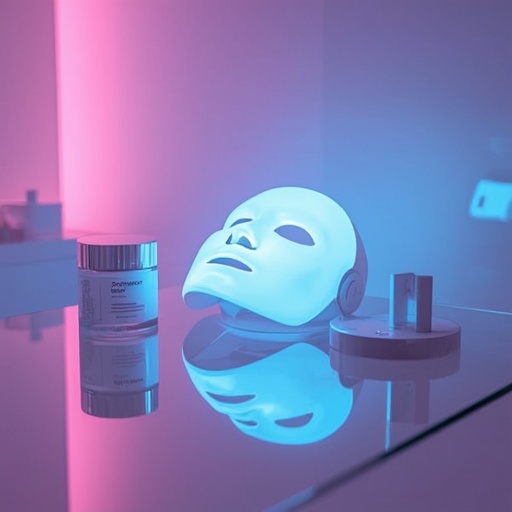
Red light therapy face masks have rapidly become one of the most prominent trends in modern skincare, gaining immense traction largely due to the influence of beauty and wellness creators across social media platforms. Commonly referred to as LED masks, these technologically advanced devices employ varying wavelengths of red, near-infrared, or blue light to address a wide range of skin concerns. Proponents claim that the red and near-infrared lights stimulate collagen production and enhance overall skin texture and elasticity, while masks featuring blue light are said to target acne by acting on specific bacteria responsible for breakouts. Their popularity stems not only from these therapeutic assertions but also from the convenience they offer: individuals can now conduct light therapy sessions from the comfort of their own homes, eliminating the need for frequent visits to aesthetic clinics or dermatology offices. Nevertheless, despite their accessibility, LED masks can be costly, and only a portion of the models available on the market have received clearance from the U.S. Food and Drug Administration (FDA), signaling that they have been tested for safety and efficacy. For anyone considering investing in such technology, it is crucial to understand both the correct protocol for use and the selection criteria that will help determine which device best aligns with their personal skincare goals. To provide authoritative insights, consultations with dermatologists and plastic surgeons reveal practical advice regarding safe usage, potential benefits, and possible risks associated with these tools.
When determining where to incorporate an LED mask into your skincare regimen, proper timing and product layering play a pivotal role. A typical skincare routine encompasses an assortment of topical preparations—such as serums, moisturizers, and ointments—each designed to address different concerns. However, according to Dr. Eleonora Fedonenko, medical director and dermatologist at Your Laser Skin Care clinic in Los Angeles, it is advisable to begin any LED treatment with a thoroughly cleansed face, devoid of sunscreen, makeup, or residue from cosmetic products. She emphasizes that substances left on the skin’s surface can obstruct light penetration, significantly diminishing the mask’s therapeutic effects. Therefore, performing light therapy immediately after cleansing ensures the most efficient energy absorption and optimal results.
Choosing an appropriate LED mask requires careful consideration. FDA clearance remains the gold standard for verifying that a product has undergone reliable safety assessments and efficacy testing. Beyond regulatory approval, prospective users should evaluate the manufacturer’s credibility and investigate whether the company has conducted scientific or clinical studies validating the wavelengths their devices employ. Dr. Fedonenko specifies that red light should ideally measure between 630 and 660 nanometers, while near-infrared light should fall within 830 to 850 nanometers—ranges supported by research for promoting collagen synthesis and reducing inflammation. Additionally, mask design is integral to performance; the device should conform comfortably to the contours of the face and distribute light evenly across all treated areas. Leading options that meet these functional criteria include the Shark CryoGlow LED Face Mask, the RENPHO Artemis LED Face Mask, and the Omnilux Contour Face, all of which have been recognized for their quality and user satisfaction.
Frequency of use is another critical component of effective light therapy. According to Dr. Fedonenko, treatments lasting from 10 to 20 minutes, performed three to five times per week, are generally sufficient to initiate visible improvements. The appropriate duration may vary based on the device’s power output—known as irradiance, a measurement describing how much light energy reaches the skin. A higher-power device may require shorter sessions, while lower-output models could warrant longer exposure to achieve similar effects. Plastic and reconstructive surgeon Dr. Amy Bandy recommends selecting a home-use LED mask with an irradiance of approximately 20 to 50 milliwatts per square centimeter, a range that balances efficacy, comfort, and safety. Devices cleared by the FDA often fall above the 30 mW/cm² threshold, which ensures that the emitted energy can trigger biological responses sufficient to enhance skin quality. Conversely, lower levels—between 10 and 30 mW/cm²—tend to be less effective because the light intensity fails to stimulate substantial cellular activity. On the other hand, users should exercise caution when dealing with masks exceeding 100 mW/cm², as excessive irradiance can provoke persistent redness or irritation, particularly in individuals transitioning from gentler devices. Dr. Fedonenko strongly advises against daily use, warning that excessive frequency may overstimulate the skin and disrupt its natural recovery process. Overzealous users occasionally mistake more frequent sessions for faster results, but the opposite often occurs: the skin becomes excessively tight, raw, and inflamed. Dr. Bandy further notes that combining frequent light therapy with aggressive skincare products—such as exfoliating acids or retinoids—can impair the skin barrier, resulting in additional sensitivity and inflammation. While temporary redness or mild dryness is common following LED sessions, any reaction that persists or worsens signals the need for professional evaluation.
Protective measures are equally important, particularly concerning eye safety. Because LED masks emit bright concentrated light in close proximity to the eyes, prolonged exposure without proper shielding may lead to eyestrain or light-induced headaches, especially in individuals sensitive to high-intensity light or those with preexisting ocular conditions. Many manufacturers now integrate protective goggles within the mask’s structure; nonetheless, users should confirm that these fit securely before activation. If discomfort, visual strain, or headaches occur, discontinuation is essential. Additionally, new breakouts, dryness, or unusual peeling serve as indicators that the skin requires a rest period before resuming treatment.
Recognizing the effectiveness of an LED mask involves closely observing gradual but evident skin changes. In most cases, users notice initial improvements within a few weeks, including diminished inflammation, greater luminosity, smoother texture, and an overall more refined complexion. The stimulation of collagen synthesis typically leads to the softening of fine lines and wrinkles, while individuals struggling with acne may experience fewer breakouts and more even skin tone due to the antibacterial action of blue light. Those with redness-prone or rosacea-affected skin often find their complexion becoming calmer and less reactive—a benefit that pleasantly surprises those who initially sought LED therapy mainly for anti-aging. However, if no noticeable difference appears after approximately eight weeks, Dr. Fedonenko suggests reassessing the device’s irradiance output, as insufficient power could explain the lack of progress.
Ultimately, while the allure of social media trends can be compelling, caution and discernment remain essential when investing in LED skincare devices. Conducting thorough research, prioritizing FDA-approved models, and following expert guidance help ensure a safe and rewarding experience. Patience is equally vital, as consistent use over several weeks is typically required to observe sustained results. Should any adverse effects arise—such as pronounced irritation, persistent redness, or discomfort—users should halt treatment and seek medical advice. In sum, LED therapy masks, when used responsibly and knowledgeably, can represent a powerful addition to one’s skincare arsenal, delivering visible and long-lasting improvements in skin quality, health, and radiance.
Sourse: https://www.cnet.com/health/how-often-to-use-a-red-light-mask/