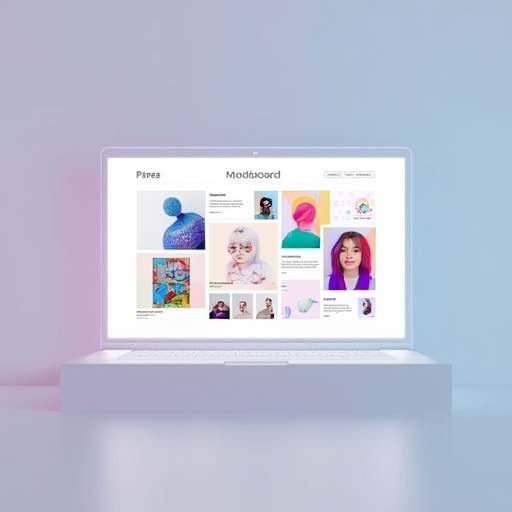
When I began experimenting with artificial intelligence for creative coding, I set myself a simple yet revealing challenge: to construct a web application reminiscent of Pinterest’s signature visual appeal — a virtual scrapbook where users could collect and organize inspirations with ease. I relied heavily on AI-driven coding assistants and design tools, curious to see how much of the process could be automated and how seamlessly these systems could handle the nuances of interface logic, user experience, and aesthetic harmony.
The result, at least at first glance, was charming. The interface bloomed with beautiful color palettes, engaging layouts, and a responsive flow that echoed the inviting minimalism of modern creative platforms. The app felt playful, smooth, and aesthetically delightful — exactly the sort of output one would hope for when fusing design sensibility with machine precision. However, it didn’t take long to realize that beneath the polished surface, the experience revealed far more about the current boundaries of AI’s role in software development than I initially anticipated.
While the AI tools accelerated repetitive coding tasks, generated boilerplate structures, and even offered surprisingly clever layout suggestions, they stumbled when confronted with abstract design reasoning, contextual decision-making, and adaptive problem solving — the subtle skills that stem from human judgment and intuition. Features that seemed minor to an algorithm, such as the emotional rhythm of scrolling through mood boards or the organic interaction between elements on a page, required human tuning and refinement. Without conscious design intervention, the user journey risked feeling mechanized, lacking the small imperfections that make digital experiences feel truly personal.
In short, this project became more than a coding exercise; it turned into a case study in human–AI collaboration. It highlighted that artificial intelligence can act as an inspired collaborator, extending creative potential by automating tedious aspects of programming. Yet, it also emphasized that the essence of purposeful creation — the spark of empathy, artistic judgment, and contextual awareness — remains uniquely human. Building the app proved that efficiency and ingenuity are not at odds, but that they coexist most meaningfully when technology serves as a mindful extension of craft rather than a replacement for it.
This experience left me with both admiration and humility: admiration for how far AI-assisted development has advanced, and humility in recognizing the indispensable value of the human intellect in shaping authentic digital art and interaction. The app may not be perfect, but it stands as a beautifully imperfect testament to the evolving dance between automation and imagination, between mechanical precision and creative intent.
Sourse: https://www.businessinsider.com/coding-experiment-pinterest-inspired-web-app-base44-ai-result-2026-5