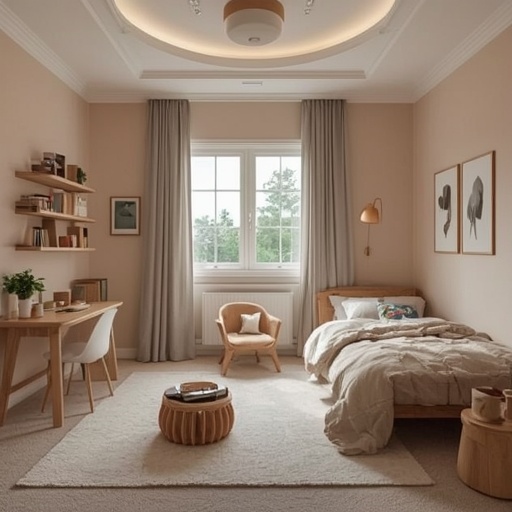
Transforming a toddler’s bedroom into what Victoria Lee Jones affectionately refers to as a “mini man cave” is far more than a playful design choice—it’s a thoughtful act of nurturing independence, confidence, and creativity during the earliest stages of development. In this transformation, every element of the room serves a purpose that extends beyond aesthetics; the design itself becomes a subtle yet powerful teacher of self‑reliance and personal expression.
Jones approached the project with the belief that a child’s environment profoundly shapes behavior and emotional growth. For her young son, she envisioned a space that would embody comfort, security, and individuality—a retreat where he could experiment with his imagination while also learning to manage and organize his own small domain. The carefully curated furniture, soft textures, and warm, neutral color palette provide both stimulation and calm, striking a balance that supports a child’s need for exploration without overwhelming the senses.
The so‑called “mini man cave” is not a conventional man’s domain shrunk to child size, but rather a symbolic progression toward autonomy. Miniature seating, accessible storage, and interactive, child‑friendly objects invite participation in daily routines—encouraging tidiness, decision‑making, and the joy of ownership. Even subtle design details, such as low‑hung artwork or open shelving filled with beloved books and toys, ensure that the space meets the child at his level—literally and developmentally.
In a modest‑sized room, these design principles become even more significant. Limited square footage prompts creativity: multifunctional pieces double as play areas and storage, and natural light enhances a feeling of openness. Every corner is intentionally used to communicate warmth and purpose. Through these deliberate choices, the small bedroom becomes a narrative of growth—illustrating how physical space can reflect emotional and cognitive advancement.
Ultimately, Jones’s project demonstrates how good design can transcend surface style and act as a catalyst for learning. By giving her son a room that is both beautiful and empowering, she underscores the idea that independence begins at home, in spaces crafted with empathy and foresight. Her “mini man cave” is therefore not just a room for a toddler—it is a microcosm of early confidence, a template for creativity, and a tangible reminder that even the smallest environments can cultivate big steps in growing up.
Sourse: https://www.businessinsider.com/toddler-room-designed-for-independence-2026-5