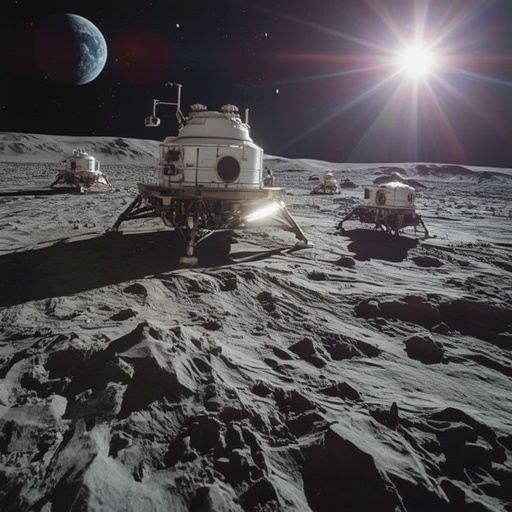
NASA has embarked on an extraordinary and visionary journey aimed at laying the foundation for a sustainable and enduring human presence on the Moon. This ambitious goal, part of the broader Artemis program, envisions far more than symbolic landings; it seeks to establish the essential infrastructure required for continuous exploration beyond Earth’s orbit. In pursuit of this vision, three critical missions scheduled for launch this year represent a historic turning point that will initiate humanity’s definitive return to the lunar surface and define the architecture of future space settlements.
Each of these three missions will target the enigmatic and scientifically valuable South Pole region of the Moon, an area long shrouded in both mystery and promise due to its permanently shadowed craters and potential reserves of water ice. Water, a fundamental resource, is anticipated to play a transformative role in supporting not only life support systems for astronauts but also in potentially generating rocket fuel—thereby reducing dependence on Earth-based supply lines. The technological and scientific insights gained through these preliminary expeditions will collectively form the indispensable groundwork for the crewed Artemis landing planned for the year 2028. This forthcoming human landing will exemplify the culmination of decades of research, innovation, and collaborative engineering among national and international partners.
Beyond these initial endeavors, NASA envisions a comprehensive framework encompassing over a dozen subsequent lunar missions that will methodically develop the capabilities necessary for a self-sufficient lunar base. These operations will include the testing of cutting-edge robotic systems, advanced power generation modules, and habitation technologies designed to endure the harsh lunar environment. The aim extends beyond mere presence—it is about permanence and adaptability. Establishing a base at the Moon’s South Pole will serve as a gateway for deeper exploration, ultimately enabling the testing of technologies and human systems that will one day carry astronauts onward to Mars and perhaps beyond.
This monumental phase of exploration underscores NASA’s unwavering commitment to advancing scientific discovery, technological progress, and international cooperation in space. By spearheading innovation in aerospace engineering and resource utilization, NASA continues to inspire a global community of scientists, engineers, and dreamers drawn together by the shared pursuit of exploration. Each launch, instrument, and experiment brings humanity incrementally closer to transforming the Moon from a distant celestial body into a thriving frontier of discovery and endeavor.
In essence, NASA’s roadmap to a permanent lunar presence intertwines human curiosity with bold technological ambition. The three missions launching this year are far more than isolated milestones—they constitute the first vital threads of a long-term tapestry of exploration that redefines humanity’s relationship with the cosmos. As the Artemis program proceeds toward its landmark 2028 crewed landing, these foundational efforts will symbolize not just the revival of lunar exploration, but the dawn of a new era in which humanity learns to live, work, and sustain itself beyond the cradle of Earth.
Sourse: https://www.theverge.com/science/937775/nasa-moon-base-moonfall-updates