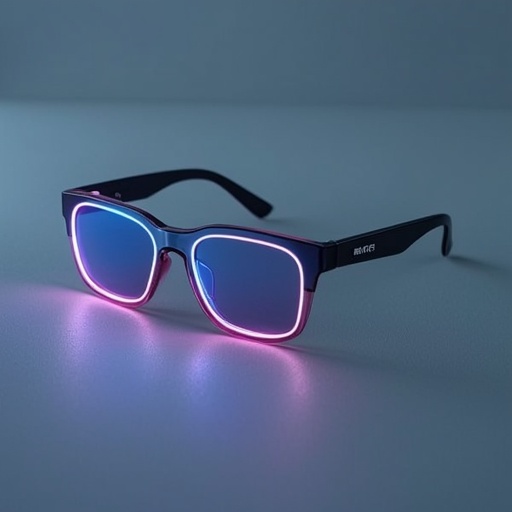
Xreal has consistently distinguished itself as one of the most forward‑thinking companies in the field of wearable display technology, and its products have earned a reputation among enthusiasts as some of the most refined and practical display glasses available. These devices essentially transform the experience of a traditional USB‑C tethered monitor into a compact, wearable form factor that sits lightly on the user’s face like an ordinary pair of glasses. Now, the company is venturing into a new phase of innovation with a more affordable offering priced at $299: the X by Xreal a01 display glasses. This model inaugurates a sub‑brand — fittingly named ‘X by Xreal’ — that aims to broaden accessibility to Xreal’s technology by delivering a cost‑effective alternative without abandoning the company’s commitment to thoughtful design and cutting‑edge features. While the a01 glasses are positioned as a budget‑friendly option and are therefore more limited in capabilities compared to Xreal’s higher‑end counterparts, such as the Xreal One Pro and the 1S, they manage to introduce a few surprising refinements that distinguish them from earlier versions.
From a performance standpoint, the a01 displays a moderate reduction in technical specifications when measured against the premium models. For instance, its field of view measures approximately 50 degrees — slightly narrower than that of the One Pro and 1S — which means the virtual screen appears a bit smaller in the wearer’s visual span. Additionally, the a01 omits the integrated dimming lens and advanced processing chipset found in the more expensive variants, which are used to anchor or ‘pin’ virtual displays in a fixed spatial position for a more stable augmented‑reality experience. Yet, despite these concessions, the new glasses compensate with notable advantages that enhance visual quality and overall usability.
One of the most impressive aspects of the a01 is its exceptionally bright micro‑OLED panels, capable of producing up to 1,600 nits of brightness. This figure represents a substantial improvement over the luminance levels of previous Xreal devices, promising vivid colors, sharper contrasts, and greater legibility even in challenging lighting environments. Such brightness performance is particularly important for outdoor use or rooms flooded with sunlight, where lesser displays often appear washed out. The glasses also support HDR10 video, enabling them to render a broader range of contrast and color depth, an increasingly common feature in high‑definition display devices. Interestingly, this feature brings them into direct comparison with TCL’s recently announced RayNeo Air 4 Pro, another contender in the growing market for budget tethered display glasses. Physically, the a01 maintains a commendably lightweight build at only 62 grams, allowing prolonged comfort during wear — an essential consideration when a device is designed to be both a fashion accessory and a functional display.
A further aesthetic advantage comes in the form of interchangeable front faceplates. These magnetic or snap‑on elements permit users to alter the outward look of the glasses, effectively customizing their visual style to match different tastes or environments. Options reportedly include both transparent fronts and darker, sunglass‑tinted variations, illustrating Xreal’s thoughtful fusion of personal expression with technological practicality. This modular design philosophy extends beyond mere fashion appeal, hinting at a future where wearable tech more seamlessly integrates into everyday wardrobes without sacrificing performance.
Perhaps the most intriguing addition, however, is the newly introduced ‘anti‑shake’ mode. This function aims to stabilize imagery during movement, thereby reducing the jarring motion or blurring that can occur when the wearer walks or changes direction quickly. If this technology performs as advertised, it could markedly enhance the user experience for video playback and other visual applications, positioning the a01 as not just a cheaper model, but a technically refined and thoughtfully engineered one.
According to Xreal’s release timeline, the X by Xreal a01 glasses have begun their rollout in China, with plans for availability in the United States around July. At that point, comprehensive reviews will determine whether these new models can outperform or at least rival the RayNeo Air 4 Pro in the increasingly crowded field of affordable, tethered display eyewear. In a year already saturated with announcements across the smart‑glasses sector, Xreal’s latest move could very well redefine expectations for what ‘budget’ display glasses can offer — combining accessible pricing, stylish versatility, and sophisticated display technology into a single forward‑looking product.
Sourse: https://www.cnet.com/tech/computing/xreals-new-budget-display-glasses-can-change-their-look-on-the-fly/