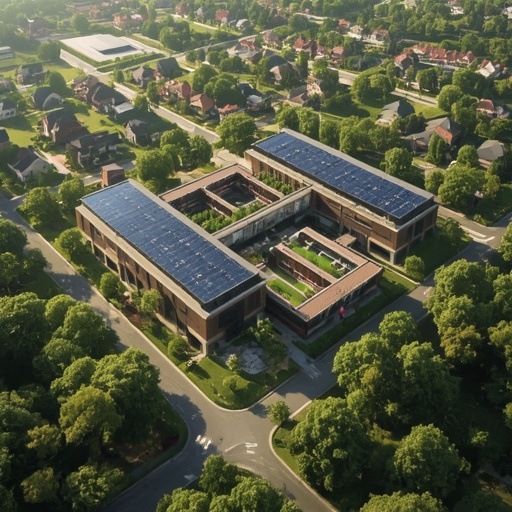
In a forward-looking commentary on the evolving relationship between artificial intelligence and the physical world it inhabits, Cerebras CEO Andrew Feldman is urging a dramatic rethinking of how technological infrastructure is conceived, built, and sustained. Rather than continuing the prevailing industry model centered on vast, isolated data centers that often consume immense natural and economic resources while remaining detached from the people and places that support them, Feldman advocates for a new paradigm—one that integrates AI infrastructure directly within local communities and shares tangible social value.\n\nAt the heart of his argument lies a belief that artificial intelligence should not merely extract from the environment but should contribute back to it. By proposing community-integrated AI hubs, he envisions facilities that transcend the conventional notion of data warehouses as energy-hungry fortresses of computation. Instead, these hubs could function as sustainable, symbiotic ecosystems—spaces where advanced technology harmonizes with human-scale needs. In this model, power consumption might be offset by renewable energy initiatives such as solar or wind integration, while surplus heat or infrastructure could be redirected to benefit nearby public facilities or residential developments. The goal is to transform AI infrastructure from an isolated industrial necessity into a communal asset that reinforces local well-being.\n\nFeldman’s ideas challenge the dominant technological ethos that prioritizes expansion and efficiency above all else. He invites the industry to reconsider what responsible growth truly means in an era when AI has become both a transformative engine of progress and a formidable consumer of environmental and societal capital. A community-focused approach could foster transparency, resilience, and public trust—qualities urgently needed as automation and machine intelligence redefine labor, governance, and daily life.\n\nThis philosophy aligns closely with broader global discussions about sustainability, corporate accountability, and the ethical integration of emerging technologies. Feldman’s insistence that AI “pay its own way” implies a future where innovation and impact are inseparable—a world in which technological progress no longer occurs in isolation but actively contributes to the communal and ecological systems on which it depends.\n\nIf realized, such a vision would mark a profound shift in the digital landscape: data centers would become drivers of regional empowerment rather than symbols of resource disparity. By embedding AI infrastructure within the fabric of society itself, the industry could model a new era of conscientious design—one that harnesses intelligence not just to compute possibilities, but to craft a more sustainable and equitable future for all.
Sourse: https://www.businessinsider.com/cerebras-ceo-data-centers-popularity-messaging-2026-5