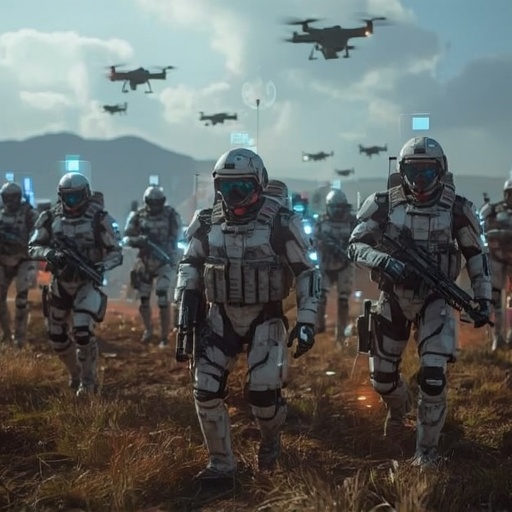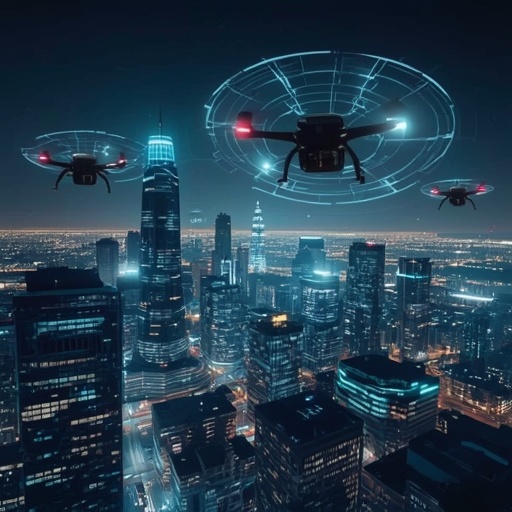
As the pace of technological innovation accelerates, the United States faces a rapidly growing vulnerability that was once confined to the realm of speculative fiction: the possibility of widespread drone attacks. Recent warnings from security analysts and defense experts underscore how exposed the nation remains, even as drones become increasingly sophisticated, affordable, and accessible to both state and non-state actors. These small, easily maneuverable machines—once viewed primarily as tools for photography, delivery, or recreation—can now be modified or weaponized with alarming ease, offering malicious actors unprecedented reach and capability.
The concern lies not merely in the drones themselves but in how swiftly their capabilities are evolving. Modern quadcopters and fixed-wing drones can evade traditional radar systems, operate autonomously using pre-programmed flight paths, and carry payloads capable of delivering significant harm. Defense mechanisms, designed for older paradigms of aerial threats, are struggling to adapt to challenges posed by swarms of inexpensive, agile devices that can overwhelm existing detection and interception technologies. As commercial innovations in materials, artificial intelligence, and battery efficiency advance, even recreational drones are acquiring endurance and precision once limited to military-grade systems.
Experts suggest that the gap between offensive capabilities and defensive readiness continues to widen. While the military has made strides in developing countermeasures—such as electromagnetic jammers, directed-energy weapons, and sophisticated radar signatures—these tools remain limited in both scope and deployment. Many civilian institutions, critical infrastructure sites, and urban areas remain unprotected against potential drone incursions. The very openness that defines the American airspace, long a symbol of progress and freedom, has become a source of risk in a new era where innovation can be rapidly repurposed.
At the heart of this dilemma lies an urgent call for collaboration between the public and private sectors. National defense cannot operate in isolation when commercial technology evolves faster than governmental procurement cycles. Companies that produce, regulate, and integrate drone-related technologies must now work in concert with policymakers and security agencies to establish smarter, adaptive systems capable of not only detecting but also neutralizing drones without endangering civilians. This might include advanced AI-based tracking platforms, urban monitoring networks, and coordinated response mechanisms capable of distinguishing between benign and threatening drone activity in real time.
The issue is not one of technological impossibility but of strategic prioritization. The speed at which threats are developing requires a similar acceleration in defensive thinking. Simply fortifying existing systems will not suffice; proactive innovation—guided by ethics, foresight, and cross-sector intelligence sharing—must become the cornerstone of national security in the age of autonomous flight. As drones reshape commerce, transportation, and warfare, so too must our concepts of protection evolve.
The warning is clear: the line between safety and vulnerability is narrowing. As advanced aerial technologies continue to permeate civilian life, the United States finds itself in a race to maintain stability in its own skies. Whether the next wave of drone-related incidents is thwarted or exploited will depend on our collective willingness to respond with agility, cooperation, and bold imagination. In this increasingly complex landscape, preparedness is not simply about defense—it is about resilience, adaptability, and the foresight to anticipate tomorrow’s unseen threats before they materialize.
Sourse: https://www.businessinsider.com/us-wide-open-drone-attacks-concerning-detection-company-2026-5