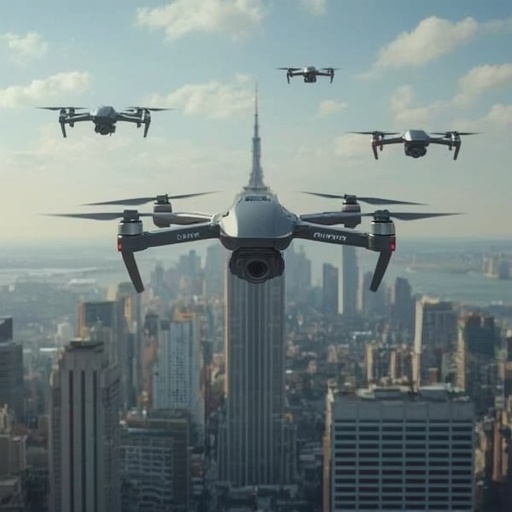
According to emerging reports, the United States government is seriously evaluating the possibility of providing targeted financial support to domestic drone manufacturers, a move that could profoundly influence the trajectory of the nation’s unmanned aerial technology sector. By engaging in preliminary discussions about funding mechanisms and strategic partnerships, federal policymakers appear to recognize the critical importance of strengthening homegrown innovation within the aerospace and defense industries. Such an initiative would not merely represent a temporary financial boost; rather, it could serve as a long-term catalyst for renewed competitiveness, stimulating research, design, and production across multiple dimensions of drone technology.
If these funding efforts materialize, the implications for the broader global drone ecosystem could be substantial. Historically, leadership in aerial innovation has been determined by a country’s ability to balance technological advancement with robust manufacturing capacity and regulatory foresight. Through investment in domestic enterprises, the U.S. may position itself to reclaim or reinforce its stature as a central hub of aerial robotics ingenuity, setting new benchmarks in autonomy, safety protocols, and performance standards. This enhanced strategic posture would likely ripple outward — influencing international markets, shaping allied cooperation, and redefining how innovation interacts with national security objectives.
Furthermore, the potential collaboration between public institutions and private firms underscores a dynamic tension that continues to shape the future of high-tech industries: the balance between government-driven vision and market-driven experimentation. Public funding can provide the stability and infrastructure necessary for foundational breakthroughs, while private innovation ensures diversity of design and rapid responsiveness to emerging opportunities. This synergy could usher in a period of exceptional creativity, where advanced drone capabilities — from logistics and agriculture to defense and environmental monitoring — are refined and expanded through shared investment and mutual ambition.
In essence, the U.S. government’s consideration of funding domestic drone companies signals more than a simple economic gesture; it reflects a strategic commitment to innovation as a form of national strength. If executed with precision and foresight, this policy could redefine the parameters of both technological leadership and industrial resilience, reaffirming the United States’ role as a pioneering force in the evolving global landscape of unmanned aerial systems.
Sourse: https://www.wsj.com/politics/national-security/ttrump-us-drone-company-funding-cadef1f7?mod=rss_Technology