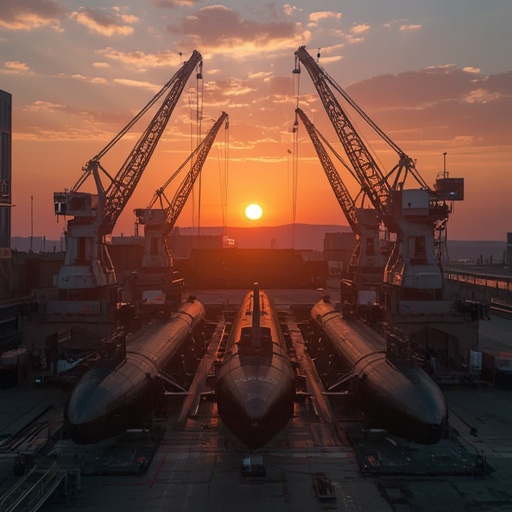
Across the United States, shipyards that have long formed the industrial backbone of naval power are encountering one of the most complex challenges in their modern history. As the Navy accelerates production of advanced submarines to meet mounting global demands, these facilities are finding it increasingly difficult to hold on to the next generation of workers. Many newly trained professionals, drawn initially by the promise of stable and technically fascinating careers, are now departing for other industries that offer less physically demanding environments and more predictable schedules.
The situation goes beyond a simple labor shortage—it represents a deeper cultural and economic shift in how younger workers approach their careers. In contrast to previous generations, who often equated long hours and physically taxing labor with professional pride and stability, today’s entrants into the workforce tend to prioritize a healthier balance between personal life and professional obligation. They are more likely to value flexible schedules, mental wellness, and opportunities for progression that do not come at the cost of physical strain.
This preference poses a profound challenge for shipyards, where traditional production practices rely heavily on manual precision, intensive physical engagement, and the unbroken continuity of multigenerational expertise. When these younger workers walk away, the result is not simply a temporary gap in staffing—it represents the gradual erosion of a unique heritage of craftsmanship that has taken decades to cultivate.
At the same time, the Navy’s demand for new vessels and maintenance cycles continues to rise, putting additional strain on the skilled labor base already stretched thin. Management teams across the maritime manufacturing sector are beginning to acknowledge that productivity goals can no longer be sustained through legacy approaches alone. To adapt, some shipyards are experimenting with automation, robotics-assisted assembly lines, and digital design systems aimed at reducing the most grueling aspects of the work while upskilling employees for higher-level technical roles.
Beyond technological enhancement, conversation within the industry is turning toward human-centered innovation—rethinking training programs, introducing mentorship models that value collaboration over hierarchy, and creating environments in which new employees feel intellectually as well as physically supported. These initiatives recognize that cultivating pride in craftsmanship must go hand in hand with respecting the evolving expectations of a new generation of industrial talent.
In essence, the question facing America’s naval manufacturing sector is not merely one of output but of balance: how can the nation sustain a workforce capable of delivering the complex engineering required for modern naval defense while also nurturing the very people upon whom that capability depends? The answer, as many industry leaders now suspect, will be found not only in technology or policy but in a cultural shift that treats innovation in human capital as strategically vital as innovation in machinery.
Sourse: https://www.businessinsider.com/young-submarine-workers-are-leaving-for-less-demanding-jobs-2026-5