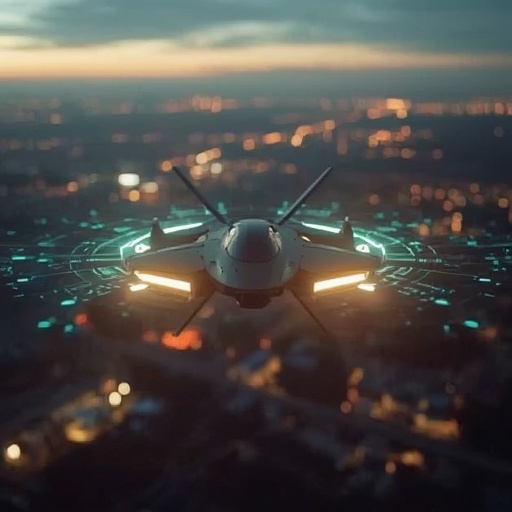
Russia has undertaken a significant modernization of its offensive drone fleet, integrating a suite of new electronic countermeasures designed to neutralize or disrupt Ukrainian interceptor drones that have recently achieved remarkable success. This development marks not merely a technical enhancement but a strategic evolution in the ongoing contest of aerial innovation over Eastern Europe’s embattled skies.
The modified Shahed drones—originally noted for their cost‑effectiveness and long‑range capabilities—have now been retrofitted with sophisticated electronic defense modules capable of shielding their communication and navigation systems from enemy interference. These upgrades allow the drones to maintain operational coherence even under intense electromagnetic attack, a capacity that substantially reduces their vulnerability to electronic jamming and direct interception.
On the other side of the conflict, Ukraine has demonstrated exceptional ingenuity by deploying nimble interceptor drones engineered to identify, pursue, and neutralize incoming threats. The extraordinary success of these defensive drones has compelled Russia to accelerate its own technological adaptations. What began as a relatively straightforward tactical competition has evolved into a comprehensive technological arms race—one in which artificial intelligence, signal security, and adaptive circuitry define who dominates the aerial domain.
This collision of innovation underscores a broader reality about modern warfare: the battlefield is increasingly shaped by the invisible contest of algorithms and electromagnetic waves rather than purely by numbers or firepower. Electronic defenses that once existed only in experimental research now play a decisive role in the operational survival of unmanned systems. Each confrontation in the air becomes a live experiment in applied engineering, providing both nations with real‑time data that will inform future weapons design.
For observers of defense technology, Russia’s decision to reinforce its attack drones with these advanced countermeasures illustrates both the pace of iterative military adaptation and the fusion of civilian electronic innovation into wartime applications. Meanwhile, Ukraine’s responsive development of new intercept tactics continues to challenge traditional assumptions about asymmetrical warfare. Together, these advances suggest that the airspace above Ukraine has become not only a tactical front but also a proving ground for the next era of digitally interconnected combat.
Sourse: https://www.businessinsider.com/russia-arms-drones-with-new-electronic-defenses-fight-ukrainian-interceptors-2026-5