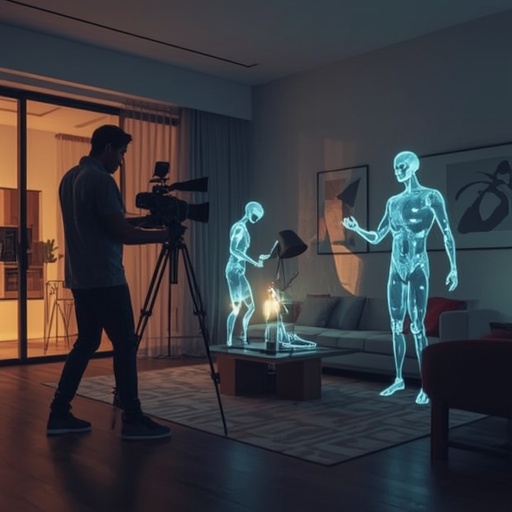
The rapid convergence of artificial intelligence and everyday domestic life has given rise to an entirely new kind of ethical dilemma—one that quite literally enters through the front door. A particularly provocative example of this intersection is a startup’s offer to provide complimentary home cleaning services in return for granting permission to record video footage of the chores being performed. On the surface, this arrangement might sound like a nearly utopian bargain: your floors are sparkling, the laundry is folded, and you pay absolutely nothing. However, under closer examination, this so‑called free service reveals a more intricate and deeply consequential exchange—one in which personal privacy becomes a negotiable commodity within the vast market of data‑driven innovation.
The company’s concept relies on transforming the details of ordinary household tasks into valuable training material for its machine‑learning systems. Every sweeping motion, every maneuver of a vacuum, even the casual human approach to tidying clutter provides nuanced behavioral data that can fine‑tune AI models intended to replicate human efficiency and adaptability. While this might accelerate technological progress, the implications extend far beyond mere convenience. The cameras that capture domestic activity also record the intricate realities of private life—spaces that are traditionally shielded from scrutiny. What was once the sanctuary of personal freedom risks becoming a laboratory for algorithmic observation.
This initiative prompts crucial questions about consent and the evolving definition of personal boundaries in the age of ubiquitous data collection. To what extent can consent truly be considered voluntary when the incentive of a valuable, tangible service—professional cleaning—is offered in return? Furthermore, how should individuals evaluate the long‑term consequences of commodifying their own daily routines? Once recorded, such information rarely remains static; it may be stored, analyzed, or even repurposed in unforeseen ways as the AI systems improve and as companies monetize their vast datasets.
The ethical tension arises from the collision of two powerful forces: the public’s growing appetite for convenience and the technological sector’s reliance on granular human data to fuel innovation. Supporters of this model view it as an inventive partnership between humans and machines—a cost‑sharing arrangement in which residents contribute data instead of money, thereby accelerating the development of smarter home robotics or autonomous maintenance systems. Critics, however, perceive a more troubling pattern. They argue that this dynamic blurs the once‑clear line between participation and surveillance, allowing the normalization of cameras in private spaces under the guise of progress.
The broader societal question becomes inescapable: how much of our lived experience should serve as raw material for artificial intelligence? When everyday gestures such as washing dishes or wiping counters are transformed into data points, the notion of privacy evolves from a static right into a complex negotiation. The home—once considered the final refuge from external observation—may instead become yet another site of digital extraction.
In this emerging economy of convenience and data, citizens are faced with an uneasy calculus. Is the relief of outsourcing cleaning tasks worth the unseen cost of intimacy surrendered to invisible algorithms? For some, the promise of a spotless space without financial expense will outweigh abstract concerns about information ethics. For others, the idea that one’s domestic life could be cataloged, analyzed, and potentially commercialized will feel like an unacceptable intrusion.
One thing is certain: this proposal encapsulates the broader trajectory of modern technology, where comfort and efficiency often arrive entangled with trade‑offs that challenge our traditional moral intuitions. Whether viewed as visionary innovation or as an invasion of personal sovereignty, this quiet transformation of private life into digital capital demands that society reconsider what, in the age of intelligent machines, privacy is truly worth.
Sourse: https://www.theverge.com/ai-artificial-intelligence/940007/ai-companies-will-pay-for-robot-training-data