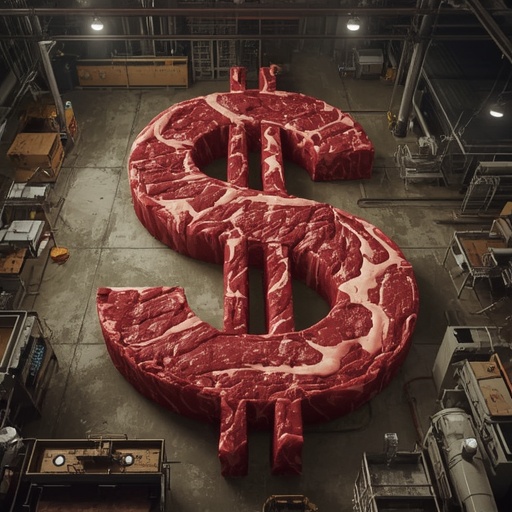
The recent surge in beef prices across the United States has sparked widespread discussion among consumers, farmers, and policymakers alike. Yet to truly understand this economic development, one must look far beneath the surface and examine the intricate network of market forces that dictate those price tags at the grocery store. It is not merely the result of general inflation or temporary supply chain disruptions; the phenomenon is deeply rooted in structural power dynamics within the meatpacking industry itself.
Over the past several decades, the American beef sector has undergone a dramatic process of consolidation. Today, approximately four dominant corporations exert control over roughly eighty percent of the national beef market. This concentration of ownership has produced an environment where a small number of firms effectively determine the flow of both supply and pricing. In practical terms, such dominance allows these companies to dictate how much ranchers receive for their cattle, how processing facilities operate, and ultimately how much consumers pay for steak, ground beef, or roasts.
This level of concentration not only limits true competition but also undermines the bargaining power of small and independent producers who struggle to compete against industrial giants. For example, independent ranchers are often forced to accept lower payments or face exclusion from essential processing networks tightly held by these conglomerates. The diminished competition can then translate into inflated prices for everyday shoppers while leaving farmers with shrinking margins.
The consequences ripple throughout the national food system: reduced market transparency, fewer choices for consumers, and growing economic inequality among producers. When the vast majority of production capacity is centralized in the hands of a few, even minor disruptions — such as plant closures or labor shortages — can trigger enormous market fluctuations. Thus, what may appear to be a simple issue of rising grocery costs is, in reality, a symptom of a deeply concentrated and imbalanced marketplace.
To build a truly equitable and sustainable food economy, greater attention must be devoted to policies that encourage fair competition, transparency, and resilience within the meat industry. Encouraging diversification among processors, enhancing antitrust enforcement, and supporting local supply chains could collectively mitigate the risks associated with overconsolidation. Only through a more balanced distribution of power can consumers, farmers, and communities achieve stability and fairness in the food system that nourishes the nation.
Sourse: https://www.businessinsider.com/beef-getting-more-expensive-2026-5