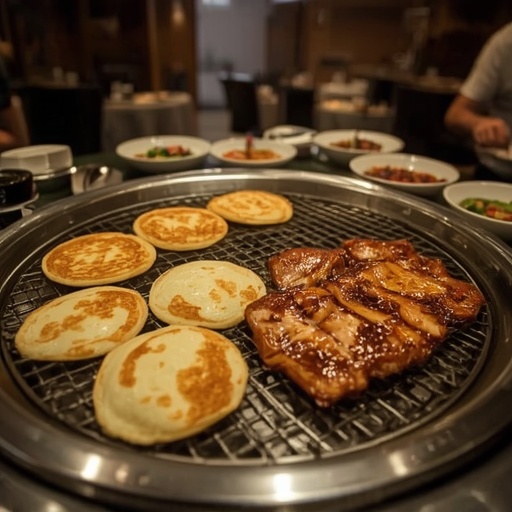
When planning your next indulgent Korean barbecue evening, it’s worth taking a moment to anticipate not only the aromas of sizzling meat and the lively clatter of side dishes but also the specific choices that will truly elevate your meal. Chef Samuel Kim, an experienced expert in Korean cuisine, emphasizes that a few classic selections can bring your dining experience from ordinary to exceptional, while others might gently hinder the feast’s harmony.
Begin your spread with jeon — the traditional Korean pancakes — that arrive at your table in a golden, crisp embrace. Their delicate, savory batter, interlaced with scallions or tender pieces of seafood, provides an ideal introduction to the textural play that defines Korean dining. These pancakes absorb just enough oil during frying to become satisfyingly rich without feeling heavy, making them the perfect warm-up act for what’s to follow.
From there, Chef Kim insists that few dishes capture the spirit of a Korean grill quite like samgyeopsal, or pork belly. Its succulent layers of fat caramelize over the heat, releasing aromas that promise indulgence. When wrapped in a leaf of lettuce with a hint of ssamjang — that deeply seasoned soybean paste — the pork transforms into a bite that balances richness, acidity, and spice with remarkable precision. The contrast between the smoky crunch of the seared meat and the cool freshness of the vegetables exemplifies why Korean barbecue remains such a captivating culinary ritual across the world.
However, the chef also offers a word of restraint. Certain dishes, while tempting on a diverse menu, do not lend themselves as gracefully to the communal grill. Fish, for example, with its delicate flesh and subtle flavors, tends to break apart or absorb excess smoke, obscuring the freshness that makes seafood so enticing elsewhere. Similarly, udon noodles—a comforting favorite in many settings—can disrupt the steady rhythm of a barbecue experience. The thick noodles demand a different kind of attention and tend to feel misplaced among sizzling cuts of meat meant for direct flame.
Kim’s advice is simple but transformative: know what enhances the table’s story. By selecting items that celebrate texture, flavor contrast, and the joy of cooking over open heat, diners can find the sweet spot between authenticity and personal taste. In doing so, every bite — from the first crisp piece of pancake to the charred edge of pork belly — becomes part of a deliberate gastronomic performance that engages all the senses.
So, as you ready your chopsticks and tune yourself to the lively murmur of a Korean restaurant, keep in mind the chef’s wisdom. Fill your table with dishes meant to shine under the glow of the grill, and let restraint guide you when temptation pulls you toward what doesn’t fit the moment. With balance, awareness, and a willingness to savor at your own pace, your next Korean barbecue can become far more than a simple meal — it can transform into an unforgettable culinary celebration of heat, flavor, and shared experience.
Sourse: https://www.businessinsider.com/korean-bbq-what-to-order-dishes-to-skip