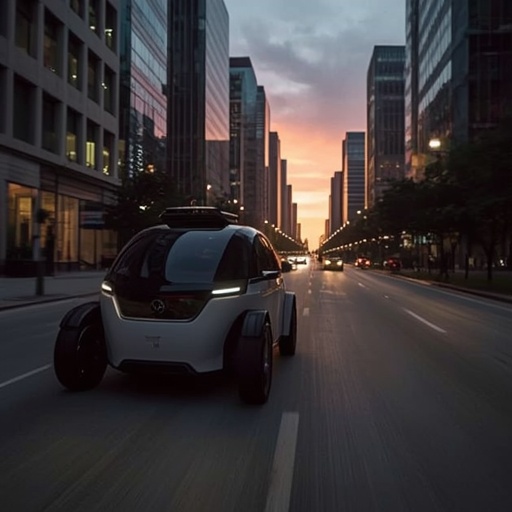
Tesla has once again strengthened its position at the forefront of autonomous vehicle innovation by broadening the operational boundaries of its unsupervised robotaxi service in Austin. This strategic move represents far more than a mere expansion of geographic coverage—it stands as a tangible indicator of Tesla’s confidence in the robustness, accuracy, and dependability of its self-driving system. The enlargement of the service area, even without a simultaneous increase in fleet size, underscores the company’s commitment to optimizing the efficiency of its existing vehicles rather than prioritizing quantity over performance.\n\nFor the residents and visitors of Austin, this development offers an increasingly immersive glimpse into a transportation model that no longer depends on human supervision behind the wheel. Each vehicle in the robotaxi fleet operates entirely through Tesla’s advanced Full Self-Driving (FSD) technology, which continuously processes a vast array of environmental data to make real-time navigational decisions. The algorithmic sophistication underpinning this technology allows these electric taxis to adapt seamlessly to varied urban infrastructures—from Austin’s dense downtown corridors to the more expansive suburban zones now newly incorporated within the service map.\n\nBeyond the technological dimension, Tesla’s expansion also sends a broader signal about the evolving readiness of regulatory frameworks and consumer trust in fully autonomous transit. Extending service operations implies that city authorities and Tesla alike have achieved a mutual understanding of safety standards, road readiness, and the responsibilities of deploying unsupervised vehicles within active public transportation networks. In effect, the city of Austin continues to function as a living laboratory, testing not only Tesla’s software capabilities but also society’s cultural comfort with machine-led mobility.\n\nFrom an innovation standpoint, this measured yet decisive enlargement highlights Tesla’s philosophy of iterative progress—a pattern of expanding functionality only after obtaining sufficient data-driven assurances of reliability. Each new district added to the service range contributes invaluable datasets that further refine the FSD neural network, improving decision-making accuracy and predictive foresight in a multitude of driving scenarios. This feedback loop between real-world deployment and system learning ensures that every incremental step brings Tesla closer to the long-envisioned horizon of large-scale, self-sustaining urban autonomy.\n\nWhile the fleet’s total number of robotaxis remains essentially constant, the ability to efficiently manage a wider area with the same resources reflects Tesla’s mastery of technological integration and operational scalability. The company demonstrates that intelligent optimization—through machine learning and computational foresight—can often substitute for mere fleet expansion. This approach embodies Tesla’s broader ethos: progress achieved not through brute production, but through continuous calibration of intelligence and efficiency.\n\nIn the grander context of electric mobility, Tesla’s Austin initiative serves as both a technological showcase and a social experiment. Every ride taken in one of these vehicles subtly reshapes public perception of autonomy, inching society closer to a future where transportation is as much about data and design as it is about movement. With each additional neighborhood added to the map, Tesla’s unsupervised robotaxi network becomes both a symbol and a testing ground for what a sustainable, self-driving urban ecosystem might ultimately become.
Sourse: https://www.businessinsider.com/tesla-robotaxi-unsupervised-service-area-austin-stock-2026-6