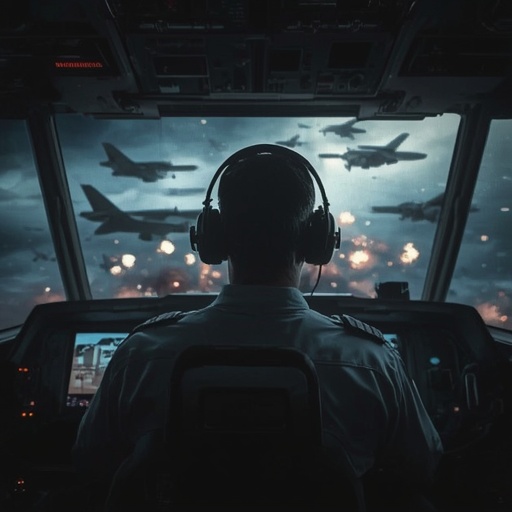
United Kingdom intelligence assessments have disclosed that Russian military units have, on several occasions, mistakenly bombed their own territories during ongoing high-frequency glide bomb campaigns. These unintentional strikes, occurring deep within Russian-controlled zones, are believed to stem primarily from cumulative fatigue among flight crews and a general deficiency in advanced training programs. The relentless operational tempo — characterized by continuous bombing sorties intended to sustain pressure on opposing forces — appears to have critically undermined pilot precision and situational awareness.
By highlighting the interplay between exhaustion, limited tactical preparation, and the technological demands of modern warfare, UK analysts underscore the broader implications for Russia’s air operations. Maintaining such an exhaustive pace of aerial bombardment, they argue, not only increases the likelihood of catastrophic friendly-fire incidents but also accelerates wear on equipment and personnel alike. In essence, sustaining high-intensity bombing missions without adequate rest cycles or retraining intervals has exposed systemic weaknesses within Russia’s defensive and offensive coordination.
Furthermore, these incidents illuminate a recurring operational vulnerability: the diminishing reliability of command-and-control structures under prolonged strain. When aircrews operate under severe fatigue, even sophisticated weapon systems such as precision-guided glide bombs become susceptible to critical human error. The accumulation of minor miscalculations — in flight trajectory, target identification, or geographical calibration — compounds rapidly, resulting in unintended strikes that undermine both morale and military effectiveness.
Strategically, these misfires reveal the broader costs of attritional warfare. They demonstrate how persistent high-intensity operations, while initially projecting strength and momentum, can paradoxically erode the very foundations of a force’s combat capability. Personnel exhaustion, logistical overstretch, and declining precision collectively create an operational environment where the line between offensive dominance and self-inflicted damage becomes precariously thin.
As evaluated by British defense intelligence, the pattern of these accidental bombings is not an isolated anomaly but an observable indicator of systemic decline in discipline, coordination, and technical oversight within Russian air operations. More broadly, this situation serves as a cautionary case study for modern militaries worldwide: speed and volume of attack cannot sustainably substitute for accuracy, training quality, or mental acuity. Ultimately, operational endurance — both human and technological — remains the decisive factor in long-term strategic success.
Sourse: https://www.businessinsider.com/russia-bombing-fab-guide-munitions-umpk-crew-fatigue-bad-training-2026-6