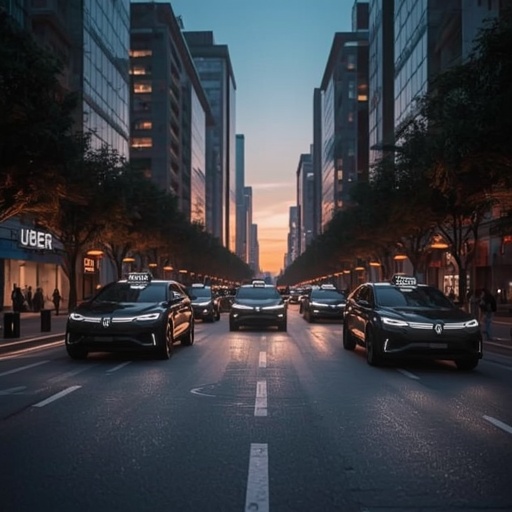
Uber, the global mobility giant, is entering a crucial new phase in its technological evolution, one that marks a deliberate and strategic balance between human drivers and autonomous vehicle innovation. According to CEO Dara Khosrowshahi, the company is consciously reducing the pace of new driver recruitment in select urban areas where self-driving taxis are currently undergoing trials. This move does not suggest a decline in human participation but rather a thoughtful recalibration of resources as Uber prepares for an era in which artificial intelligence increasingly powers transportation.
Interestingly, despite this selective slowdown in manual driver recruitment, the overall number of driver sign-ups across Uber’s platform continues to rise. This trend reflects a broader market reality: consumer demand for convenient, flexible, and on-demand mobility services remains robust and is expanding steadily in both established and emerging markets. As Khosrowshahi explained, Uber’s accelerating sign-up rates highlight the company’s continued relevance for drivers seeking income opportunities, even while it invests heavily in the long-term vision of automation.
This dual trajectory—paring down recruitment where autonomous fleets operate while intensifying activity elsewhere—illustrates how Uber is navigating the complex transition toward self-driving technology. Cities that are testing autonomous taxis serve as experimental hubs, where Uber gathers vital data and assesses how human and robotic systems can coexist efficiently within the same platform. For example, self-driving taxis can manage route optimization, nighttime rides, or high-demand events, while human drivers continue to handle complex customer interactions and specialized services.
Ultimately, this strategic shift signals not a rapid replacement of human drivers but a careful convergence of traditional and emerging technologies. It positions Uber as a pioneer in shaping a transportation ecosystem that is both intelligent and inclusive—one where innovation complements rather than displaces workforce participation. The company’s evolving model also underscores a broader industry trend: the mobility landscape is gradually transitioning from a purely human-operated network to a hybrid infrastructure in which automation enhances reliability, safety, and scalability.
In essence, Uber’s approach captures a defining moment in the evolution of urban mobility. By aligning current market growth with future technological capabilities, the company is ensuring that its ecosystem remains adaptable, resilient, and forward-looking. As cities continue to modernize their transport systems, Uber’s balance between expanding human opportunities and integrating autonomous solutions exemplifies how innovation can drive sustainable progress within the global transportation industry.
Sourse: https://www.businessinsider.com/uber-driver-recruitment-down-austin-atlanta-robotaxis-jobs-2026-6