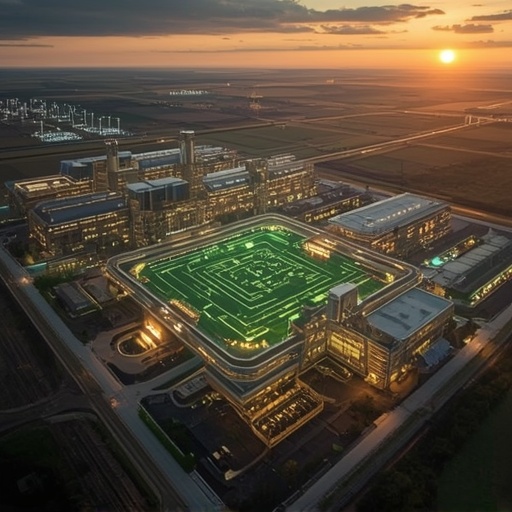
SpaceX’s bold vision to construct a colossal $55 billion semiconductor manufacturing complex in Grimes County, Texas, represents one of the most ambitious industrial endeavors in recent U.S. history. Known internally as Terafab, this monumental project seeks to establish an advanced hub for AI chip production—signaling Elon Musk’s unrelenting commitment to technological self-sufficiency and U.S.-based innovation. The undertaking not only underscores SpaceX’s expanding role beyond aerospace engineering but also emphasizes a critical national objective: reducing reliance on foreign semiconductor supply chains.
However, alongside the excitement generated by this technological leap, Terafab has become a focal point of contention and reflection. Supporters herald the initiative as a turning point that could accelerate America’s dominance in artificial intelligence and advanced fabrication, potentially creating thousands of high-skilled jobs while invigorating the Texas economy. They view it as a bold step toward securing a domestic infrastructure capable of meeting the exponential demands of AI processing in the years to come.
Conversely, critics have raised significant concerns regarding the project’s sheer magnitude, environmental impact, and socio-economic ripple effects. The immense scale of the proposed facility invites questions about sustainability, energy consumption, and long-term viability. Local communities are deliberating the balance between economic progress and preservation of environmental and social equilibrium, as the project promises both opportunity and disruption.
At a broader level, Terafab encapsulates the growing tension between technological progress and public apprehension over its consequences. As AI systems continue to proliferate across industries—from autonomous transportation to data-driven decision-making—the quest to produce the hardware that powers them has reached a geopolitical and ethical crossroads. SpaceX’s foray into chip manufacturing thus symbolizes not merely an industrial expansion but a philosophical gamble on how far innovation should be allowed to advance amid escalating ecological and societal pressures.
Ultimately, the conversation surrounding SpaceX’s Terafab endeavor is less about a single company and more about the evolving identity of American innovation itself: visionary, audacious, and perpetually contested. Whether this initiative becomes the cornerstone of a new technological era or a cautionary tale of overextension will depend on how effectively ambition is balanced with accountability in the years ahead.
Sourse: https://www.businessinsider.com/elon-musk-spacex-terafab-chip-factory-texas-opposition-ai-backlash-2026-6