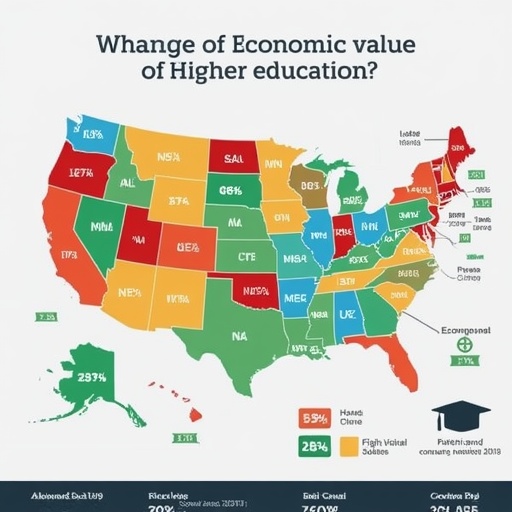
The relationship between higher education and financial success varies dramatically across the United States, and recent data help illuminate exactly where a bachelor’s degree yields the greatest economic benefits—and where its influence on income remains comparatively modest. This comprehensive analysis ranks all fifty states according to the relative salary boost conferred by holding a bachelor’s degree, providing a nuanced perspective on how geography intersects with educational return on investment.
In some states, obtaining a four-year degree substantially elevates earning potential, reflecting robust job markets in industries that heavily reward specialized knowledge and professional expertise. These regions often include states with dynamic urban centers, strong demand for skilled labor, and diverse economies driven by technology, finance, healthcare, or advanced manufacturing. For instance, data indicate that individuals in these high-value states may experience salary differentials reaching tens of thousands of dollars annually compared to their peers without degrees, highlighting education’s powerful economic impact when combined with opportunity-rich environments.
Conversely, other states exhibit far smaller wage gaps between college graduates and non-graduates, suggesting that factors such as industry composition, cost of living, and local labor demand significantly mediate educational value. In regions where employment relies heavily on trades, agriculture, or service-oriented roles, the marginal benefit of a bachelor’s degree may diminish, revealing that college education is not a universal guarantee of financial advancement but rather one element within a broader economic ecosystem.
Beyond pure income statistics, this ranking also sheds light on the wider social and policy implications of educational attainment. States that demonstrate strong returns on education often enjoy vibrant talent pipelines, higher workforce participation, and enhanced community investment in human capital. In contrast, those with narrower pay differentials may face structural challenges, including limited access to high-paying industries or disparities in postsecondary completion rates.
Ultimately, understanding where a bachelor’s degree truly ‘pays off’ empowers students, families, and policymakers alike to make more informed decisions about higher education. Whether the motivation is personal growth, long-term employability, or financial security, recognizing that geographic context influences the payoff of a college diploma underscores a vital truth: education’s value is real, but its greatest rewards emerge where opportunity and knowledge intersect.
Sourse: https://www.businessinsider.com/bachelors-degree-earnings-gap-states-ranked