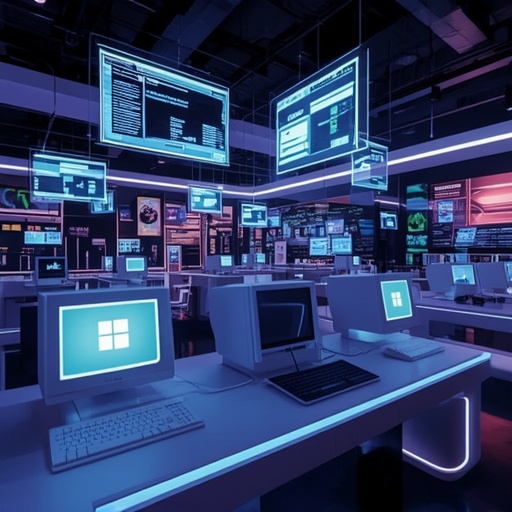
Step into an unparalleled exploration of computing history and innovation through the Virtual OS Museum — a meticulously curated digital archive that brings together more than six hundred distinct operating systems spanning over two hundred and fifty hardware platforms. This extraordinary collection, which showcases approximately seventeen hundred individual installations, provides a vivid and dynamic encapsulation of how our digital world evolved from its earliest experimental frameworks to the sophisticated systems we rely on today.\n\nDeveloped by Andrew Warkentin, a dedicated technologist and historian of computing, the Virtual OS Museum was conceived not merely as an exhibition but as an interactive preservation project—a living chronicle of decades of operating system development. Through advanced emulation technology, visitors are able to experience authentic recreations of historical environments directly from their own computers. The interface allows each user to immerse themselves in the look, feel, and underlying architecture of systems that once defined entire technological eras, bridging the gap between nostalgic curiosity and modern understanding.\n\nImagine seamlessly moving from the stark command-line minimalism of early computing to the colorful, icon-driven user interfaces that heralded the age of personal computing. The Virtual OS Museum provides a tangible sense of progress: every iteration, every interface innovation, every kernel refinement contributes to a greater narrative of human ingenuity and adaptation. Through this, users can trace the lineage of digital creativity—how visionaries of the past laid the groundwork for everything from cloud computing to mobile ecosystems.\n\nWhat truly distinguishes the Virtual OS Museum is its comprehensive scope and scholarly fidelity. Each system has been recorded, cataloged, and emulated with an eye for historical accuracy, ensuring that even obscure variants or rare prototypes are preserved for posterity. It simultaneously functions as a research tool for historians and developers, a playground for enthusiasts, and an educational resource for students seeking to understand the foundations of software engineering.\n\nExploring the Virtual OS Museum is like entering an expansive technological time capsule. It invites visitors to not only observe but to interact—to run applications, navigate menus, and rediscover forgotten conventions that once defined user experience design. Such engagement sparks both nostalgia and appreciation: nostalgia for the eras when computing felt experimental and exciting, and appreciation for the remarkable journey that led from primitive operating shells to today’s interconnected infrastructures.\n\nUltimately, the Virtual OS Museum stands as a testament to digital heritage and human creativity. It celebrates the diversity of technological expression and preserves it for future generations. Whether you are a seasoned developer, a scholar of computing, or simply someone fascinated by technology’s cultural evolution, this project offers an immersive, richly detailed way to experience the perpetual story of operating systems — the invisible frameworks that have shaped computing for over half a century.
Sourse: https://www.theverge.com/tech/945246/virtual-os-museum-dos-windows-mac-os