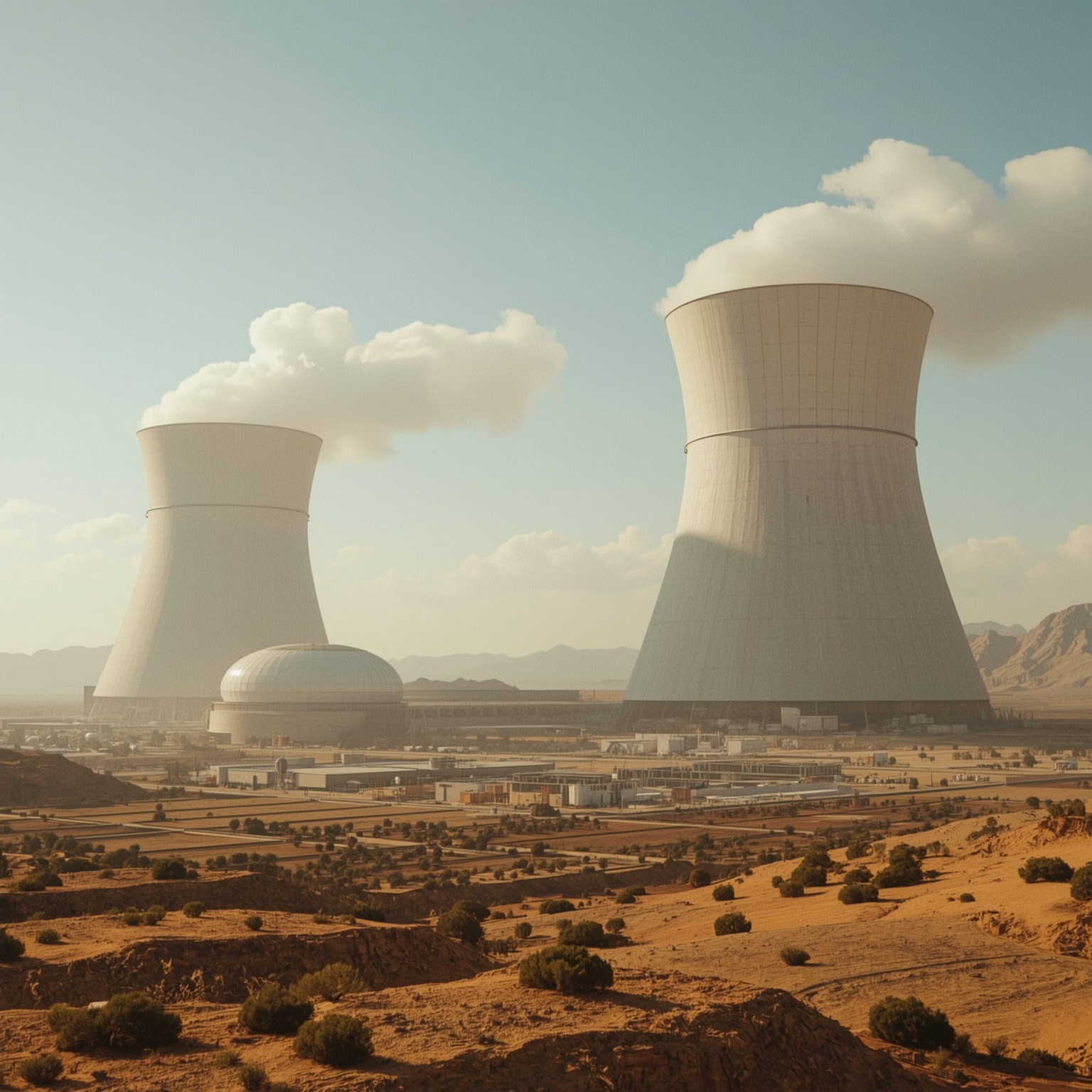
Over the last decade, the technology sector has taken an increasingly prominent role in advancing innovations aimed at mitigating the deepening climate crisis. Among its most celebrated pursuits has been the development of highly specialized technologies capable of extracting carbon dioxide directly from the atmosphere—a process known as direct air capture, or DAC. By capturing CO₂ from ambient air, these systems are designed to counteract decades of industrial emissions that have accelerated global warming. Major Silicon Valley firms, driven by rising public pressure and internal sustainability mandates, have heralded DAC as both a technological triumph and a moral imperative, pledging substantial investments and issuing a series of high-profile announcements to fund and promote its adoption.
This private-sector momentum once aligned neatly with the climate strategies championed by the Joe Biden administration, which had committed vast sums of federal money to building regional DAC hubs across the United States. That ambitious initiative framed carbon removal not merely as a scientific experiment but as an essential pillar of America’s broader effort to decarbonize its economy. However, the political landscape has shifted dramatically. The new presidency under Donald Trump, whose rhetoric has frequently dismissed climate change as a fabrication and prioritized fossil fuel extraction under the slogan of “drill, baby, drill,” marks a stark reversal. The current administration’s recent decisions to curtail or completely eliminate funding for clean energy programs—including at least ten existing DAC hubs—illustrate the extent of that ideological pivot.
These developments come at a critical juncture for the technology industry itself. Even as companies like Microsoft, Amazon, and Google have pledged billions toward achieving net-zero or even carbon-negative operations, their relentless push into artificial intelligence has paradoxically expanded their energy consumption and, with it, their carbon footprint. Massive data centers filled with energy-intensive processors demand extraordinary quantities of electricity, often sourced from fossil-fuel-heavy grids. As a result, the very companies attempting to finance atmospheric carbon cleanup are simultaneously contributing to its acceleration—a contradiction that has left them increasingly reliant on emerging carbon removal technologies to meet their environmental goals.
Federal retrenchment threatens that delicate balance. The U.S. Department of Energy recently nullified approximately $7.5 billion in clean energy and climate grants—affecting 223 projects nationwide—and confirmed that numerous DAC initiatives, including several state-designated hubs, were among those defunded. One notable example is a grant awarded to CarbonCapture, a California-based startup that had been conducting early-stage engineering research for a large-scale DAC plant planned in Louisiana. Microsoft, which had entered into a 2023 agreement with CarbonCapture to remove atmospheric carbon as part of its pledge to become carbon negative, now faces uncertainty regarding that partnership’s domestic viability. Consequently, CarbonCapture has announced plans to relocate its first commercial pilot project from Arizona to Alberta, Canada, signaling a potentially broader industry migration away from the United States.
CarbonCapture’s decision had been taking shape for months, its leadership having anticipated diminishing federal enthusiasm for DAC following the election. Indeed, Trump’s fiscal year 2026 budget proposal explicitly identifies carbon removal programs as wasteful components of what it derides as a “Green New Scam.” When asked about the funding cuts, CEO Adrian Corless explained that without federal backing, the Louisiana project could no longer proceed. The company’s other collaborations—spanning proposed installations in California, Illinois, and Arizona—now appear similarly jeopardized. According to Corless, this rollback will inevitably erode the international prominence the United States had achieved under the prior administration as a global leader in carbon removal research and deployment.
Microsoft was also expected to serve as one of the anchor clients for a federally supported DAC hub in Louisiana being developed by other firms, part of a $3.5 billion initiative launched by the Biden administration in 2022. Interestingly, several projects closely associated with the fossil fuel sector, including those sponsored by Chevron and Occidental Petroleum, remain unaffected by the Department of Energy’s present cuts. Occidental’s carbon removal subsidiary, 1PointFive, for instance, continues to receive support for its massive DAC installation at the historic King Ranch. Notably, captured carbon from such facilities can be repurposed for enhanced oil recovery—an industrial technique that injects CO₂ into aging oil fields to extract otherwise inaccessible reserves—raising questions about whether some carbon removal efforts may paradoxically extend the fossil fuel era. Earlier this year, Occidental disclosed expectations that its carbon management ventures could facilitate the extraction of tens of billions of additional barrels of oil, a projection made after multiple discussions with the president himself.
Meanwhile, Amazon has inked an agreement to purchase a quarter-million metric tons of carbon removal from 1PointFive, reinforcing Big Tech’s financial commitment to DAC even as the regulatory environment grows more hostile. Yet smaller and less capitalized startups, which rely heavily on public-sector grants to advance groundbreaking but expensive technologies, may find survival far more difficult. Without sustained federal support, these enterprises could find themselves unable to progress beyond the experimental phase toward commercial deployment. As Erin Burns of Carbon180 observes, the government’s abrupt withdrawal of funding represents an abdication of a hard-won competitive advantage, undermining a sector that had positioned the U.S. at the forefront of climate innovation.
The challenges confronting DAC extend beyond politics and capital. Technologically, the process remains extraordinarily energy intensive, making the cost of capturing each ton of carbon prohibitively high at scale. For example, CarbonCapture previously abandoned a project in Wyoming due to the inability to secure sufficient electricity within an acceptable timeframe—an issue emblematic of the infrastructural bottlenecks that still constrain the industry. With demand for computing power skyrocketing as artificial intelligence applications proliferate, these stresses on the grid are only likely to intensify, complicating efforts by major cloud providers to claim meaningful emissions reductions.
Environmental advocates remain divided over DAC’s long-term value. Critics contend that dependence on large-scale carbon removal invites complacency and delays genuine decarbonization, functioning as a techno-fix that enables ongoing pollution. Conversely, supporters argue that humanity has already surpassed safe atmospheric carbon thresholds, rendering some form of removal indispensable to climate stabilization. Yet such debates may soon be overshadowed by new policy realities: under an administration systematically rolling back environmental protections—one that has even instructed Department of Energy employees to avoid using the term “climate change”—the amount of carbon demanding eventual removal is poised to expand, not contract.
Observers widely interpret the DOE’s latest budget cuts as part of a politically motivated campaign disproportionately affecting Democrat-led states, a byproduct of the protracted fiscal standoff that has pushed the federal government toward periodic shutdowns. Even so, their consequences extend across party lines; several rescinded grants were tied to projects sited in conservative states as well. Documentation reviewed by *The Verge* and other outlets reveals that what was officially categorized as a California grant in the DOE’s listings had actually been intended for implementation in Louisiana—a testament to the bureaucratic confusion surrounding these decisions. In addition to DAC, the terminated projects encompass the entire spectrum of clean energy innovation, including hubs focused on hydrogen production, advanced turbine manufacturing, and next-generation battery systems.
In the view of advocates like Burns, the nation is voluntarily relinquishing its edge at the very moment when sustained leadership in climate technology is most vital. She characterizes the reversal not as a simple policy correction but as a symbolic forfeiture of American innovation, remarking that it feels like the country is “spiking the ball,” prematurely celebrating defeat rather than striving for progress. The collective effect of these policy choices, combined with the surging carbon demands of digital expansion, raises urgent questions about whether the U.S. technology sector can continue to marry ambition with accountability in the uncertain years ahead.
Sourse: https://www.theverge.com/report/792812/trump-funding-cut-climate-carbon-removal-hub