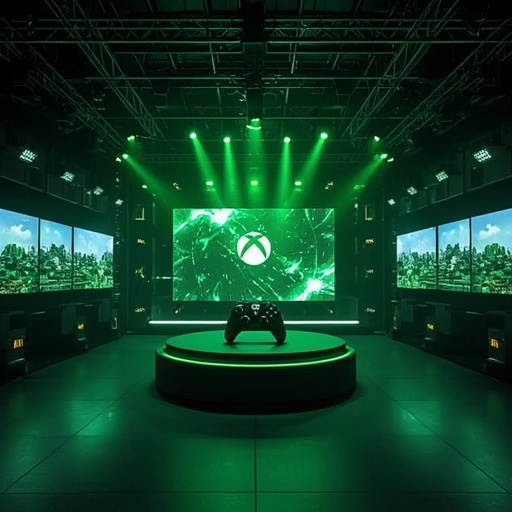
Microsoft entered its most recent Xbox Games Showcase on Sunday carrying both a heavy weight of expectation and a clear sense of urgency. The company, long recognized as a dominant force in the technology and entertainment industries, found itself in a position where it urgently needed to reaffirm confidence in its gaming division. Over the past year, numerous reports and market analyses have highlighted the Xbox console’s underwhelming sales performance, which did not align with the company’s initial forecasts and strategic objectives. This shortfall has been particularly concerning, as Microsoft was compelled to raise the price of its consoles on several occasions, a decision that, while financially necessary, may have contributed to diminished consumer enthusiasm. Compounding these difficulties, the conglomerate’s expansive portfolio of studios has struggled to meet internal sales expectations, with several recent releases failing to achieve the projected commercial momentum. Meanwhile, Xbox Game Pass—a service designed to redefine gaming distribution by offering vast libraries of titles for subscription—has paradoxically been viewed by some analysts as eroding traditional game sales, creating an ongoing debate about its long-term profitability and market influence.
Amid this backdrop of financial pressure and strategic reassessment, Microsoft has initiated a series of major leadership transitions and broad structural realignments. New executives have stepped into key roles, signaling a concerted effort to reshape the company’s creative direction and operational philosophy. In tandem with these leadership changes, the corporation has enacted a significant business recalibration that included a recent price increase for Xbox Game Pass, reinforcing its commitment to sustainability in a changing economic environment. These moves appear indicative of a company intent on redirecting its course—strategically preparing for the eventual reveal of its next-generation console. The Xbox Games Showcase thus represented not just a marketing event, but a symbolic milestone in Microsoft’s ongoing attempt to reestablish momentum and reaffirm its cultural relevance within the gaming ecosystem.
Over the course of the presentation, Microsoft unveiled more than twenty-five distinct trailers, a testament to both the breadth and ambition of its current creative pipeline. While several presentations offered updates to existing live service titles—such as the ever-evolving Fallout 76 and the pirate-themed community hit Sea of Thieves—others introduced entirely new projects and expansions that broadened the horizon of the Xbox universe. It is noteworthy that this strategic inclusion of live service updates diverged from Sony’s recent State of Play approach, which notably omitted similar ongoing-title highlights. Microsoft instead sought to convey a comprehensive vision: a gaming platform that nurtures both continuity and innovation.
Among the most anticipated announcements were a range of major titles, including several exclusives designed to strengthen the Xbox brand’s identity. Particular attention was drawn to *Gears of War: E-Day*, a franchise revival that underscores Microsoft’s reliance on established properties with enormous fan followings. At the same time, the presentation served as a global debut for new games that will be made available immediately on release day through Xbox Game Pass—a strategy that continues to function as both a competitive advantage and a market differentiator. One such reveal, *Persona 6*, exemplifies Microsoft’s success in securing partnerships with beloved third-party franchises historically associated with other platforms.
The event did not deliver a singular, seismic reveal equivalent to Sony’s recent *God of War: Laufey*, which captivated audiences worldwide. Nonetheless, Microsoft’s emphasis on leveraging its distinct strengths—chiefly its capacity to pair blockbuster releases with same-day Game Pass availability—suggests a deliberate and confident strategy aimed at reinforcing the console’s value proposition. Whether this approach will translate into increased hardware sales or accelerated subscriber growth remains uncertain. Market analysts and consumers alike continue to watch with cautious optimism. Yet one conclusion is unmistakable: Microsoft’s gaming sector is far from stagnating. On the contrary, the firm appears animated by renewed purpose, charting a patient yet resolute path toward reclaiming its stature at the forefront of interactive entertainment.
Among the featured titles showcased were an extensive array of anticipated releases: *Gears of War: D-Day*, *Fable*, *Halo: Campaign Evolved*, *Resonance: A Plague Legacy*, *Persona 4 Revival*, *State of Decay 3*, *Sea of Thieves: Season 20*, *Metro 2039*, *Bad Magpie*, *Wo Long 2*, *Join Us*, *Senua*, *Doom: The Dark Ages | Revelations*, *Crazy Taxi: World Tour*, *Age of Empires 4*, *Minecraft Dungeons 2*, *Magicians: The Devil’s Deal*, *Valor Mortis*, *The Elder Scrolls Online: Return of the Thieves Guild*, *Fallout 76: Infestations*, *Microsoft Flight Simulator 2024: World Update 22*, *Where Winds Meet: Hidden Mountain*, *Castlevania: Belmont’s Curse*, *Vivarium*, *Persona 6*, *Spyro: A Realm Beyond*, *Clockwork Revolution: The Heist*, and *Call of Duty: Modern Warfare 4 | DMZ*. Collectively, this impressive lineup signaled that Microsoft is not retreating from the forefront of gaming development but rather entering a renewed phase of creative expansion and strategic confidence.
Sourse: https://www.cnet.com/tech/gaming/all-the-trailers-from-xbox-games-showcase-2026/