As industries evolve at a staggering pace, Robot.com’s CEO, Felipe Chavez, is presenting an audacious yet deeply humanist vision of the future—one where automation serves as liberation rather than replacement. In his philosophy, robots are not the cold symbols of a mechanized society but the catalysts that can restore human ingenuity to center stage. By envisioning an interconnected ecosystem of intelligent machines capable of assuming mundane, repetitive, and demotivating tasks, Chavez aims to tackle one of the modern workplace’s most pervasive issues: burnout. Too often, employees are drained by tasks that are monotonous, leaving little room for the pursuit of meaning, creativity, or innovation. His ambition is not to take humans out of work but to return work to humans—specifically the parts that spark curiosity and progress.
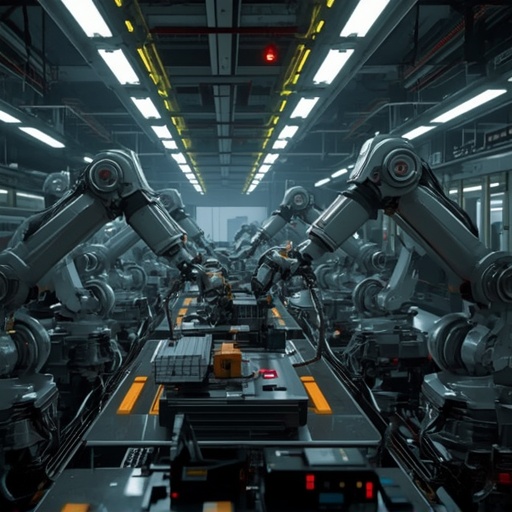
This redefined approach to automation suggests a smarter, not colder, technological paradigm. Instead of viewing robots as competitors in the labor market, Chavez invites society to see them as partners—tireless collaborators that can carry the weight of routine operations. Picture a manufacturing line where precision robotic arms handle repetitive assembly or a logistics hub where autonomous systems perform constant inventory monitoring. These examples illustrate the principle at the heart of Robot.com’s mission: technology as a workforce amplifier, expanding human potential instead of sidelining it.
For organizations, this technological vision promises a profound transformation in talent management, productivity, and employee engagement. Freed from endless administrative or operational burdens, professionals can focus their cognitive and creative energy on strategy, invention, and design—the very areas that drive competitive advantage in a knowledge economy. When individuals are no longer trapped in cycles of menial work, the workplace evolves from a site of output to a space of innovation and meaning.
The implications of Chavez’s forward-thinking perspective ripple beyond any single company or industry. It represents a cultural recalibration—a movement toward a world where automation enhances human dignity rather than erodes it. Instead of imagining a bleak, impersonal future dominated by machines, Robot.com proposes something radically optimistic: a collaborative ecosystem where technology shoulders the drudgery of modern work, allowing human talent to flourish in creativity, empathy, and purposeful thought. In short, the future that Felipe Chavez envisions is not one where robots replace people, but where they empower them to realize their fullest potential in an era defined by intelligence, innovation, and interconnection.
Sourse: https://www.businessinsider.com/robot-com-ceo-automation-kiwibot-delivery-robots-humanoids-future-labor-2026-6