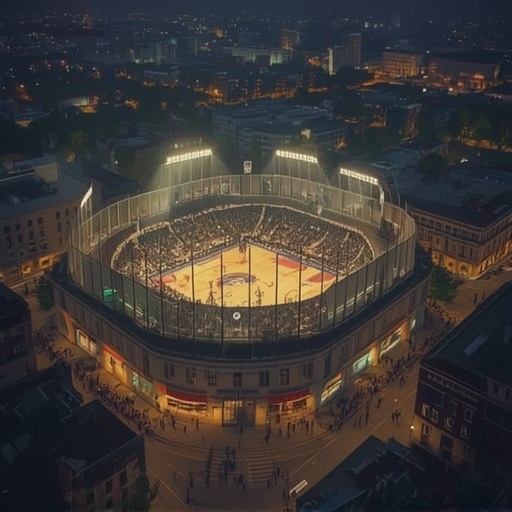
The abrupt cancellation of the highly anticipated Knicks watch party outside Madison Square Garden has evolved far beyond an ordinary scheduling dispute. What initially appeared to be a simple administrative decision has morphed into a public confrontation between New York City officials and the ownership of one of the city’s most iconic sports franchises. This incident underscores not only a struggle for influence over how communal events are hosted in shared spaces but also the intricate relationships between public authority, private enterprise, and the cultural heart of the city.
The watch party was meant to be a moment of collective celebration — a vibrant display of unity where fans could gather beneath the city lights to cheer for their team. Instead, its cancellation has illuminated deep-seated tensions within the urban ecosystem. City leadership argues that safety and logistical concerns justified the decision, emphasizing responsibilities to maintain crowd control and infrastructure stability. On the other side, team ownership perceives the move as an overreach of authority, suggesting motives tied more to political control than to public welfare. The discord reveals how sports, often celebrated for their power to bring communities together, can also expose rifts in civic governance and corporate power structures.
For the surrounding neighborhood, the implications stretch well beyond rhetoric. Local restaurants, shops, and street vendors had been preparing for a surge of foot traffic and potential revenue from thousands of fans expected to attend. With the last-minute cancellation, many small businesses now face an abrupt blow to their earnings, illustrating how large-scale decisions made in boardrooms and government offices can ripple through the economic lives of everyday New Yorkers. In a district that thrives on event-driven commerce, a lost evening of activity can translate into significant financial pain.
This feud also reflects a broader urban narrative — one where the balance between cultural enthusiasm and administrative control is continuously tested. Should public spaces surrounding privately owned landmarks serve as civic plazas open to communal celebration, or should they remain tightly regulated to preserve order? The answer lies at the intersection of law, economics, and public sentiment, making each decision a measure of the city’s values.
At its core, the controversy transcends the game itself. It invites reflection on who truly owns the public experience of sports in modern cities — the teams and corporations that steward the arenas or the communities whose passion gives them life. As debates continue and both city hall and MSG seek to assert their authority, one fact remains clear: the people and businesses surrounding the arena bear the heaviest cost when policy and pride collide.
The canceled watch party has thus become emblematic of something larger than basketball — a symbol of New York’s perpetual struggle to balance civic pride, economic opportunity, and the complexities of privatized cultural landmarks. In every sense, the court of public opinion has now become the arena where this game’s most consequential battle unfolds.
Sourse: https://www.businessinsider.com/knicks-finals-run-sparks-feud-between-james-dolan-mayor-mamdani-2026-6