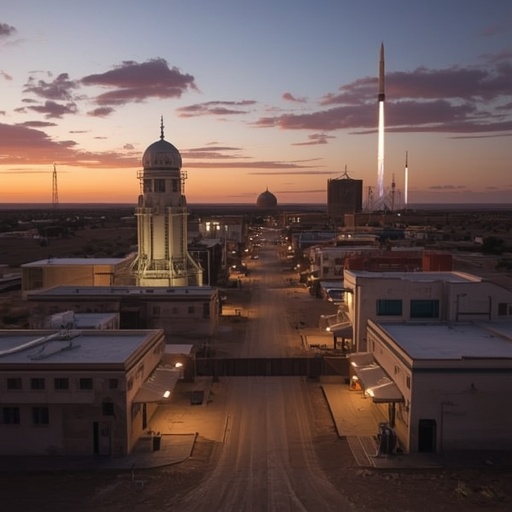
For decades, Brownsville, Texas, rested quietly along the southern border, known more for its cultural depth and cross-border commerce than for its role in the global innovation narrative. Yet, the city now stands on the threshold of a remarkable metamorphosis — one propelled not by traditional industries but by the elevated ambitions of space exploration. As SpaceX, Elon Musk’s pioneering aerospace company, edges closer to launching a highly anticipated initial public offering, the tremors of that potential financial milestone are being felt far from the trading floors of Wall Street. They reverberate through the streets of Brownsville, reshaping its physical landscape, economic prospects, and collective self-image.
This transformation is layered and complex. On one hand, SpaceX’s presence has brought unprecedented attention and investment to a community that once struggled to attract large-scale development. The company’s Starbase facility has effectively redefined the area’s horizon, with towering launchpads and gleaming rockets standing as symbols of aspiration and technological prowess. Property values have fluctuated, local infrastructure is evolving rapidly, and the once sleepy downtown hums with new business ventures catering to a growing workforce of engineers, technicians, and dreamers drawn by the gravitational pull of the aerospace frontier.
However, Brownsville’s redefinition extends beyond economics and visible infrastructure. It reflects a profound sociocultural shift, where local residents must reconcile pride in becoming a node of human spaceflight innovation with the growing pains of accelerated modernization. Questions abound: How will the community balance its historical identity with the demands of a high-tech future? Can small businesses, shaped by decades of regional tradition, adapt to a newly globalized economy centered on space technologies? And most critically, what happens when the ambitions of a private enterprise reshape not only the skyline but also the very rhythm of daily life?
A potential SpaceX IPO intensifies these reflections. Should the company become publicly traded, an influx of capital could amplify every existing trend — accelerating infrastructure projects, inviting external investors, and potentially widening the gap between rapid growth and equitable community development. Yet, with uncertainty comes opportunity. Brownsville has the chance to position itself as a sustainable model for how frontier economies can engage with aerospace innovation without losing their authenticity or accessibility. The conversation is no longer merely about rockets launching into orbit; it’s about how one town on the Texas border may chart a course to the future, using the power of human ingenuity and economic transformation to redefine what community progress truly means in the space age.
Sourse: https://www.wsj.com/business/what-the-spacex-ipo-means-for-this-texas-border-town-b4a0f5f5?mod=rss_Technology