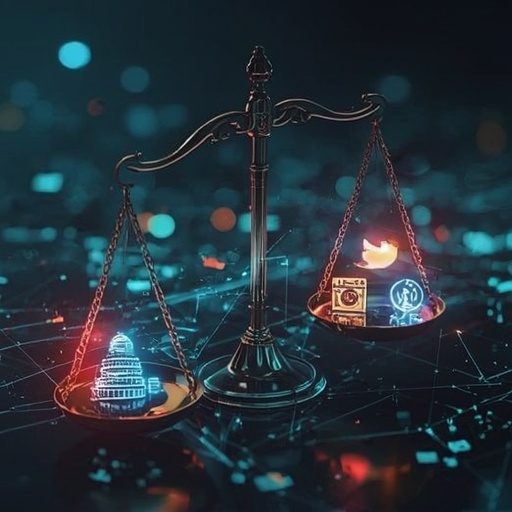
The JAWBONE Act represents a landmark bipartisan initiative in the ongoing dialogue over government accountability, free expression, and the power dynamics that increasingly define the digital age. This legislation seeks to establish a clear legal boundary between the legitimate functions of government oversight and the improper exertion of influence on private-sector platforms responsible for moderating public discourse. By allowing individuals to bring legal action against any government official who unlawfully coerces social media, artificial intelligence, or broadcasting companies to suppress or remove speech, the act underscores a growing recognition that digital communication is not merely a technical domain but a cornerstone of democratic life itself.
At its heart, the bill responds to the mounting concern that informal governmental pressure can pose the same threat to free expression as direct censorship. In recent years, public attention has shifted toward the opaque relationships between state power and digital intermediaries—entities whose algorithms and content policies shape what billions of users see, share, or know each day. The JAWBONE Act acknowledges that even when content is not ultimately taken down, the mere act of intimidation or behind-the-scenes persuasion can chill speech and distort the marketplace of ideas. By offering citizens clear recourse in such cases, Congress aims to recalibrate this delicate balance between regulation and freedom.
The measure’s implications extend far beyond partisan politics. It appeals simultaneously to advocates of civil liberties, who view uncoerced expression as foundational to democracy, and to proponents of transparency, who see it as essential to restoring public trust in both government and technology platforms. Whether the target of intervention is a social media post, an AI-generated commentary, or a traditional broadcast, the law insists on a single principle: that government actors must answer to the public when their influence threatens to silence lawful voices.
In a broader sense, the JAWBONE Act signals an evolving understanding of how constitutional freedoms must adapt within an increasingly algorithmic society. The question is no longer confined to whether speech may be restricted, but to how unseen pressures and incentive structures—often invisible to ordinary users—shape the very conditions under which speech occurs. By codifying a right to contest these dynamics through the courts, lawmakers are not only defending free speech as an individual right but also preserving it as a collective framework for accountability. The act, therefore, is more than a procedural safeguard; it is an affirmation that democratic discourse must remain free from covert manipulation, even as technologies and their guardians continue to evolve.
Sourse: https://www.theverge.com/policy/948525/cruz-wyden-jawbone-act-censorship