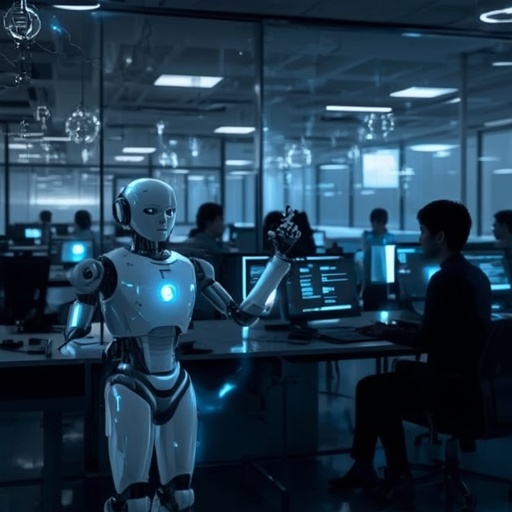
China stands at a pivotal juncture in its technological evolution, where the extraordinary speed of artificial intelligence adoption is simultaneously fueling national innovation and raising profound concerns about the sustainability of employment. As automation infiltrates more sectors—from manufacturing and logistics to education and finance—questions surrounding the adequacy of existing labor protections have become impossible to ignore. Even within the country’s official media landscape, long known for emphasizing national progress, influential outlets have begun to acknowledge the growing tension between technological advancement and worker well-being. The Workers’ Daily, directly affiliated with China’s primary trade union organization, has emerged as a particularly notable voice, urging government bodies and industry regulators to craft stronger frameworks that shield employees from displacement and exploitation amid the digital transformation.
This moment reflects a broader dilemma confronting modern economies worldwide: whether societies can continue to innovate without eroding the social foundations that sustain them. In China’s case, the stakes are uniquely high due to the nation’s immense workforce and its ambition to lead in next-generation technologies such as AI, robotics, and data engineering. If properly managed, this movement toward automation could yield higher productivity, efficiency, and prosperity. Yet without thoughtful safeguards in place—such as reskilling programs, fair labor legislation, and equitable access to new opportunities—many workers risk being marginalized in the very system their labor helped to build.
Public discourse now revolves around a delicate balancing act: how to integrate AI into diverse industries in a way that preserves human dignity, maintains economic inclusion, and ensures that progress does not exacerbate inequality. The call for stronger worker protections thus represents more than a reaction to short-term challenges; it reflects a vision for sustainable modernization where technological triumph is harmonized with the principles of fairness, stability, and shared prosperity. As China continues its rapid march into the age of intelligent automation, this question remains central—not merely for policymakers and business executives, but for every citizen whose livelihood and identity are shaped by the evolving relationship between human enterprise and machine intelligence.
Sourse: https://www.bloomberg.com/news/videos/2026-06-12/ai-sparks-job-loss-worries-in-china-call-for-protection-video