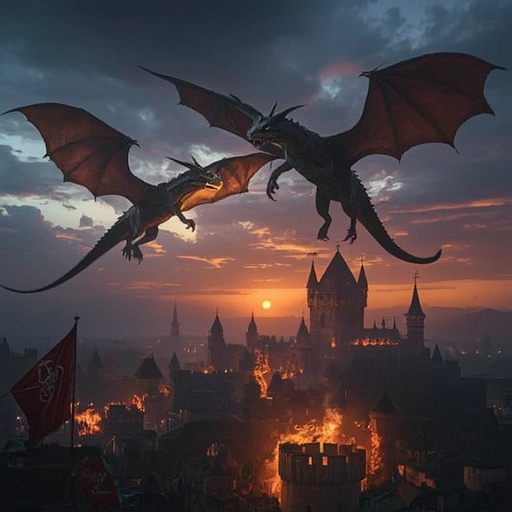
Season two of ‘House of the Dragon’ unfolded as a relentless cascade of power struggles, emotional sacrifices, and combustible confrontations, setting the stage for a realm consumed by ambition and vengeance. The season, which began in the smoldering aftermath of intense familial divisions, delved deep into the intricate politics that govern the Targaryen dynasty—a family bound by dragons and fractured by pride.
At the heart of the narrative lies the inevitable eruption of civil war within the Targaryen bloodline, a conflict that would become known through history as the infamous Dance of the Dragons. Following the devastating death of young Prince Lucerys Velaryon at the end of the first season, Rhaenyra Targaryen faced the impossible weight of grief and fury. Her sorrow swiftly evolved into a burning determination to reclaim the Iron Throne, which she viewed as her rightful inheritance. Meanwhile, King Aegon II—her half-brother and rival claimant—fortified his authority from King’s Landing under the counsel of his mother Alicent Hightower and grandfather Otto Hightower, both adept at the art of courtly manipulation and political subterfuge.
Throughout the second season, the storytelling gained breadth and emotional texture, offering not only scenes of brutality and fire but also explorations of loyalty, betrayal, and the devastating cost of royal ambition. The Black Council, aligned with Rhaenyra, strategized from Dragonstone, carefully weighing each decision with the awareness that one wrong move could incinerate their house altogether. In contrast, the Green Council sought to restrain rebellion and maintain the illusion of peace even as whispers of revolt began to infiltrate every corner of Westeros.
The dragon riders themselves emerged as metaphors for the perilous nature of power—mighty yet unpredictable, capable of both protection and annihilation. Every flight, every battle waged from the skies, was a vivid representation of the uncontrollable force of destiny that both elevated and destroyed those who dared to command it.
Unlike the sweeping chaos of open war, this season emphasized psychological warfare: espionage, clandestine dealings, and the inner turmoil of characters torn between love and duty. The human dimension of the Targaryen saga—the vulnerability that persists beneath layers of arrogance and fireproof blood—came sharply into focus, especially through Rhaenyra’s growing awareness of the tragic inevitability of her path.
From visually stunning dragon duels to intimate, candle-lit councils steeped in suspicion and mistrust, each episode demonstrated HBO’s mastery of depicting grandeur intertwined with emotional precision. The season concluded not with resolution but with escalation—a breathless anticipation of destruction yet to come. Every alliance, every oath, every act of vengeance braided itself into a complex tapestry foreshadowing the war that would engulf the realm.
To revisit season two is to witness the anatomy of inevitability: a dynasty corroding from within, a world trembling on the edge of fire, and a profound meditation on how desire—whether for love, justice, or power—inevitably demands its price. As the next season looms, audiences stand on the precipice of the all-consuming storm, prepared to watch dragons soar, kingdoms crumble, and history be forged once again in flame and blood.
Sourse: https://www.businessinsider.com/house-of-the-dragon-season-2-recap-2026-6