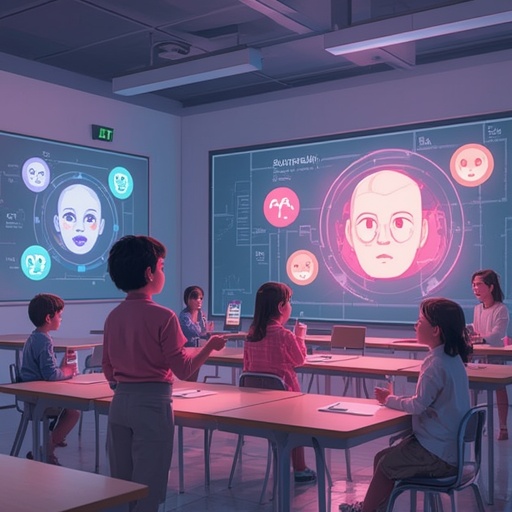
In the swiftly evolving landscape of our AI-driven age, one truth is becoming unmistakably clear: adaptability now surpasses perfection as the defining skill of the future. As technological innovations refine the very fabric of education, work, and communication, the children who will flourish are not necessarily those who collect an unbroken line of top grades, but rather those who have learned how to face uncertainty with emotional depth, resilience, and flexibility. Excellence in academic achievement, while admirable, is no longer sufficient to thrive in an environment that demands curiosity, empathy, and an ability to recalibrate when circumstances shift.
Psychologist Lindsay C. Gibson underscores this reality by pointing to a new hierarchy of developmental priorities for parents and educators. In her view, emotional maturity—characterized by self-awareness, empathy, and the ability to manage disappointment without collapse—has become a more reliable compass for navigating the disruptions and reinventions brought about by artificial intelligence. The children who will define tomorrow’s leaders, innovators, and collaborators will not be those who memorize formulas most efficiently, but those who can absorb feedback, recover quickly from setbacks, and adapt their strategies without losing confidence or compassion.
To illustrate, consider two students: one who performs flawlessly on exams yet panics when faced with ambiguity, and another who occasionally struggles academically but possesses unwavering emotional grounding. In the unpredictable reality of technological change and evolving jobs, the latter student will likely fare better—equipped to face novel problems, reinterpret their roles, and build relationships that foster collective creativity. Emotional adaptability becomes a lifelong asset, enabling growth even in moments of discomfort.
Thus, raising a future-ready child means emphasizing internal strength over external validation. Parents and mentors are now called to model emotional intelligence through open communication, tolerance for mistakes, and encouragement of thoughtful risk-taking. By cultivating curiosity and self-reflection, they help children understand that success is dynamic rather than static. Grades may open doors, but adaptability keeps them open.
As artificial intelligence continues to automate skills once considered deeply human, what remains distinctively valuable is precisely our humanity—the capacity to connect, reflect, and evolve. Children who grow up emotionally mature and resilient will not merely survive this new age; they will shape it, steering technology with consciousness and compassion. In nurturing emotional adaptability today, we prepare the next generation not simply to compete with machines, but to lead wisely alongside them.
Sourse: https://www.businessinsider.com/psychologist-parenting-emotionally-mature-kids-ai-career-work-2026-6