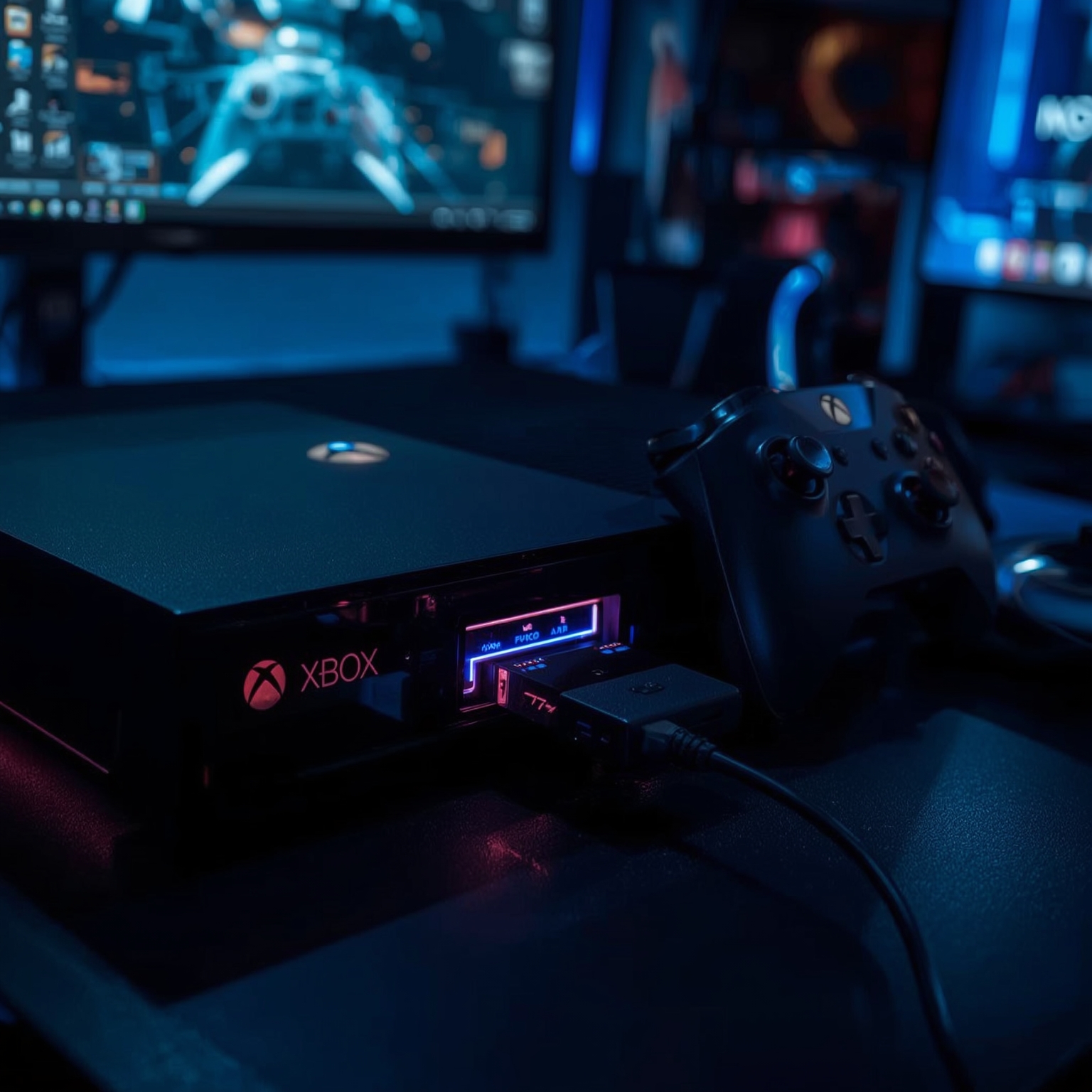
It’s remarkably common for Xbox Series S and X owners to encounter the frustrating problem of running out of available storage space. Modern games have grown increasingly massive in file size, with a single, graphically intensive title often consuming well over 100 gigabytes. This means that even a console equipped with what once seemed like generous storage can fill up at an alarming rate after only a handful of installations. Consequently, managing storage becomes a constant cycle of deleting older titles, uninstalling lesser-played games, and redownloading them later—a process that is not only inconvenient but can also take hours depending on one’s internet connection.
The most effective—and realistically, the only fully integrated—solution provided by Microsoft is to invest in an official storage expansion card manufactured by trusted brands such as Seagate or Western Digital. While Xbox consoles do allow users to store game files on a generic USB external hard drive, this method has critical limitations. Games placed on such drives cannot be launched directly from the external device; instead, they must first be copied back to the console’s internal SSD storage before they can run. This procedure negates much of the convenience of offloading games in the first place. By contrast, an official expansion card plugs directly into the proprietary slot located on the rear of the console and functions as a seamless extension of the primary internal drive. As a result, players can run any game from their digital library instantly, without the need to transfer files or compromise on speed.
Fortunately for those seeking to enhance their console’s capabilities, there are noteworthy deals currently available. Western Digital’s 512GB WD Black C50 expansion card can presently be purchased for about $85.99 at Amazon—a discount of roughly $8 off its regular price—which marks its second-best offer since May. For gamers who require more substantial capacity, Western Digital’s 1TB model is now priced around $119.99, representing a $30 discount. This promotional rate, found at both Amazon and Best Buy, is the lowest since July, although it falls just slightly short of setting a new record.
Seagate’s competing storage expansion line begins at a 1TB configuration, which is now available for approximately $123.49—a reduction of about $30.50—on both Amazon and Best Buy. Impressively, that price is lower than what was offered during the last Prime Day event. For players with particularly extensive libraries who wish to eliminate storage anxiety altogether, Seagate’s 2TB expansion card provides ample room for a large collection of titles and has dropped significantly to $199.99, shedding an impressive $160 off its original cost. This deal also marks a better offer than that seen during the most recent Prime Day sale. Finally, those seeking maximum storage capacity can consider Seagate’s colossal 4TB model, now available for $379.99, reflecting a substantial $120 discount and establishing a new all-time low price across both major retailers.
Each of these expansion cards is designed to integrate perfectly with the Xbox Series S and X architecture. They slide securely into a dedicated slot located behind the console—no awkward cables, external enclosures, or intermediate adapters are required. Once installed, the expansion card mirrors the performance characteristics of the console’s internal NVMe SSD, delivering identical read and write speeds. This ensures that games load quickly and run smoothly, with no sacrifices in visual quality or frame rate responsiveness. In short, the expansion card behaves as if it were native internal storage.
The amount of space an individual gamer will need varies drastically depending on their library and preferred genres. As examples, a large-scale online title such as Fortnite demands slightly more than 86GB of storage, while an indie classic like Stardew Valley consumes a modest 1.53GB—illustrating how diverse the range in file sizes can be. Therefore, a 1TB or 2TB card might be ideal for those who frequently play large, AAA releases, whereas a smaller 512GB option may suffice for users who focus on lightweight digital titles.
For players committed to purchasing only digital editions of games—rather than physical discs—tripling or even quadrupling the available storage space will be transformative. It minimizes the need to constantly delete and re-download games, a time-consuming process that can require several hours on slower or data-limited internet connections. Even physical copies typically necessitate substantial day-one updates, so storage concerns are unavoidable regardless of medium. Moreover, Xbox Game Pass subscribers, who regularly gain access to a fresh rotation of new titles each month, will find these storage upgrades nearly indispensable. In essence, a high-capacity expansion card not only enhances convenience but also future-proofs the user’s setup against the ever-growing demands of modern gaming.
Sourse: https://www.theverge.com/tech/698725/amazon-october-prime-day-xbox-storage-expansion-card-deal-sale-2025