In the household in which I was raised, the idea of multiple generations living together under one roof was unfamiliar, almost foreign. Extended family gatherings were rare and usually brief; on those infrequent occasions when my sisters and I stayed overnight at our grandparents’ home, the atmosphere was unmistakably that of guests, not residents. We understood those visits as special exceptions rather than a normal way of life. Bringing sleeping bags or expecting to bunk with cousins was inconceivable to us—those sorts of family interactions belonged to vacations, not daily living. Hotels, after all, had become the default space for visiting relatives. My parents, loving yet often exhausted, greatly valued their privacy and solitude. The responsibility of raising three energetic daughters was challenge enough without the added task of hosting guests for extended periods. Consequently, I spent my childhood within a small, self-contained world, one defined by familiarity, routine, and an unspoken boundary separating our intimate family circle from the broader clan.
Everything began to shift dramatically once I married. My husband came from a family whose culture of togetherness stood in sharp contrast to my upbringing. He was one of five siblings and part of a vast network that included sixty-five first cousins—many of whom lived mere minutes away. In his world, constant interaction with extended family was not just accepted but cherished. When we traveled to visit his parents, it was immediately clear that staying in a hotel was not an option; the expectation was to live and participate fully under their roof, to attend long family meals, join conversations that lasted hours, and immerse ourselves in this warm, bustling web of relationships. It was a kind of closeness that at first surprised me, but over time I came to appreciate and even admire its unselfconscious generosity.
As the years passed and we welcomed our own five children into the world, that inherited sense of openness began to shape my approach to parenting and hospitality. It no longer seemed strange to host groups of our children’s friends for meals or overnight stays. The lively energy of shared meals and impromptu sleepovers became part of our household rhythm. Yet despite this growing comfort with a busy home, I could not imagine anything beyond our nuclear unit sharing our living space indefinitely. I envisioned the familiar arc of parenthood that ends with an empty nest—one in which adult children venture out into the world to build lives of their own.
When our children grew older, I assumed, quite naturally, that they would establish independent households. I anticipated, with a mix of wistfulness and relief, a quieter stage of life in which my husband and I could enjoy privacy that had long been elusive. I imagined leisurely mornings, leisurely dinners, and the luxury of not coordinating multiple bathroom schedules or cooking large-scale meals every night. The prospect of solitude did carry a hint of melancholy, and I foresaw moments when the silence might feel almost oppressive after decades of vibrant, noisy chaos. Nonetheless, I accepted that rhythm as the ordinary course of family life. True to expectation, our children pursued higher education, moved into jobs scattered across the country, and found apartments far from home. The once-crowded house echoed differently now, filled with both peace and nostalgia.
But the universe, as it often does, had its own quiet revisions in mind. Our eldest son and his fiancée approached us one day with a heartfelt request: to move in and share our home for a time. We were immediately aware that in our future daughter-in-law’s Taiwanese culture, multigenerational living was not merely common but often considered a natural expression of mutual care and family continuity. We already loved her deeply, and welcoming them both seemed not a concession but a gesture of affection and respect for a different yet equally beautiful family tradition. With open hearts, we agreed.
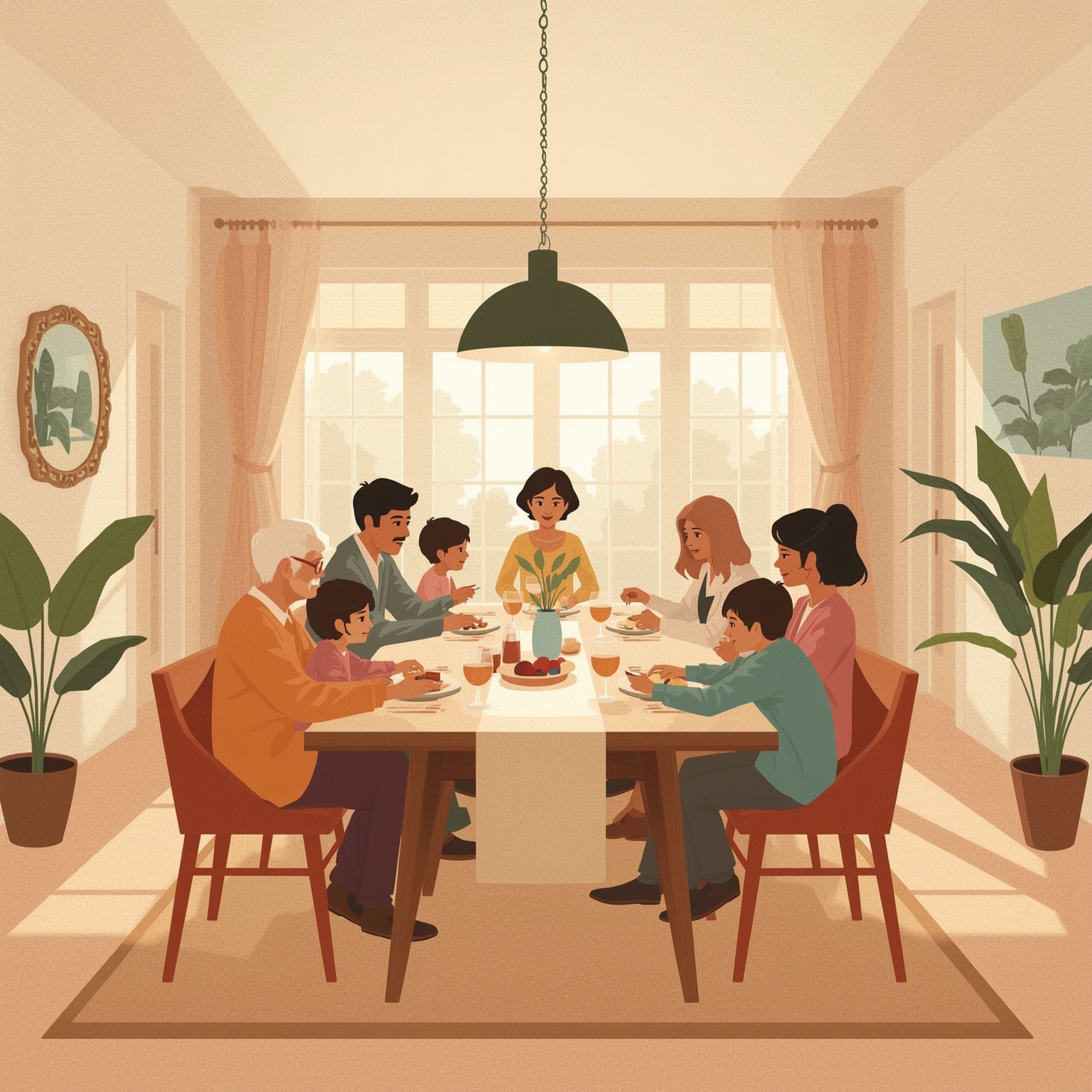
Once our new arrangement began, we made deliberate efforts to ensure that everyone’s privacy and comfort were respected. Our home was not vast, yet we configured it to provide each couple with their own sanctuary. All four of us led busy professional lives, but evenings became the cherished hour of reconnection, when we gathered around the dinner table to exchange the stories of our day. Our son and his wife are gifted classical musicians, so our household often resonated with the beautiful, living music of violin, piano, and flute. These moments filled our home not only with melody but with a sense of shared purpose and gratitude.
During the summers, my husband and I typically moved temporarily to the Delaware shore, where we directed and produced a children’s theatre program. Those months apart created natural intervals in our shared arrangement—opportunities for the younger couple to enjoy their own rhythm of independence while we pursued our artistic work. These intermissions served everyone well, bringing renewed appreciation and balance when we reunited.
A few years later, a new chapter opened with the birth of our first grandchild—a sweet, curious little boy who brought back the familiar sights and sounds of infancy. Suddenly we found ourselves once more covering electrical outlets, cushioning furniture edges, and adjusting to a home transformed by baby gear. My husband and I took great joy in spending generous amounts of time with our grandson, yet we understood clearly that the primary responsibility for child-rearing rested with his parents. There was mutual understanding and no trace of resentment: we delighted in helping whenever needed but maintained boundaries that preserved our independence and their autonomy. The baby often accompanied his parents to performances and rehearsals, absorbing music as naturally as air. When extra support was required, they sensibly enlisted a teenage sitter. The coexistence felt harmonious, rooted in respect and mutual generosity rather than obligation.
A decade later, our household dynamic evolved once again, this time incorporating two additional grandsons—each as lively and endearing as the first. We now number seven under one roof: four adults and three young boys. The character of the household has shifted, but its essence remains one of partnership and affection. My husband and I, now proudly known as Nana and Pa, take great pleasure in how smoothly we coordinate daily life. Tasks such as cooking, grocery shopping, and managing expenses are divided equitably, guided by quiet cooperation rather than explicit rules. Our son and his wife continue to parent with wisdom and warmth, creating an environment in which the children thrive academically, socially, and musically. I have no temptation to interfere, for there is deep trust in their competence. When disagreements surface, as they occasionally must in any close-knit household, we resolve them not through avoidance but through conversation around the same table that has hosted countless shared meals.
At this point in our lives, we have come to see our living arrangement not as a temporary adjustment but as a fulfilling, long-term choice. The boys love their schools, their neighbors, and the rhythms of the same community their father once roamed as a child. Watching them ride bicycles along familiar streets stirs in me a profound sense of continuity—a circle of life unfolding within the same walls that once echoed with my own children’s laughter.
My earlier vision of retirement, filled with quiet mornings and solitary routines, has transformed into something far more textured and complete. Instead of stillness, there is vitality; instead of isolation, connection. Though the bathroom is shared and the days are lively, I would not exchange this intricate, intergenerational existence for anything—not even for the luxury of a bathroom entirely my own.
Sourse: https://www.businessinsider.com/empty-nesters-welcomed-son-and-family-multigenerational-living-2025-10