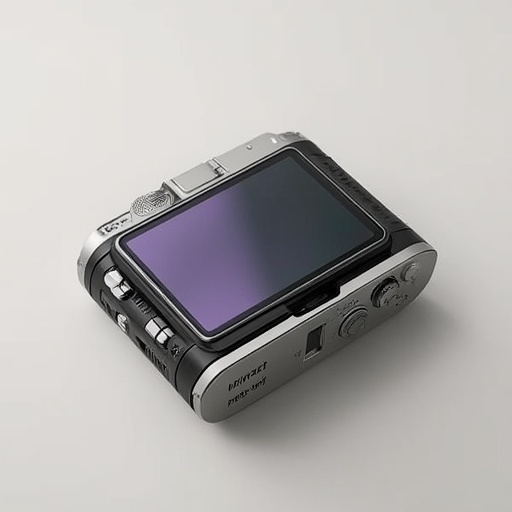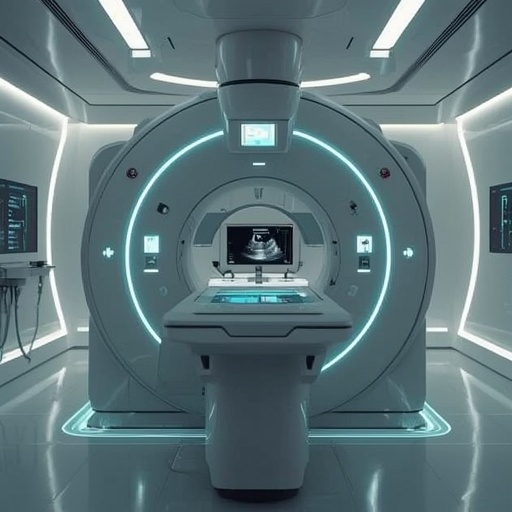
Midjourney’s latest announcement has sparked both fascination and debate within the realms of technology and healthcare. The company, best known for its boundary-pushing visual innovations, has now ventured into the medical domain with what it calls a “dunk-tank” medical scanner — an apparatus that seems straight out of speculative science fiction. This new prototype, according to the few details publicly disclosed, proposes an entirely novel approach to diagnostic imaging: one that is inexpensive, completely free of radiation, and potentially accessible on a global scale. On the surface, such a concept could represent a seismic leap forward in how humanity perceives medical technology. Yet beneath the futuristic veneer lies a pervasive uncertainty — while the scanner’s promises ignite imaginations, its actual efficacy remains unverified and largely theoretical.
The device’s design evokes curiosity: a sleek, transparent tank illuminated by layers of holographic projections and described, metaphorically or literally, as a ‘submersion system’ for whole-body imaging. It suggests a future where medical diagnostics might no longer depend on radiation-based methods, such as X-rays or CT scans, which raise both safety and accessibility concerns in many regions. The idea of a radiation-free, low-cost image acquisition process sounds transformative, especially for under-resourced areas or preventative care contexts. However, what stands conspicuously absent from Midjourney’s narrative is the technical substantiation that typically accompanies scientific breakthroughs — no peer-reviewed data, no clinical trials, and no clear explanation of how this technology works at a biochemical or physical level.
That omission has led to understandable skepticism. Healthcare innovation thrives not merely on visionary design, but on transparency, reproducibility, and regulatory validation. A device that claims to “see” inside the body without radiation demands rigorous testing, ethical oversight, and empirical evidence before it can earn the confidence of clinicians or patients. While Midjourney’s background in artificial intelligence and generative modeling suggests potential for novel data visualization or AI-assisted reconstructions, the leap from simulated imaging to clinical precision is enormous. Without verifiable results or expert review, observers are left to question whether this ambitious creation represents genuine medical progress or simply conceptual artistry masquerading as innovation.
Nevertheless, the broader implications remain compelling. The convergence of AI-driven creativity and medical technology challenges long-standing distinctions between art, science, and engineering. If Midjourney’s conceptual leap were to materialize, it could mark the beginning of an era where imaging tools are not only functional but aesthetically and economically optimized — rethinking medicine’s interface with both technology and human perception. But until reproducible outcomes are presented and validated through scientific channels, this so-called ‘dunk-tank’ scanner will occupy an ambiguous space between imagination and implementation — a vivid symbol of both the audacity and uncertainty that define the modern relationship between artificial intelligence and healthcare innovation.
Sourse: https://www.theverge.com/ai-artificial-intelligence/961265/midjourney-medical-ultrasound-scanner-behind-the-scenes-video