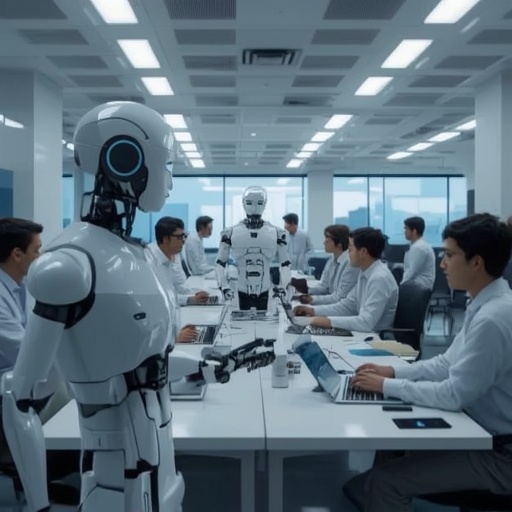
Goldman Sachs has released a thought-provoking projection suggesting that artificial intelligence (AI) could redefine the very fabric of the U.S. labor market. According to economist Joseph Briggs, as many as fifteen million jobs across the nation might be displaced by AI-driven automation and algorithmic advancements. Yet, rather than a purely pessimistic outlook, this transformation also signals the emergence of a new economic era characterized by innovation, enhanced productivity, and the birth of entirely new industries.
As AI systems evolve, they are expected to handle repetitive, data-centric tasks with astonishing efficiency, freeing human talent to focus on strategic and creative pursuits. For instance, routine administrative work, standardized data analysis, and certain customer service functions may increasingly be executed by intelligent systems, while novel roles in data management, machine learning ethics, and AI system maintenance continue to expand. This dual effect—eliminating some traditional positions while generating advanced technical and analytical opportunities—suggests a fundamental restructuring rather than a decline in human employment.
The report underscores that the future of work will not simply be about technology replacing people, but about the coexistence of human ingenuity and digital capability. Organizations poised for success will be those that embrace proactive reskilling initiatives, cultivate digital literacy, and foster adaptability among their teams. Governments and educational institutions will likewise play crucial roles in preparing the workforce to navigate such far-reaching technological disruption.
Ultimately, the Goldman Sachs analysis paints a picture of dramatic change tempered by immense potential. While millions of workers may face transitions, countless new avenues for economic participation and professional growth are projected to arise. The challenge and opportunity, therefore, lie in how individuals, leaders, and societies respond—by embracing innovation, continuously learning, and building the collaborative future that artificial intelligence makes possible.
Sourse: https://www.businessinsider.com/goldman-sachs-economist-predicts-ai-displacing-15-million-jobs-2026-7