Embarking on a journey that stretches across approximately 2,400 miles and unfolds over 53 continuous hours is far more than an ordinary travel experience—it is a voyage through time, geography, and personal reflection. Traveling aboard Amtrak’s celebrated California Zephyr, which links the urban energy of Chicago with the sunlit expanse of California, one encounters a moving panorama of the American landscape at its most varied and arresting. The train’s long, graceful route reveals the subtle transformation of the Midwest’s quiet plains into the formidable grandeur of the Rocky Mountains and, later, the serene majesty of the Sierra Nevada range.
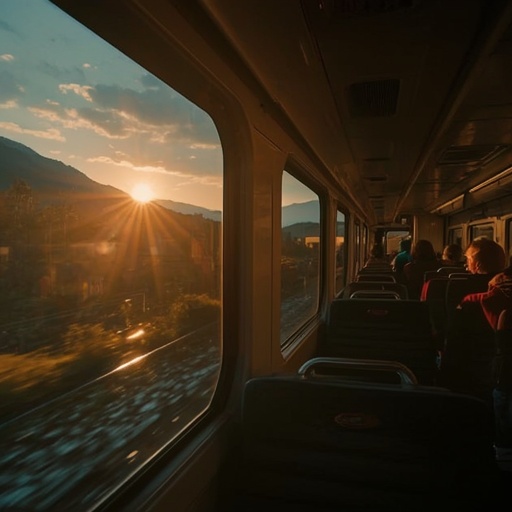
Within the intimate space of a private cabin, the rhythmic cadence of the rails becomes both soundtrack and companion. The Zephyr’s generous observation car—lined with panoramic windows from floor to ceiling—invites passengers to witness sunrises that bathe the horizon in deep amber and dusks painted with violet light cascading over distant peaks. Each hour brings a new tableau: endless stretches of golden grasslands, winding rivers catching fragments of sunlight, and mountain passes cloaked in mist. For those unaccustomed to long train journeys, this slow unfolding of scenery becomes an unexpected meditation on stillness and perspective.
Of course, the romance of cross-country travel exists in balanced contrast with its minor trials. Dining car delays test one’s patience, and unsteady Wi-Fi reminds each passenger of the value in disconnecting from constant digital noise. Yet these perceived inconveniences reveal themselves, in retrospect, as gifts of enforced pause—a restoration of pace in an era dominated by haste. Every delayed meal becomes an opportunity for observation, conversation, and introspection. The quiet camaraderie among fellow travelers—an architect sketching mountains, a family playing cards, a retiree recounting decades of journeys—illustrates how the Zephyr fosters a temporary but authentic community on wheels.
Amtrak’s California Zephyr epitomizes slow travel at its most profound: a reminder that a destination’s worth often lies not merely in arrival but in the gradual discovery of what lies between departure and conclusion. The private roomette offers comfort akin to a miniature retreat, while the train’s design encourages movement between solitude and social engagement. Whether one chooses to gaze silently at the receding landscape or share stories over morning coffee, the experience becomes a living metaphor for balance—between progress and pause, between individuality and shared experience.
Though moments of imperfection persist—occasional schedule shifts, the simple dining menu, or the faint hum of mechanical motion through the night—these features contribute to the authenticity of the adventure. Like the uneven cadence of life itself, the Zephyr invites acceptance rather than resistance. In the quiet glow of evening, when the train curves along a mountain ledge and the outside world collapses into darkness illuminated only by reflected stars on glass, travelers feel the subtle truth that the journey itself is the lesson. It teaches patience, perspective, and an appreciation for the incomparable art of moving deliberately through space and time.
When the train finally eases to its stop in California, the transition feels both ordinary and profound. One steps onto the platform transformed by a voyage that blended introspection with spectacle, endurance with beauty. The California Zephyr does more than bridge two points on a map—it threads together moments of human curiosity and wonder, proving that in the age of instant gratification, taking the longest route can sometimes become the most meaningful choice of all.
Sourse: https://www.businessinsider.com/california-zephyr-longest-amtrak-train-best-worst-parts-review