In an era defined by sleek touchscreens, AI-driven software, and cloud-based creativity, it might seem counterintuitive that inspiration could arise from tools that predate today’s hyper-digital norms. Yet there are moments when older technology—hardware built with tangible buttons, distinct textures, and a certain mechanical charm—offers a uniquely grounding experience. For one innovative music producer, the rediscovery of an old-school smartphone with a physical keyboard became more than a nostalgic indulgence; it became a catalyst that reshaped his creative rhythm and workflow.
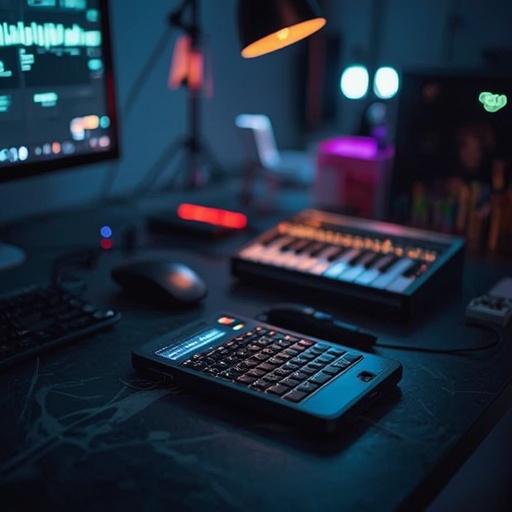
The producer describes how the device’s tactile keyboard, with its unmistakable click and deliberate response, brought a renewed sense of intention to his work. In contrast to the frictionless swipes and taps of modern screens, pressing an actual button imposed a brief yet meaningful pause—a micro-moment of reflection that allowed ideas to settle before being executed. That subtle physical resistance seemed to deepen his connection to the creative process, transforming fleeting inspiration into focused artistic output.
Psychologically, this makes perfect sense: creativity often emerges from environments that balance familiarity and novelty. The act of engaging with something from the past—particularly a tool that once dominated daily life—triggers memory, emotion, and sensory engagement. In a world saturated by virtual interfaces, the sensation of touch carries both symbolic and functional importance. The producer found that this older device helped strip away distractions, enabling him to concentrate entirely on composition, sound design, and emotional resonance.
His story serves as a reminder that innovation doesn’t always mean abandoning what came before. Sometimes, the technologies of yesterday possess precisely the constraints and imperfections that make them fertile ground for imagination today. Nostalgia, in this context, does more than romanticize the past; it reconnects the artist with an authentic sense of creation—one that values presence, patience, and physical interaction as essential components of ingenuity.
We often chase the next advancement, believing progress must always be defined by sophistication. Yet this example illustrates how true innovation can arise from revisiting the familiar, respecting its history, and discovering anew what made it remarkable in the first place. It invites a larger question for anyone in the creative field: what forgotten or “obsolete” tool still holds the ability to reignite your passion, sharpen your focus, or remind you why you began creating at all?
In the end, creativity isn’t bound by the novelty of our instruments but by the depth of our engagement with them. Whether digital or analog, new or old, it is the human impulse to connect, explore, and express that transforms any tool into a vessel for artistry and meaning. This story beautifully captures that truth—a vision of how past and present can harmoniously coexist, each fueling the other in a timeless loop of inspiration.
Sourse: https://www.theverge.com/entertainment/960958/flatbush-zombies-erick-the-architect-interview