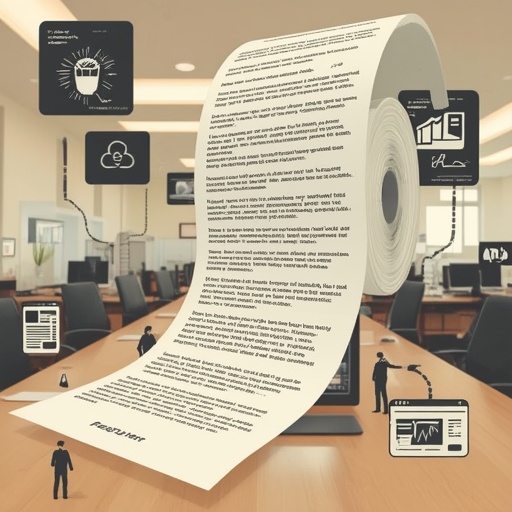
Over the past few years, something curious has happened in the world of recruitment: job descriptions, once concise expressions of a role’s essence, have ballooned into sprawling documents that seem almost never-ending. In many ways, they now resemble those famously long CVS receipts — overflowing with itemized details, repetitive sections, and add-ons that no one quite needs, yet everyone somehow expects. The culprit, or perhaps the catalyst, behind this transformation is artificial intelligence. What was originally built to make hiring more efficient and data-driven has inadvertently given rise to a new kind of verbosity — one that prioritizes exhaustive thoroughness over meaningful communication.
AI-powered job description generators, resume scanners, and keyword-optimization tools promised to make the recruitment process smarter and faster. And to some extent, they have. Yet, in their algorithmic pursuit of perfection, they’ve replaced the clarity of human intention with a torrent of qualifications, responsibilities, and corporate lingo. The result? Listings that attempt to capture every conceivable skill or personality trait a candidate might possess — from advanced analytical thinking to interpersonal empathy, from proficiency in obscure software to ‘a passion for innovation.’ This isn’t just overkill; it’s noise that obscures what truly matters.
For candidates, these hyper-detailed postings can feel discouraging or alienating. How do you apply for a position when it lists twenty-five mandatory skills and fifteen ‘nice-to-haves,’ many of which seem tangentially related at best? Talented applicants may self-select out of opportunities simply because they don’t tick every box on the algorithm’s wishlist. For recruiters, meanwhile, the deluge of boilerplate language creates its own set of problems. By trying to capture everything, these expanded job descriptions communicate almost nothing distinctive about the team, the company culture, or the values that set one workplace apart from another.
At its core, hiring has always been about human connection — the alignment between an organization’s purpose and an individual’s potential. The best job descriptions have traditionally reflected that relationship, striking a balance between clarity and aspiration. Yet as AI tools continue to automate wording, collect data, and optimize for search engines, many companies have lost that narrative thread. Instead of articulating what success looks like in the role, descriptions have become lists of transactional demands.
To restore meaning to the process, we need to reclaim the art of focus. A job description should be a clear and persuasive invitation, not a technical checklist. It should help candidates envision how their strengths can contribute to real outcomes, rather than drowning them in keyword-stuffed jargon. Technology can still play a useful role here — not as the author of the message, but as the assistant that helps refine it. When used thoughtfully, AI can enhance precision without erasing personality.
Ultimately, the future of recruitment depends on how well we combine efficiency with empathy. Let’s stop treating hiring as a data science experiment and start remembering that behind every resume is a human being seeking purpose, growth, and belonging. If we can infuse our AI-driven systems with that sensibility, maybe the next generation of job descriptions will finally fit onto something shorter than a CVS receipt — and say a whole lot more.
Sourse: https://www.businessinsider.com/job-descriptions-longer-than-cvs-receipts-ai-2026-7