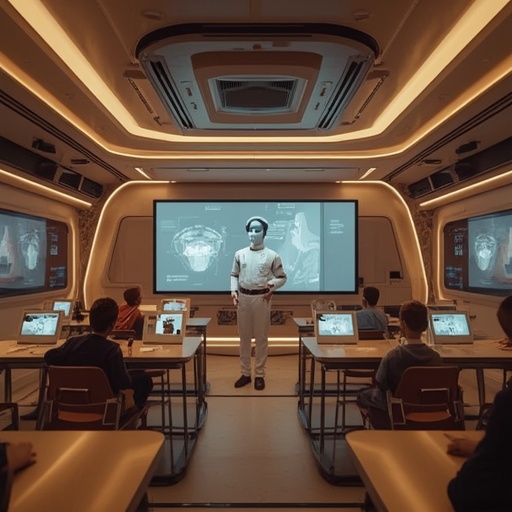
As artificial intelligence continues to expand its influence across nearly every facet of society, a fascinating cultural divide is emerging in the realm of education. While a majority of Americans remain wary of trusting AI—even in trivial decisions such as choosing dining options or entertainment recommendations—some of the nation’s most affluent families are taking a radically different approach. They are willingly inviting AI into one of the most sensitive and foundational aspects of life: the education of their children.
These wealthy households are experimenting with AI-powered learning environments and personalized tutoring platforms that use sophisticated algorithms to adapt lessons to the child’s pace, personality, and progress. In contrast to traditional classrooms that rely on standardized curricula and large student-to-teacher ratios, these AI systems claim to offer precision teaching—tailored micro‑lessons that evolve dynamically as the student learns. For the parents who can afford them, these tools promise a new level of customized education, a private and data‑driven path toward academic mastery that money and innovation jointly make possible.
For many observers, however, this development raises complex questions. Is this embrace of AI‑driven instruction a visionary glimpse into the future of learning—one that could ultimately benefit society at large once democratized—or is it merely an exclusive experiment reserved for the elite, a high‑tech form of educational privilege? Supporters contend that machine learning can enhance human potential, making education more efficient, individualized, and accessible. Skeptics, in turn, worry about ethical implications: dependence on data‑collecting systems, diminished human interaction, and the risk of deepening inequality between those who can access cutting‑edge tools and those who cannot.
Nonetheless, the trend is difficult to ignore. As advanced software assumes an increasingly active role in shaping how young minds engage with knowledge, the classroom of the near future may look fundamentally different—more interactive, adaptive, and algorithmically guided. Whether AI in education represents the dawn of a transformative learning era or remains an experimental luxury for the privileged few, it undeniably forces society to reconsider what teaching, learning, and trust will mean in a world where machines are no longer just tools, but active participants in a child’s intellectual development.
Sourse: https://www.theverge.com/ai-artificial-intelligence/961505/wealthy-ai-schools-alpha-forge-prep