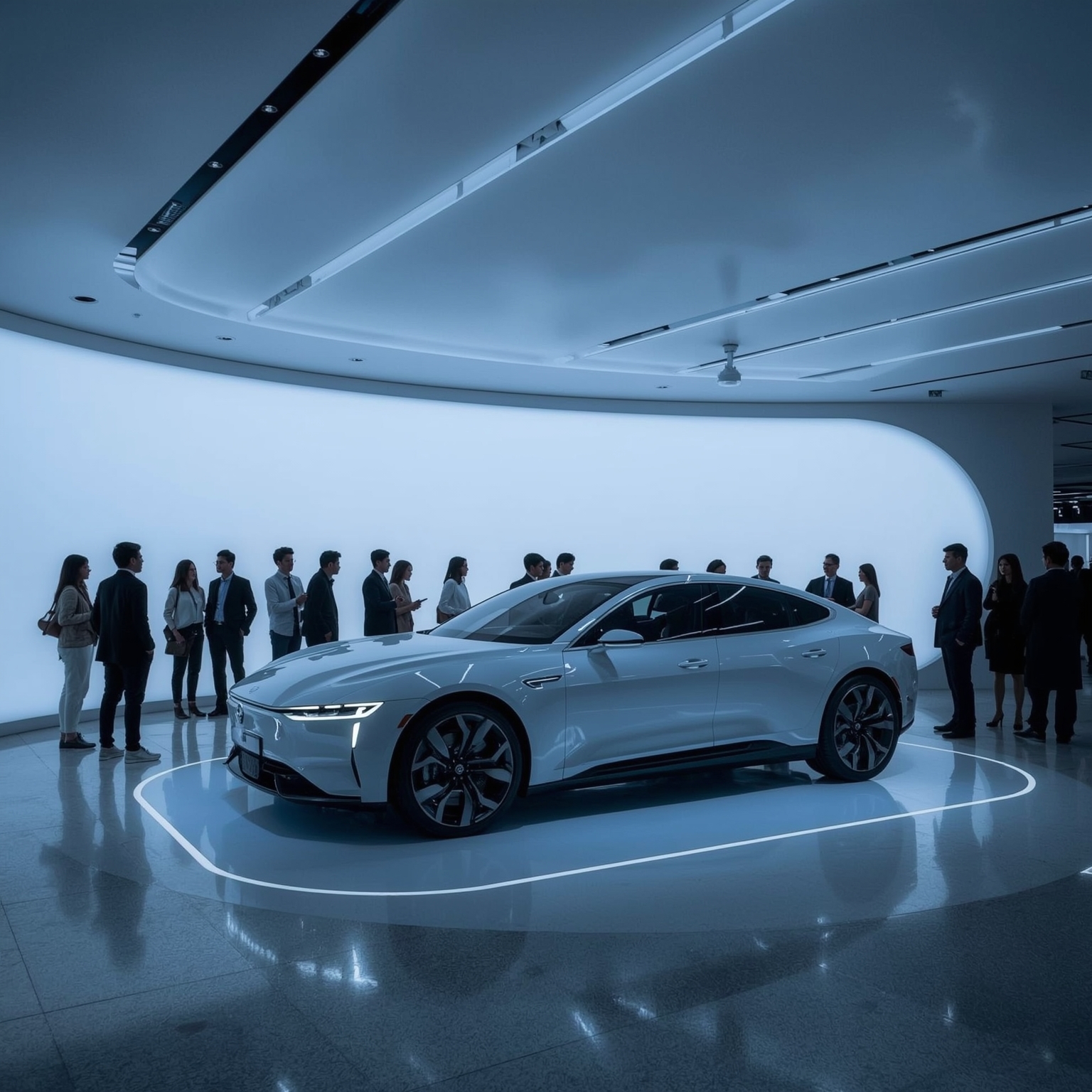
On China’s bustling online platform Weibo—often compared to Twitter for its rapid news sharing and public discourse—users have expressed a wide range of opinions regarding Tesla’s announcement of new cost-conscious electric vehicles. These mixed reactions reflect both China’s increasingly sophisticated consumer base and the competitive tension between foreign and domestic automakers. On Tuesday, Tesla revealed two new economical versions of its signature models, the Model Y and Model 3, positioning them as more accessible alternatives within its existing lineup. While these new entries boast lower price points, they intentionally omit several of the luxury features found in their higher-end counterparts, such as leather upholstery, integrated radio systems, entertainment screens for rear passengers, and the brand’s hallmark Autosteer capability, a component of the advanced Autopilot software suite.
The two models—designated the Model Y Standard and Model 3 Standard—will retail for $39,990 and $36,990 respectively, representing a reduction of roughly $5,000, or about ten percent, in comparison with their premium versions. Tesla confirmed that shipments are expected to begin next month, signaling a strategic move to broaden its market appeal by lowering the financial barrier for prospective buyers. Yet, despite the apparent affordability, this announcement met with skepticism among many Chinese online commentators.
On Weibo, some netizens dismissed the offering outright, using sardonic language to question its value proposition. One widely shared post mocked the so-called “beggar’s version” of the Model Y, noting that even the stripped-down vehicle, priced at approximately 230,000 yuan, remained expensive for what it offered. The comment went viral, attracting hundreds of likes and replies that echoed a similar sentiment: that Tesla’s cost reductions did not go far enough to justify what was perceived as diminished quality and missing features.
A number of users further remarked that the American company’s latest models still couldn’t compete favorably with domestic Chinese electric vehicles in terms of price or available features. One commenter observed that, for roughly the same cost, local manufacturers already provide electric cars with more advanced technology, greater comfort, and additional customization options, making Tesla’s strategy appear less compelling. Another user added that by spending an extra 10,000 RMB, they could purchase Li Auto’s Li i6—an electric SUV known for its value and innovation—implying that the local competition remains both fierce and attractive.
However, not all feedback leaned negative. A subset of Weibo users predicted strong sales despite the criticism, observing that public complaints often coexist with high consumer demand. “Plenty of people will claim disinterest,” one comment read, “but Tesla will probably sell them in droves once orders open.” Another user shared a more personal perspective, expressing strong admiration for Tesla’s design and technology but regretfully admitting that the car still remained financially out of reach. These diverging attitudes underscore China’s complex consumer psychology—a blend of aspiration, pragmatism, and growing national confidence in local brands.
Responding to requests for comment, Tesla remained silent, offering no official statement to Business Insider. The silence, however, does not mask the high-stakes context in which the company now operates. Across China, the world’s largest EV market, Tesla and approximately one hundred other automakers are engaged in an intense price war that has reshaped the industry’s competitive landscape. Just last year, Tesla initiated substantial price reductions across multiple models—including the Model 3, S, X, and Y—cutting up to 14,000 yuan, or nearly $1,930, in a bid to stimulate demand. Such tactics brought short-term visibility but also magnified investor concerns about shrinking profit margins. At the same time, BYD, Tesla’s strongest local rival, pursued an even more aggressive discounting approach, publicly acknowledging that its own margins had suffered due to what it described in an August report as ‘excessive marketing’ and a heavy reliance on promotional pricing.
Within Weibo discussions, some users went beyond pricing complaints to question Tesla’s underlying business rationale. As one post pointed out, the savings on the Model Y Standard—amounting to roughly 30,000 yuan—did not seem substantial enough to entice new buyers or significantly differentiate the model from its premium variant. Another critic speculated that Tesla’s leadership might be prioritizing short-term gains over innovation, suggesting that a modest 10% reduction was an inadequate response to rising domestic competition. “This is an enormous and dynamic market,” the post continued, “but instead of channeling its energy into new designs or technology breakthroughs, Tesla appears focused on mere cost-cutting. The Tesla we see today no longer mirrors the pioneering spirit of the past.”
One particularly pointed remark proposed that the company relocate its research and development operations to China, asserting that the local environment is far more conducive to electric vehicle innovation. The commenter claimed that due to its strong manufacturing ecosystem, abundant talent pool, and fast-paced efficiency, China could offer Tesla greater opportunities to adapt and thrive than the United States currently does.
Elon Musk himself appeared to anticipate this kind of criticism during Tesla’s earnings call in July, when he described affordability as the single greatest obstacle preventing widespread EV ownership. He emphasized that the primary barrier for customers was not a lack of enthusiasm for Tesla vehicles but rather financial limitations. As Musk explained, while demand for Tesla cars remains robust, many potential consumers simply do not possess sufficient disposable income to purchase them. The logic behind releasing lower-priced models, therefore, aligns with his stated goal: if Tesla can systematically reduce costs without destroying its brand value, more consumers will finally be able to own one of its vehicles.
Nevertheless, Tesla’s performance in the Chinese market has recently shown signs of weakness. Data from the China Passenger Car Association indicates that in the second quarter of 2025, Tesla sold only 129,000 units in China—a nearly twelve percent decline from the same period the previous year. These figures underscore the challenges Tesla faces in maintaining its appeal among Chinese consumers, particularly when competitors have learned to combine technological sophistication with localized branding and pricing flexibility. On the financial side, Tesla’s share price reflected market unease: on Tuesday, the company’s stock dropped by 4.4%, closing at $433.09, though it remains up over seven percent since the beginning of the year.
In this light, Tesla’s latest push toward affordability can be interpreted as both a defensive measure against intensifying competition and a strategic recalibration aimed at securing its foothold in an increasingly crowded marketplace. Whether these ‘budget’ vehicles will ultimately bolster Tesla’s market position or merely highlight the growing dominance of China’s domestic automakers remains to be seen.
Sourse: https://www.businessinsider.com/china-car-fans-react-tesla-new-affordable-model-y-standard-2025-10