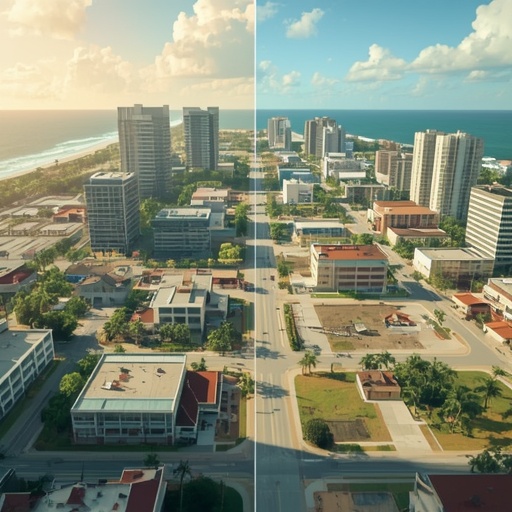
The city of Clearwater, Florida, finds itself at a pivotal moment, one that encapsulates the struggle between differing visions of urban renewal, communal identity, and ownership of a shared future. At the heart of this complex and emotionally charged conversation lies the city’s downtown, a stretch of urban land whose vacant lots and slow-moving renovations have come to symbolize not just physical stagnation, but also the tension between competing aspirations. On one side stand residents, business owners, and civic leaders who view the sudden surge of property acquisitions by individuals associated with the Church of Scientology as a force that has inadvertently — or perhaps strategically, in their eyes — delayed the area’s revitalization. They see empty storefronts and underdeveloped parcels of land as tangible reminders of unrealized potential, as spaces that could be humming with cultural life, local commerce, and economic growth if not for the uncertainty surrounding ownership and intent.
The opposing perspective, articulated by representatives and members of the church, paints a very different picture. In their telling, these purchases are not acts of obstruction but of strategic planning, part of a far-reaching redevelopment vision that aims to transform downtown Clearwater into a vibrant, cohesive urban center. For them, the gradual pace of visible progress does not signify inaction, but rather a deliberate, methodical effort toward long-term improvement — a vision built on patience, coordination, and monumental ambition. This tension between perception and intent, between suspicion and optimism, forms the axis around which the city’s current debate revolves.
It is, in many ways, a quintessential urban dilemma: a contest between revitalization and control, between grassroots community development and centralized, privately directed investment. Questions of transparency, accountability, and public benefit hover over the discourse, each side invoking its own interpretation of what constitutes genuine progress. The city’s officials, caught in the middle, must balance property rights and economic freedom with the collective desire for an inclusive, thriving downtown. It is difficult to disentangle economic policy from cultural context in Clearwater, where identity, faith, and politics converge on the same real estate.
As the argument gains visibility and intensity, Clearwater becomes a living case study in the broader challenges facing many modern cities. How does a community reconcile divergent priorities when its future direction, architectural form, and civic atmosphere are all subject to overlapping claims? Can a city’s heart be revived through large-scale private vision, or must its pulse come from the people who inhabit it daily? The answer, still unwritten, will ultimately define not only the skyline of downtown Clearwater but also the narrative of who truly shapes the soul of a city when ideology meets urban space. 🏙️ #Clearwater #UrbanDevelopment #CommunityDebate #CityPlanning #FutureVision
Sourse: https://www.wsj.com/us-news/locals-are-clashing-with-scientologists-over-the-future-of-this-florida-downtown-4f438234?mod=pls_whats_news_us_business_f