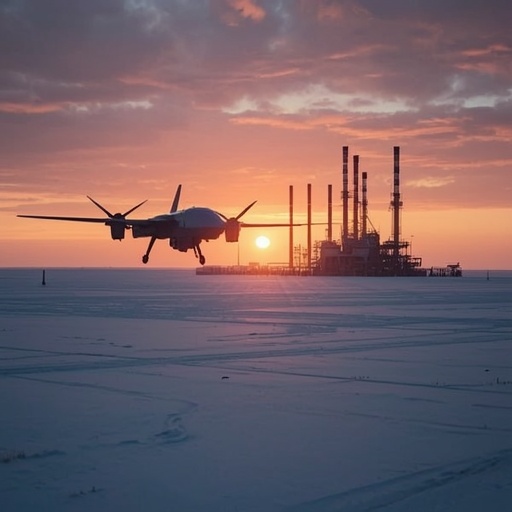
In what appears to be one of the most strategically momentous strikes of the ongoing Russia‑Ukraine conflict, multiple reports indicate that Ukrainian unmanned aerial vehicles managed to reach the very heart of Siberia, targeting the extensive Omsk oil refinery — widely recognized as Russia’s largest and most pivotal energy‑processing facility. This unprecedented event, covering an astonishing distance of roughly 1,700 miles from Ukrainian territory, represents not only a remarkable technical feat in the field of long‑range drone operations but also an indicative shift in the nature and reach of modern warfare.
The Omsk refinery, central to Russia’s vast fuel production network, holds immense importance for both regional supply chains and the national economy. A successful strike on such an infrastructure node, even if damage was contained, dramatically underscores a deepening vulnerability within Russian domestic space — one that was previously thought to be well beyond the operational reach of Ukrainian forces. The implications of this development extend far beyond a single tactical episode. It reveals a tangible enhancement in Ukraine’s defense and technological capabilities, highlighting innovations in drone endurance, navigation, and strategic precision that now enable operations on a scale once considered implausible.
From a geopolitical standpoint, this marks a turning point that transforms the established understanding of the geographical limits of the conflict. The ability to project force so profoundly into Siberia redefines the strategic calculus for both nations, demanding reassessment of defensive coverage and airspace monitoring deep within Russia’s hinterlands. Analysts note that such a strike may factor into heightened apprehension regarding critical energy infrastructure vulnerability — with potential ripple effects across global oil markets, logistics planning, and broader security frameworks.
Beyond the immediate economic consequences, the raid also carries symbolic resonance: it demonstrates Ukraine’s continuing intent to challenge and outmaneuver an adversary with superior conventional resources. The mission’s execution communicates adaptability and technical sophistication — qualities essential in a prolonged, asymmetrical confrontation. For Russia, the event could trigger renewed scrutiny over domestic air defense integration, long‑range threat anticipation, and the resilience of strategic installations historically presumed secure.
In sum, the reported long‑distance drone offensive on the Omsk oil complex epitomizes a new stage in the conflict — one characterized by innovation, extended operational reach, and widening geographical impact. It compels policymakers, defense strategists, and energy analysts alike to reconsider assumptions about the boundaries of the battlefield, the evolving role of autonomous aerial systems, and the intricate interconnection between military technology and global economic stability.
Sourse: https://www.businessinsider.com/ukraine-drones-omsk-refinery-attack-long-range-siberia-fire-point-2026-7