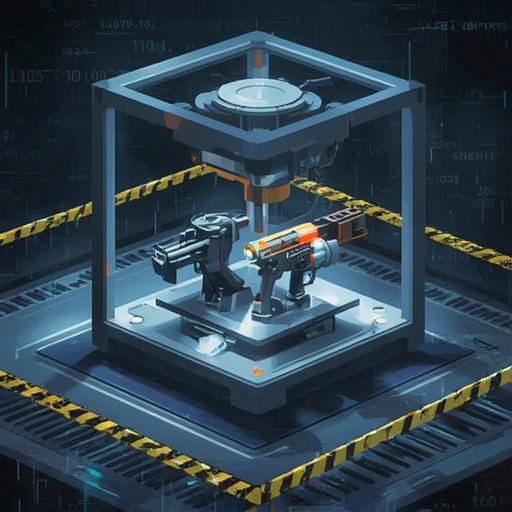
The emergence of 3D printing as an accessible, transformative technology has not only empowered inventors, makers, and creative professionals but has also fundamentally altered the landscape of personal manufacturing. Once viewed primarily as a tool for artistic exploration, prototype development, and industrial innovation, the 3D printer has now—perhaps inadvertently—become a vehicle for a more unsettling revolution: the creation of untraceable firearms, widely known as ‘ghost guns.’ These weapons, constructed from digital blueprints and carefully printed mechanical components, lack serial numbers or formal registration, rendering them virtually invisible to existing regulatory and tracking systems.
This development marks a pivotal turning point where cutting-edge technology intersects with public safety, law enforcement, and policy. The ability to manufacture a functional firearm from a desktop device raises profound ethical and societal questions. What happens when tools designed to democratize innovation also democratize danger? As more individuals gain the capability to produce lethal weapons beyond the reach of oversight, governments and communities are facing an unprecedented challenge—how to preserve the spirit of technological freedom while ensuring collective security.
Addressing the rise of ghost guns demands thoughtful collaboration among policymakers, technologists, and legal experts, who must reconsider the boundaries of privacy, regulation, and innovation in the digital age. Crafting effective responses requires an understanding of both the technical realities of additive manufacturing and the legal frameworks that currently struggle to keep pace with digital production. Examples from recent years demonstrate how quickly printed components can evolve from harmless prototypes into fully operational weapons—assembled quietly, at home, far from public scrutiny.
Communities, too, are being pushed to grapple with uncomfortable realities. The same ingenuity that enables breakthroughs in medicine, architecture, and design has also empowered individuals to exploit technological progress for destructive purposes. In this environment, education and ethical design practices become just as crucial as legislation. Advocating for responsible innovation means reinforcing awareness about the potential consequences of unrestricted digital sharing and emphasizing accountability within online maker cultures.
Ultimately, the conversation surrounding ghost guns is not solely about firearms—it is about the broader relationship between humanity and its inventions. As we stand on the threshold of increasingly autonomous and decentralized production technologies, the essential question remains: can we maintain a balance between the limitless potential of human creativity and the pressing need to protect society from the unintended repercussions of that creativity? The decision to act—or to remain passive—will define how this chapter in technological history unfolds. The readiness to confront the challenge of ghost guns will test not only our laws but also our collective willingness to integrate responsibility into the DNA of innovation itself.
Sourse: https://www.theverge.com/tech/960802/3d-printed-gun-laws-ghost-guns