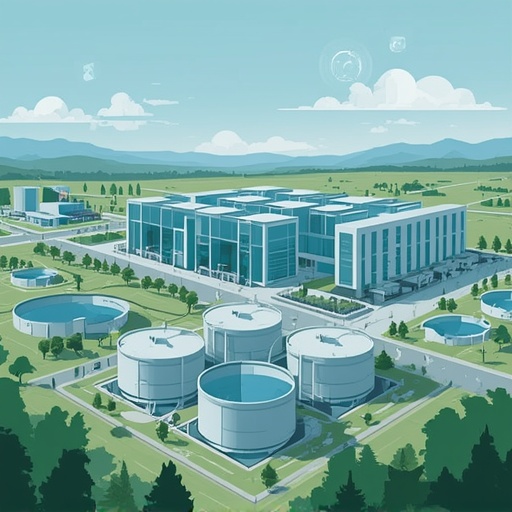
In the city of Cheyenne, Wyoming, a peculiar environmental discovery has drawn unexpected attention to the intersection of technological development and ecological stewardship. Local authorities recently detected a rare bacterium thriving within the community’s wastewater system—a finding unusual enough to prompt an in-depth investigation. After extensive tracing and comparative testing, environmental officials determined that the microorganism’s presence could be directly associated with discharges originating from a nearby Meta data center, one of the region’s most advanced facilities dedicated to managing large-scale digital operations.
This development has become a focal point for discussions about how the expanding technology sector interacts with natural and municipal ecosystems. Data centers, often praised as the unseen engines of the digital economy, require immense quantities of energy and water for cooling and maintenance, creating complex environmental implications beyond their sleek façades. The detection of a unique bacterium within a city’s wastewater presents a vivid reminder that no technological infrastructure exists in isolation — every system, digital or organic, functions as part of a broader network of mutual influence.
Officials in Cheyenne now face the dual challenge of addressing a biological anomaly while ensuring continued technological growth in a responsible and transparent manner. The situation underscores the importance of comprehensive environmental monitoring practices, emphasizing that innovation must progress in close harmony with sustainability initiatives. How can communities reconcile the enormous advantages of technological expansion — such as economic growth, connectivity, and efficiency — with the imperative of protecting ecological integrity? This question is not confined to Wyoming; it lies at the very heart of the global conversation about the future of sustainable technology.
Beyond the scientific intrigue, the Cheyenne case serves as a microcosm of the world’s broader environmental accountability debate. It illuminates the delicate equilibrium between industrial progress and ecological preservation — a balance that demands vigilance, cooperation, and foresight from both private enterprises and public institutions. In an era where data drives virtually every sector of modern life, this discovery invites reflection on the costs and responsibilities embedded in our digital civilization. Ultimately, Cheyenne’s experience illustrates that the pursuit of innovation, when guided by environmental awareness and ethical prioritization, can redefine how communities everywhere approach the vital coexistence of technology and nature.
Sourse: https://www.businessinsider.com/meta-data-center-waste-water-bacterium-cheyenne-wyoming-2026-7