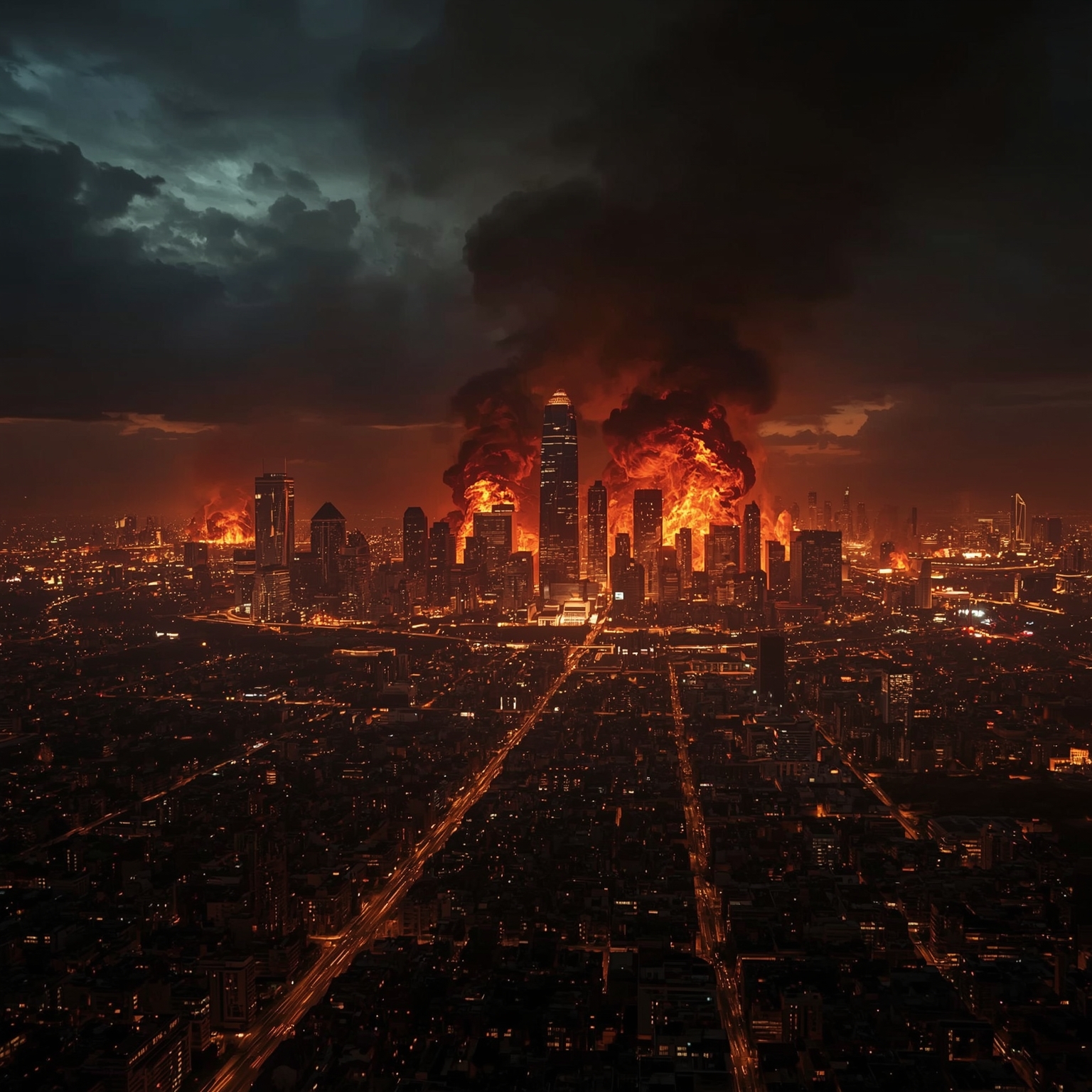
Federal authorities have taken into custody a suspect believed to be responsible for setting in motion the catastrophic Palisades blaze, an inferno that ultimately claimed twelve human lives and reduced thousands of acres of land to ash and ruin. According to official reports, one of the most unusual pieces of evidence in the case involves a digital image—an artificial intelligence–generated depiction of a burning city—that the accused allegedly produced using the ChatGPT platform. This use of generative AI, investigators suggest, may foreshadow the suspect’s subsequent actions and adds a deeply unsettling technological dimension to an already tragic narrative.
Acting United States Attorney Bill Essayli, representing the Central District of California, announced on Wednesday that federal law enforcement officials have formally accused twenty-nine-year-old Jonathan Rinderknecht of Florida of “maliciously initiating the blaze that evolved into the Palisades Fire in January.” The Department of Justice (DOJ) clarified that the comprehensive investigation tied Rinderknecht to the origin of the conflagration through a combination of digital and eyewitness evidence, including surveillance camera footage, testimonies from individuals present near the scene, and cellular phone data that positioned him close to the ignition site at the critical timeframe.
During a press conference, Essayli elaborated on the nature of the evidence, emphasizing that among the digital traces recovered was a ChatGPT prompt allegedly entered by the defendant. This prompt, according to Essayli, called for the creation of what he referred to as a “dystopian painting”—a visual composition portraying, in part, a forest engulfed in fire and a panicked crowd fleeing the devastation. Investigators claim that Rinderknecht generated this AI image several months prior to the real-life disaster, suggesting a possible preoccupation with the theme of burning landscapes long before flames consumed the Pacific hillsides.
The DOJ further reported that Rinderknecht has been accused of igniting what was initially identified as the Lachman Fire on January 1, 2025. Though first responders managed to contain the early outbreak, strong winds and dry conditions caused the flames to reignite, transforming the originally small blaze into the massive Palisades wildfire. This inferno went on to become the third most destructive wildfire in California’s recorded history, sweeping relentlessly through the communities of Pacific Palisades, Topanga, and Malibu. Official state data later confirmed that the devastation encompassed more than 23,000 acres, destroying upwards of 6,000 structures and forever altering the physical and emotional landscape of those coastal towns.
Prosecutors have detailed Rinderknecht’s movements on the night of the tragedy with precise specificity. Residing in the Pacific Palisades at the time, he allegedly concluded a rideshare trip shortly before midnight on New Year’s Eve, leaving his passenger before parking his car near a well-known hiking trailhead known as Skull Rock. There, investigators assert, he began walking along the path while recording video footage on his iPhone. According to the complaint obtained by the *Los Angeles Times*, Rinderknecht was also listening to a French rap song titled “Un Zder, Un The,” whose accompanying music video depicts a person setting fire to a trash container—an eerie parallel to the crime with which he is now charged.
The prosecution contends that shortly after midnight struck, marking the dawn of the new year, Rinderknecht deliberately lit the fire and almost immediately called 911 to report the incident himself. During that emergency call, investigators claim he simultaneously queried ChatGPT with a question phrased in imperfect English: “Are you at fault if a fire is lift because of your cigarettes.” This peculiar interaction, as cited in the *Los Angeles Times* report, has become one of the more perplexing elements of the case, highlighting a collision between human culpability, digital tools, and moral inquiry. Together, these details construct a picture of a case that stands not only as a criminal investigation but also as a sobering reflection on accountability in the age of artificial intelligence.
Sourse: https://www.theverge.com/news/796993/doj-chatgpt-ai-images-palisades-fire-california