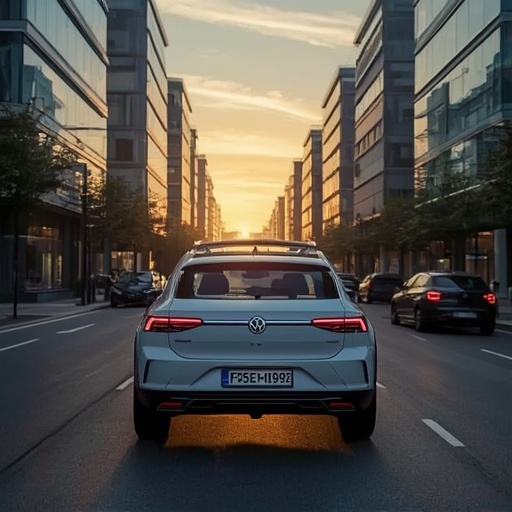
Volkswagen has officially embarked on a significant new chapter in its technological and mobility journey by unveiling its inaugural robotaxi pilot program in Germany. This initiative represents far more than the mere introduction of self-driving cars — it symbolizes a pivotal stride toward redefining the entire landscape of urban mobility and transportation innovation. With this pilot, Volkswagen not only demonstrates the maturity of its autonomous vehicle development but also reaffirms its long-term commitment to sustainability, safety, and forward-thinking engineering.
By launching a passenger-focused autonomous service, Volkswagen joins the global vanguard of manufacturers striving to make driverless transport an everyday reality. The company’s initiative aligns with an accelerating international trend, as urban centers around the world search for solutions that can alleviate congestion, enhance environmental efficiency, and transform the ways people move within cities. Through this pilot service, individuals will gain a firsthand glimpse of how advanced automation and artificial intelligence can harmoniously integrate with real-world traffic systems, thereby offering safer, more reliable, and more environmentally responsible travel experiences.
What makes Volkswagen’s undertaking particularly noteworthy is the convergence of cutting-edge technology and strategic foresight. The robotaxi pilot is not merely a technological demonstration—it is a reflection of the company’s forward-leaning philosophy, one that treats innovation as a pathway to sustainable progress rather than as an isolated pursuit. By merging precision engineering, clean energy solutions, and adaptive software intelligence, Volkswagen’s autonomous vehicles aim to deliver mobility that is both seamless and human-centered.
In practical terms, the robotaxi program establishes a blueprint for future mobility ecosystems, where privately owned vehicles gradually give way to shared, autonomous services capable of meeting diverse public transport needs. This shift could ultimately reduce emissions, optimize road usage, and enhance accessibility for passengers of all ages. As testing progresses, Volkswagen’s engineers and data scientists will collect insights about real-world performance, local traffic conditions, and user experience — all essential elements for refining the technology and ensuring scalability.
This pilot, unfolding in Germany, sends a powerful message of industrial and cultural transformation. It highlights Volkswagen’s ambition to act as a central catalyst in reshaping mobility for a safer, more sustainable, and more connected future. Beyond mechanical innovation, it underscores a profound commitment to urban quality of life: envisioning cities in which autonomous vehicles glide through streets that are smarter, cleaner, and designed for shared efficiency.
The debut of this service stands as a tangible testament to Volkswagen’s unwavering belief that the next era of mobility will be both autonomous and inclusive. The company’s foray into robotaxi operations may well pave the way for a transportation paradigm in which technology and humanity evolve hand in hand, redefining convenience, safety, and the very essence of modern travel.
Sourse: https://www.businessinsider.com/volkswagen-moia-launches-robotaxi-pilot-hamburg-germany-autonomous-id-buzz-2026-7