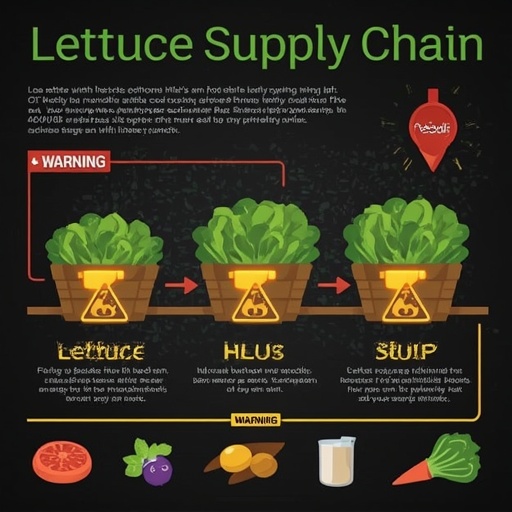
The recent cyclosporiasis outbreak traced back to a primary lettuce supplier and impacting numerous Taco Bell locations across five U.S. states has reignited widespread concern about the intricate and often opaque systems that bring fresh produce from farms to restaurant tables. At the heart of this issue lies the fundamental question of how modern food supply chains manage safety checks, traceability, and accountability in an era of rapid production and distribution.
Cyclosporiasis, a foodborne illness caused by the microscopic parasite *Cyclospora cayetanensis*, spreads primarily when food is contaminated by fecal matter during cultivation, harvesting, or processing. Though it is a preventable disease, outbreaks of this nature underscore how vulnerable global food systems can become when even a single link in the chain fails to maintain rigorous hygiene protocols or oversight. In this case, lettuce — a staple ingredient often served raw — presents unique challenges because it cannot be adequately disinfected after contamination.
This incident has affected Taco Bell restaurants throughout multiple states, compelling both regulators and corporate entities to examine how preventive measures are applied within high-volume food networks. The company and its suppliers are collaborating with state and federal public health investigators to pinpoint the precise source and distribution path of the contaminated produce. These efforts reveal the complexity of large-scale supply chains: a single farm’s practices may influence thousands of consumers and numerous franchise locations across the country.
The outbreak serves as a broader lesson in supply chain transparency. It reinforces the need for standardized, verifiable safety controls that extend well beyond basic inspections. Modern fast-food operations depend heavily on third-party growers and packers, which means that internal audits, certification requirements, and technological systems for tracking produce — such as blockchain or digital lot monitoring — can play a crucial role in minimizing similar risks in the future.
For consumers, this case is a reminder of the delicate balance between convenience and caution. While large brands often comply with rigorous safety standards, absolute protection depends on the integrity and vigilance of each partner involved in production, transportation, and storage. Those who work within the food industry, from agricultural specialists to corporate procurement officers, must view such outbreaks not only as isolated crises but as opportunities to reinforce preventive infrastructure.
Ultimately, the Taco Bell lettuce incident underscores a collective responsibility — across businesses, policymakers, and the dining public — to prioritize food safety at every stage of the farm-to-table process. In an era where meals are sourced globally and prepared locally, unwavering transparency, continuous supplier assessment, and investment in traceable technologies will be essential tools to safeguard the nation’s health and maintain public trust in the reliability of its food systems.
Sourse: https://www.businessinsider.com/what-to-know-taylor-farms-taco-bell-lettuce-supplier-cyclosporiasis-2026-7