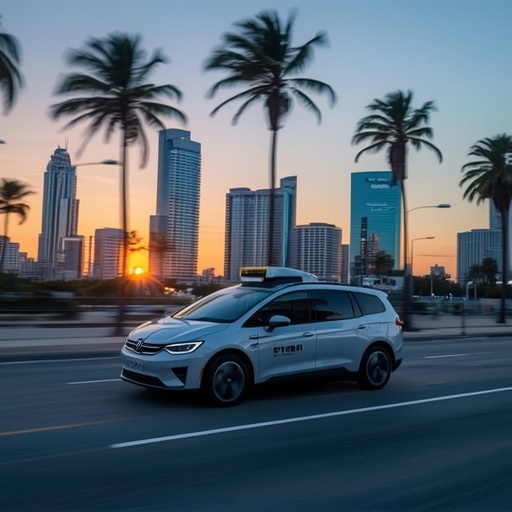
Tesla’s bold expansion of its autonomous ride-sharing network has reached a new milestone with the official arrival of its Robotaxi service in the vibrant Florida cities of Orlando and Tampa. This strategic move underscores the company’s relentless pursuit of innovation and its commitment to redefining modern mobility. By deploying self-driving vehicles across two of the state’s most dynamic metropolitan areas, Tesla aims to transform the way people experience urban transportation, replacing traditional rideshares with a more efficient, sustainable, and cutting-edge alternative.
The introduction of Robotaxis in these cities represents far more than a regional launch—it is a tangible step toward the long-envisioned future of fully autonomous mobility. Orlando and Tampa, both known for their rapidly growing populations and bustling tourism industries, provide an ideal environment for testing large-scale adoption of autonomous vehicles. In these cities, Tesla’s advanced AI-driven systems will operate amidst complex traffic conditions, local commuters, and seasonal visitors, thereby showcasing the company’s engineering sophistication and its ability to adapt machine intelligence to real-world mobility demands.
From an environmental perspective, this expansion signifies a decisive stride toward cleaner, greener cities. Each electric Robotaxi contributes to reducing local emissions and minimizing the carbon footprint associated with conventional car travel. For Florida—a state frequently at the forefront of conversations about sustainability and climate resilience—Tesla’s autonomous fleet offers both a technological marvel and a symbol of environmental responsibility. By integrating renewable energy principles with artificial intelligence, Tesla is not merely offering transportation, but presenting a vision of urban ecosystems in which convenience and ecological harmony coexist.
For consumers, the experience of summoning a Tesla Robotaxi promises a blend of comfort, futuristic design, and technological trustworthiness. These vehicles, equipped with advanced sensory arrays, real-time navigation, and predictive obstacle recognition, are designed to transport passengers with exceptional safety and precision. Commuters and travelers who opt for such a ride are effectively stepping into a glimpse of tomorrow’s city life—one where cars communicate seamlessly with infrastructure, traffic congestion decreases through AI coordination, and journeys are not merely modes of transit but demonstrations of innovative progress.
This launch also invites deeper discussion around the social and economic implications of automation in everyday mobility. While some passengers may marvel at the wonder of a car that requires no human driver, others might question how society will adapt to the growing role of artificial intelligence in critical public spaces. By introducing its Robotaxi program into bustling city centers, Tesla not only accelerates technological adoption but also sparks a broader dialogue about employment, regulation, insurance, safety standards, and trust in automated decision-making systems.
Ultimately, the rollout of Tesla’s Robotaxis in Orlando and Tampa symbolizes much more than just an expansion into new markets—it embodies a turning point in humanity’s relationship with transportation. It marks the gradual shift from human-operated driving toward an era defined by intelligent automation, environmental awareness, and interconnected smart-city infrastructures. Whether one views this innovation with enthusiasm or cautious curiosity, there is no doubt that Tesla’s continued advancement is propelling the world toward a future where autonomous vehicles are not a speculative idea but an integral component of daily urban life.
Sourse: https://www.theverge.com/transportation/968624/tesla-robotaxis-orlando-tampa-florida-earnings