Hidden deep within the austere beauty of the Arctic, Longyearbyen exists as a remarkable symbol of human endurance and adaptability. Recognized as the northernmost town in the world, it stands among the icy peaks and endless expanses of the Svalbard archipelago, a remote Norwegian territory situated roughly halfway between mainland Norway and the geographic North Pole. Despite being located nearly 800 miles from that polar pinnacle—one of the most forbidding environments on Earth—this community has managed to cultivate a lifestyle that seamlessly merges modern comforts with an appreciation for the unrelenting forces of nature that define life at the top of the world.
With a population hovering around 2,400 resilient residents, Longyearbyen may appear small when compared to other urban centers, yet it possesses all the essential amenities of contemporary civilization. Here, residents enjoy restaurants serving international cuisine, a cinema that screens the latest films, a well-equipped school proudly regarded as the northernmost educational institution on the globe, and even a collection of cozy pubs, museums, and art galleries that speak to the town’s vibrant cultural spirit. Regular flights connect this settlement to mainland Norway, with Oslo only a few hours away by air, ensuring that Longyearbyen remains accessible despite its extreme isolation.
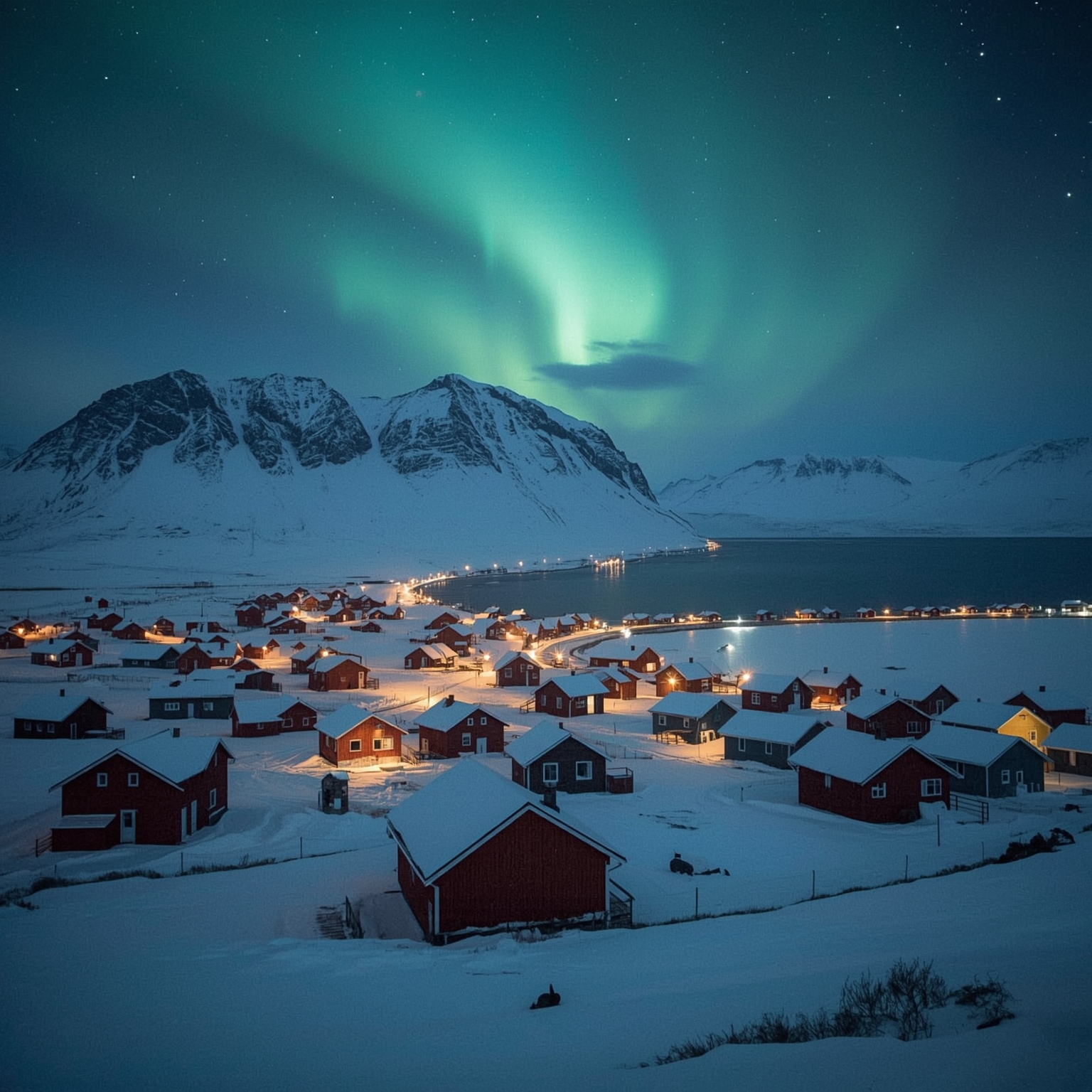
However, life in this Arctic enclave is far from ordinary. The town uniquely experiences polar extremes of light and darkness—four months of perpetual night followed by four months of continuous daylight. During the prolonged winter twilight known as the ‘polar night,’ the sun does not rise above the horizon from early November until late January, enveloping the town in a surreal, blue-tinged darkness illuminated only by the moon, starlight, and the ethereal dance of the aurora borealis. Conversely, during summer’s midnight sun, the landscape remains bathed in golden light around the clock, casting long shadows across the snow-covered mountains and allowing residents to hike, explore, and socialize under the perpetual glow.
The precarious coexistence between humans and wildlife in Svalbard underscores the unforgiving yet magnificent character of this environment. Polar bears—majestic, powerful, and occasionally perilous—roam freely throughout the archipelago. Although their main habitat lies farther north on drifting pack ice, they sometimes wander close to Longyearbyen in search of food. For that reason, both residents and visitors are strongly encouraged to carry firearms when venturing beyond the borders of town. Encounters are rare but potentially deadly, and local authorities have even published meticulous guidelines on the appropriate weapons and safety measures necessary for survival in polar bear territory.
Longyearbyen’s story is one of transformation. Originally founded in the early twentieth century as a coal mining settlement, the town once thrived on the region’s rich mineral deposits. Mining has since been phased out entirely, culminating in the scheduled closure of the final mine in June 2025. Today, the economy has reinvented itself around scientific research and tourism, welcoming many tens of thousands of adventurous travelers annually who come to witness the breathtaking Arctic landscape, experience the midnight sun, or study the profound impact of climate change firsthand.
Perhaps the most famous structure near Longyearbyen is the Svalbard Global Seed Vault, often described as humanity’s ultimate insurance policy against global catastrophe. Burrowed more than 400 feet into a mountain and sealed within layers of permafrost, this ‘doomsday vault’ stores over one million varieties of seeds from every major crop species known to humankind. Its design allows the vault to remain frozen and secure for at least two centuries, even if power is lost. However, as global temperatures rise and Arctic permafrost begins to thaw, engineers have had to invest heavily in upgrades to protect this modern ark from the very environmental changes it was designed to safeguard against.
Life in Longyearbyen is not without risk beyond the ever-present cold. Natural forces can be unpredictable in this region—avalanches in 2015 and 2017 caused tragic loss of life and significant property damage, reminding everyone just how precarious existence can be here. Burial has even been banned since the 1950s after melting permafrost began to expose old graves, forcing authorities to prohibit interment altogether. Likewise, birth is a rarity, as expectant mothers must travel to the mainland weeks before delivery due to the lack of advanced medical facilities on the island.
In terms of society, Svalbard operates under a distinctive legal arrangement that makes it unparalleled in the world’s immigration landscape. Thanks to the Svalbard Treaty, individuals of any nationality may live and work in the archipelago without visas or residence permits—provided they can financially sustain themselves. Nevertheless, the transitory nature of life in this remote town means that most residents stay only temporarily; studies show that a majority leave after a few years, often seeking new opportunities or returning to milder climates.
Despite isolation and extraordinary cost-of-living challenges, Longyearbyen maintains an unexpectedly refined quality of life. The local school educates around 270 students aged six to eighteen, combining conventional academics with vital survival skills tailored to Arctic living—how to camp safely, respond to avalanches, or handle encounters with polar bears. Higher education continues with the University Centre in Svalbard (UNIS), a world-renowned research institution dedicated to Arctic biology, geology, geophysics, and technology. Tuition fees are minimal, and all students undergo mandatory firearms training—a necessary precaution in their unique academic environment.
Culturally, Longyearbyen’s residents know how to celebrate resilience. When the sun finally peeks over the mountains each February after months of darkness, the entire town gathers for the Sun Festival Week, a jubilant event marking the symbolic return of light. Locals say the sun is officially ‘back’ the moment its rays illuminate the old hospital steps—a tradition both poetic and deeply emotional. And although the dark season challenges the mind and body, it also rewards residents with some of the most spectacular phenomena in the world: the luminous ribbons of the Northern Lights and jaw-dropping lunar events like the 2018 “super blue blood moon.”
Everyday life in Longyearbyen is characterized by unusual yet practical adaptations. Snowmobiles outnumber people several times over, serving as the most reliable mode of transportation across frozen terrain. Others rely on polar sled dogs, whose endurance and strength allow them to cover stunning distances across the tundra. Even mundane tasks like grocery shopping reflect the realities of Arctic existence—goods arrive by ship or air, prices are high, and sometimes a sled replaces the humble shopping cart. Visitors, meanwhile, can rest in comfort at the Radisson Blu Polar Hotel, famously listed as the world’s northernmost hotel, where modern amenities meet panoramic views of an untamed wilderness.
All in all, Longyearbyen stands as a living experiment in how humanity confronts and adapts to extremes. Against a backdrop of ice, darkness, and unpredictable nature, its residents have forged a community defined by curiosity, resilience, and cohabitation with forces far greater than themselves. The town is more than a settlement—it is a testament to human tenacity, an intersection of science and adventure, and a bold declaration that even at the edge of the world, life not only endures but thrives with remarkable grace.
Sourse: https://www.businessinsider.com/life-in-worlds-northernmost-town-longyearbyen-svalbard-photos