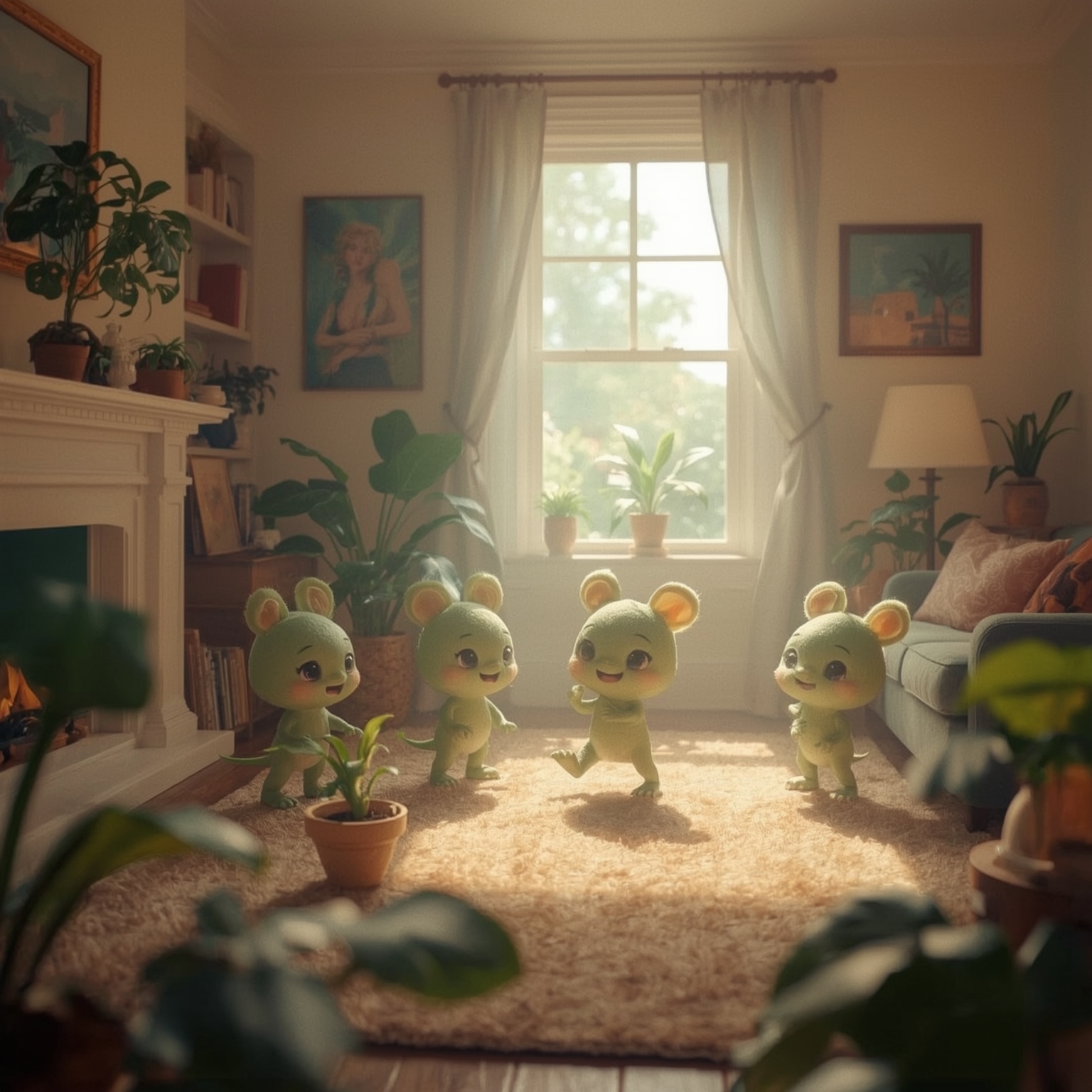
Earlier this week, Nintendo unexpectedly unveiled a heartwarming animated short that depicted a small child learning to take its very first steps. The simplicity and charm of the cartoon immediately captured viewers’ attention across social media platforms. Given Nintendo’s history of surprising its audience with inventive game announcements and whimsical teasers, many fans rapidly concluded that this delightful video must have been hinting at something larger — perhaps the debut of a completely new intellectual property or an upcoming animated feature tied to one of the company’s beloved franchises. The speculation was understandable; after all, Nintendo frequently weaves storytelling and visual artistry into its promotional material, making it easy for audiences to imagine that even a modest clip might foreshadow a future release.
However, as the mystery unraveled, it became clear that the truth was far more straightforward — yet no less enchanting. The video, titled “Close to You,” was not actually introducing a new game at all. Instead, it turned out to be part of a creative project connected to the whimsical universe of *Pikmin*, one of Nintendo’s most endearing and consistently imaginative series. This revelation placed the short squarely in the tradition of what could be called a “Pikmin situation”: a charming artistic endeavor meant to celebrate existing characters and lore rather than unveil a brand-new concept. In other words, what had seemed like an elaborate teaser was in fact a small self-contained film designed to evoke curiosity, affection, and nostalgia among long-time fans.
To dispel the growing wave of speculation, Nintendo soon released an official clarification. In a post published on X (formerly Twitter), the company confirmed that both versions of “Close to You” are indeed short films produced by Nintendo Pictures — the studio’s recently acquired computer-generated (CG) animation division. This subsidiary, which now serves as the creative powerhouse behind many of Nintendo’s cinematic ventures, focuses on crafting visually expressive and emotionally resonant content that expands the company’s storytelling beyond video games. By explicitly designating the release as a pair of ‘small movies,’ Nintendo emphasized that these works were meant purely as narrative and artistic expressions, not as marketing preludes or game trailers.
Furthermore, Nintendo’s statement included a forward-looking remark that hinted at the direction this creative branch might take. The company explained that Nintendo Pictures “will continue to take on various challenges with videos in the future,” a phrase that suggests an ongoing commitment to experimenting with film-based storytelling, digital media, and animation. This strategic language implies that audiences can expect a steady stream of similar shorts — artistic pieces that aim to inspire excitement, emotional connection, and perhaps renewed interest in Nintendo’s expansive ecosystem of characters and experiences. It is also likely that these videos will complement other digital initiatives, such as encouraging viewers to explore related content within the Nintendo Today app, where such features can deepen engagement with the brand.
In essence, what began as a deceptively simple animation about a baby learning to walk evolved into a subtle yet effective demonstration of Nintendo’s creative philosophy. The studio used the power of curiosity and interpretation to galvanize fan interaction before gracefully revealing the project’s true nature. Through this mixture of surprise, storytelling, and strategic clarity, Nintendo reaffirmed its reputation as a company capable of delighting its audience in unexpected ways — not merely by producing games, but by mastering the art of playful communication and visual charm.
Sourse: https://www.theverge.com/entertainment/797623/pikmin-close-to-you-nintendo-pictures