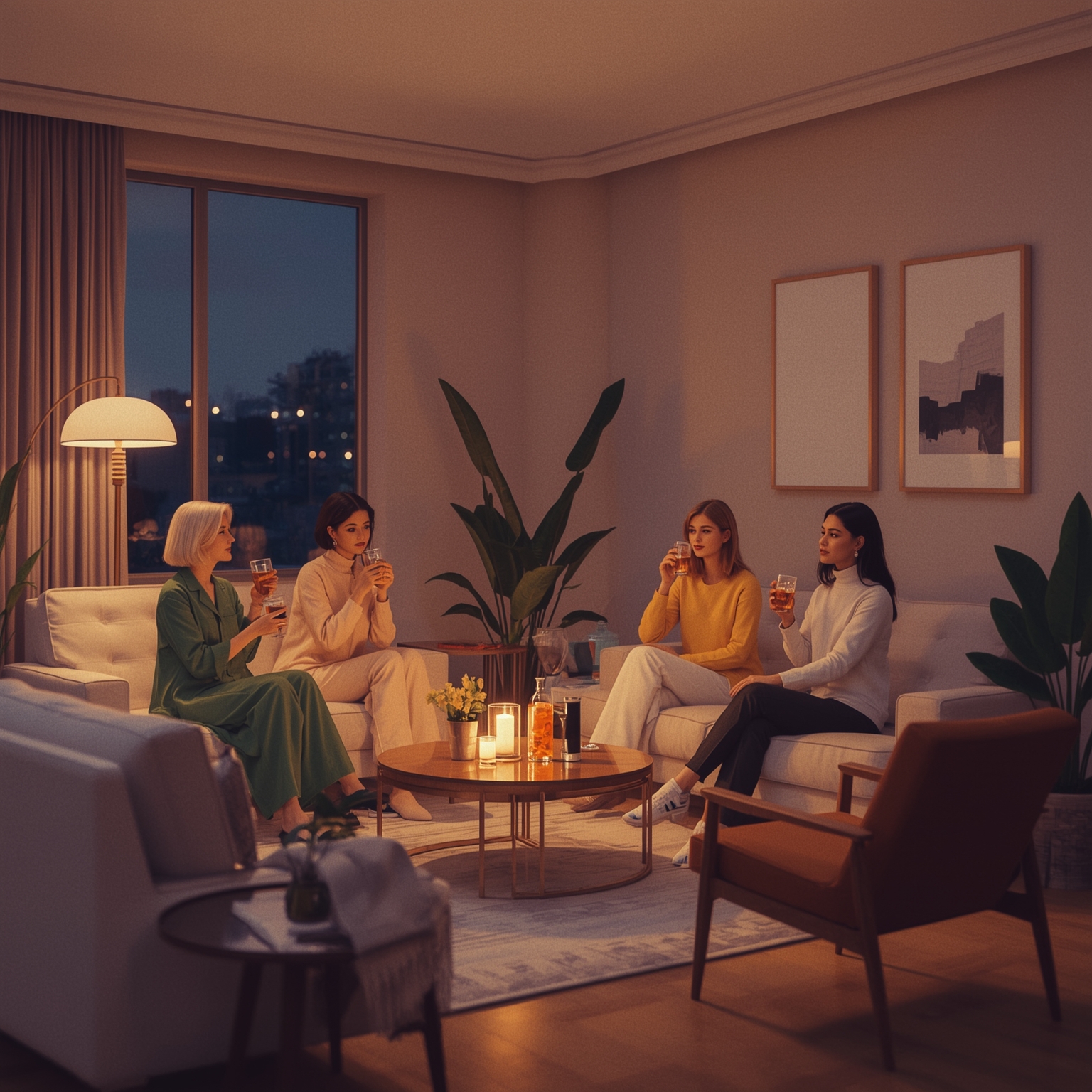
For many members of Generation Z, the definition of a good time has evolved dramatically from previous notions of nightlife. Instead of frequenting pulsating nightclubs filled with flashing lights and booming music, this younger generation increasingly gravitates toward more intimate, relaxed settings — picnics in the park, gatherings in cozy living rooms, or informal house parties among close friends. These social shifts accompany a noticeable change in consumption habits, as young adults today are drinking less alcohol compared to their predecessors.
A Gallup survey conducted in August revealed a clear downward trend: between 2023 and 2025, the proportion of Americans aged 18 to 34 — encompassing both Gen Z and the younger millennial cohort — who reported drinking alcohol declined by nine percentage points. Financial behaviors reflect this moderation as well. Data from the Federal Reserve’s economic reports show that Americans aged 25 to 34 spent roughly 11 percent less on alcohol in 2023 than their counterparts did two decades earlier, in 2003, when adjusted for inflation. Although these figures might initially appear discouraging for the beverage industry, key leaders within the sector argue that this generational transition represents not the end of opportunity but a transformation in how and where those opportunities lie.
One such voice is Jing Mertoglu, Global Vice President of Insights and Analytics at the Japanese beverage conglomerate Suntory — the owner of iconic whiskey brands such as Jim Beam and Maker’s Mark. Speaking with *Business Insider*, Mertoglu explained that while Gen Z has undeniably altered its relationship with alcohol, the desire to enjoy drinks within social contexts remains intact; only the nature of those experiences has changed. She observed that young people now pursue a broader variety of social environments than earlier generations did. Whereas millennials and their predecessors might have considered a ‘night out’ synonymous with a bustling karaoke bar or a crowded disco, Gen Z embraces an expanded repertoire: serene picnics in urban parks, small-scale get-togethers, camping trips, and other creative forms of leisure that balance energy with relaxation.
According to Mertoglu, fun itself has been redefined for this demographic. They are equally drawn to mid- and low-energy social experiences as they are to high-energy pursuits. The diversity of their recreational choices is evident across different cultural contexts: in China, niche ‘micro-clubs’ have begun attracting small, curated audiences; in South Korea, young professionals gather with friends around campfires for casual drinks; and in Singapore, themed events such as daytime matcha raves draw hundreds of participants who prefer sunlight to strobe lights. One such event in August reportedly gathered around 400 attendees — a testament to how Gen Z fuses novelty, wellness, and socialization in distinctive ways.
Mertoglu also highlighted another key element driving these habits: a preference for comfort, privacy, and deeper connection. Since the COVID-19 pandemic, many young adults have become adept at socializing from the comfort of their own homes. She refers to this shift as the ‘home premise’ — a phenomenon characterized by the increasing popularity of hosting and participating in at-home gatherings. These occasions combine affordability with intimacy, allowing people to connect more authentically without the inconvenience of travel or the potential expenses of nightlife venues. As Mertoglu explained, staying in to share drinks with friends is not only cost-effective but also emotionally satisfying. It allows for a sense of ease, belonging, and personal control over the atmosphere — aspects that resonate strongly with Gen Z’s values of comfort and safety.
Even though Gen Z enjoys music festivals, global concerts, and major cultural experiences — such as attending Lollapalooza or performances by worldwide acts like BTS — their approach to leisure is less anchored in routine drinking than in the pursuit of meaningful experience. According to Mertoglu, this generation continues to value enjoyment and social bonds, yet they express it through settings and substances that align with their broader lifestyle priorities. Changes in work patterns have further accelerated this evolution: with many professionals now working remotely on Fridays or adopting flexible office arrangements, the once-standard ritual of after-work drinks as a form of weekly release has waned. What was once a cultural norm — winding down with colleagues at the bar — has given way to a dispersed and more individualized rhythm of relaxation.
Nevertheless, this moderation does not equate to abstinence or the disappearance of alcohol from Gen Z’s social life. Mertoglu emphasized that even within these calmer, so-called ‘low-energy’ environments like picnics, movie nights, or casual house parties, alcoholic beverages maintain a role — albeit a more balanced one. For beverage companies, this recalibration of attitudes presents a dynamic opening to innovate. Rather than catering solely to club-goers or nightlife enthusiasts, brands must adapt to consumers who favor convenience, health consciousness, and variety.
In response to this shift, Suntory has broadened its portfolio by developing ready-to-drink cocktails, which cater perfectly to a generation that values portability and simplicity. These beverages, pre-mixed and often served in sleek canned formats, eliminate the need for bartending equipment and can easily accompany outdoor adventures or spontaneous indoor hangouts. Reflecting the success of this strategy, Suntory reported in August that its sugar-free Minus 196 line achieved double-digit growth in Japan during the first half of 2025 compared with the previous year. The United States has become its largest market for ready-to-drink offerings, prompting the company to extend distribution and introduce new flavors that reflect diverse consumer tastes.
The appeal of lower-alcohol or alcohol-free alternatives extends beyond Suntory. Anheuser-Busch InBev, famed for brands like Budweiser and Corona, recorded a 33 percent year-on-year surge in non-alcoholic beer sales in the second quarter of the current year. This momentum was largely driven by Corona Cero, a zero-alcohol beer enriched with Vitamin D — a product that merges wellness trends with traditional enjoyment.
Mertoglu attributes this growing appreciation for moderation to Gen Z’s overarching commitment to health, mindfulness, and self-care. Whether through nutrition, fitness, or their drinking habits, they strive for equilibrium. Their aim is not abstention but optimization: choosing lighter, more refreshing beverages that align with a lifestyle emphasizing vitality over excess. From subtly reduced-alcohol cocktails to innovative nonalcoholic alternatives and naturally flavored refreshments, this generation values choice, balance, and purpose in every sip.
In essence, Generation Z is not turning away from conviviality or celebration — they are merely rewriting the script. Their version of a party may look different, sound quieter, and feel more intentional, yet it remains driven by connection, creativity, and an enduring curiosity about new ways to enjoy life. For beverage companies willing to adapt, the future remains full of promise — not in the clamor of the nightclub, but in the simple clink of glasses shared around a picnic blanket or a softly lit living room table.
Sourse: https://www.businessinsider.com/gen-z-club-less-drinking-suntory-exec-low-abv-drinks-2025-10