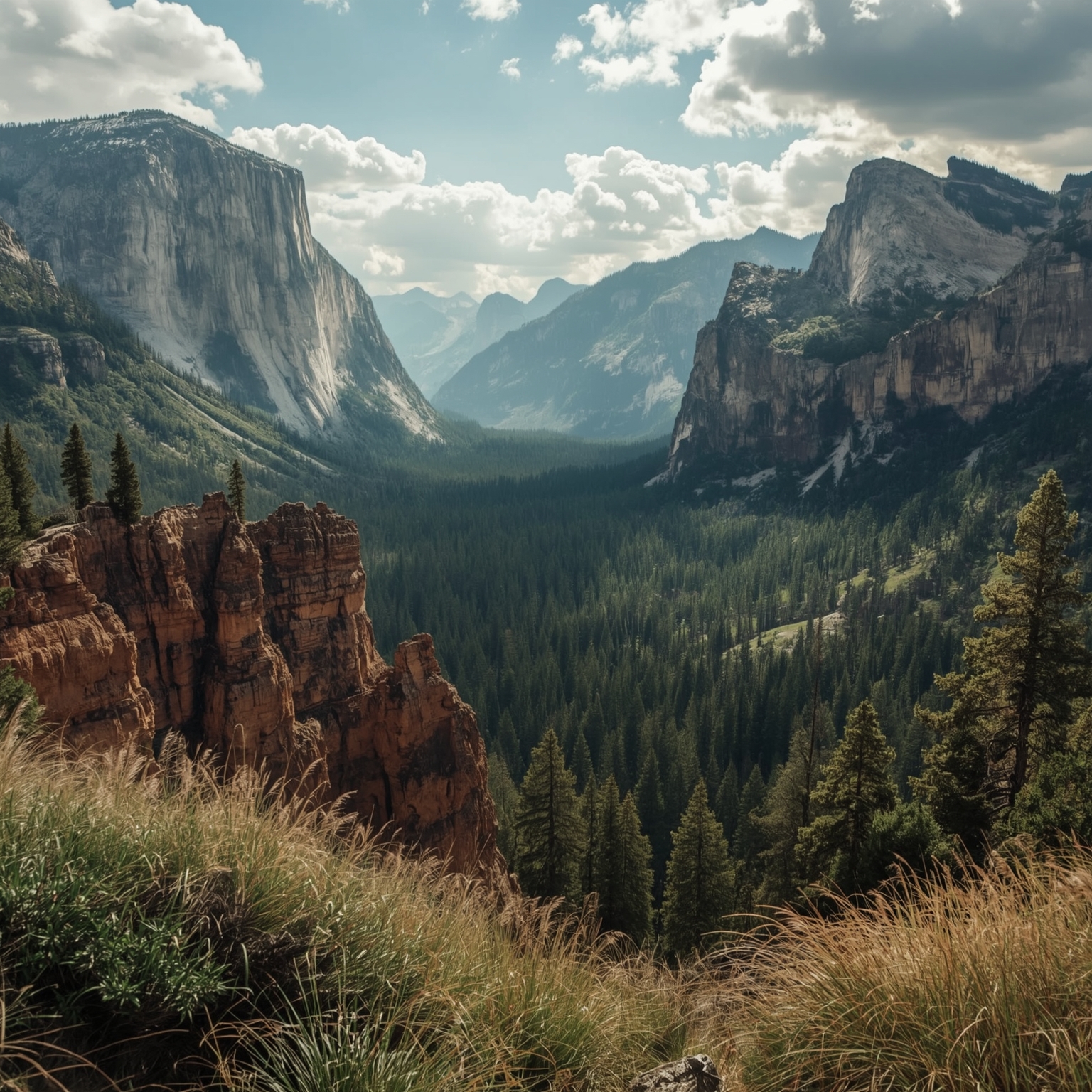
During the ongoing government shutdown, many of the United States’ most celebrated national parks technically remain accessible to the public, yet the precise definition of the word “open” varies dramatically from one park to another. In this context, an “open” park does not necessarily imply full operational capacity or the usual extent of visitor services. Instead, it simply means that visitors are still permitted to enter and experience the outdoor landscapes, though the level of available amenities, staffing, and maintenance differs considerably across the system.
For instance, while certain parks have managed to keep their visitor centers functioning and staffed, others have shuttered these facilities entirely. Many locations have also suspended the collection of entrance fees, both as a cost-saving measure and because sufficient personnel are not on duty to manage fee stations. In general, most parks are operating under drastically reduced staff levels. According to the National Park Service’s contingency plan, more than 9,000 of its approximately 14,500 employees have been furloughed, leaving only a small core workforce in place. This skeletal staffing arrangement inevitably results in diminished capacity to handle even baseline responsibilities such as sanitation, trash removal, restroom upkeep, and general visitor assistance. Consequently, travelers may encounter overflowing waste receptacles, closed restrooms, unmaintained trails, or other inconveniences normally prevented by a full maintenance team.
Funding structures across the national park system vary considerably, which affects how each individual park can continue to operate during the government shutdown. Some sites depend almost entirely on revenue generated by entrance fees, while others also receive supplemental support from state governments, local municipalities, or philanthropic organizations to sustain key services. Non-government operations—such as concessionaire-managed lodges, restaurants, souvenir shops, and guided tours—frequently remain available to visitors, since these are typically run under private contracts rather than through direct federal employment. In effect, these private and nonprofit partnerships have become vital stopgaps, allowing travelers limited access to basic services even when federal funding has been interrupted.
The National Parks Conservation Association (NPCA), a well-established nonprofit dedicated to preserving and advocating for America’s national parks, has expressed growing concern about the ramifications of leaving parks physically accessible but administratively undermanned. The group notes that this partial accessibility leads to both visitor confusion and heightened risks to fragile natural and cultural resources. As a result, the NPCA has urged federal authorities to fully close the parks for the duration of the shutdown, arguing that doing so would better safeguard ecosystems, historic landmarks, and the public itself from preventable damage or hazards. NPCA spokesperson Kyle Groetzinger summarized the dilemma succinctly: while some parks remain physically open and others closed, more than sixty percent of the National Park Service workforce is currently sidelined. This, he warned, means that the very specialists who protect delicate habitats, preserve historical artifacts, and interpret the nation’s heritage for millions of visitors are unable to fulfill their critical roles.
Among the nation’s most visited parks in 2024, current conditions vary considerably. At Glacier National Park in Montana, while visitors may enter and enjoy the scenic terrain, all visitor centers have closed, and campgrounds operate with a minimal number of staff, according to local tourism authorities. In Wyoming’s Grand Teton National Park, roads and hiking trails remain accessible, yet ranger-led programs, visitor centers, and permitting offices are closed, and entrance stations are untended. Similarly, Olympic National Park in Washington continues to allow public entry, but its visitor centers are locked and no entrance fees are collected. Privately owned lodging and dining establishments near park boundaries remain operational. Washington’s park advocacy nonprofit has publicly implored residents to postpone their visits due to limited staffing and weakened infrastructure, warning that such reduced capacity underscores the inherent vulnerability of the park’s ecosystems and heritage sites during shutdowns.
In Maine, Acadia National Park remains open, including its roads and trail network. Basic facilities such as campgrounds and restrooms are maintained, but several key attractions—among them the Hulls Cove Visitor Center and Sieur de Monts Nature Center—are closed. The nonprofit Friends of Acadia emphasized that the timing could not be worse, as the park experiences heavy visitation during the fall foliage season, a period crucial to the region’s tourism-driven economy.
Out west, Yosemite National Park and the eight other national parks in California remain accessible. Roads, campgrounds, and sanitation services continue to function, supported in part by nonprofits such as the Yosemite Conservancy, which has taken responsibility for staffing certain welcome centers. While no entrance fees are being gathered, essential operations like law enforcement and emergency response are still maintained, and concessionaire-operated amenities including restaurants and lodges continue to serve guests.
Colorado’s Rocky Mountain National Park remains open as well, though its visitor centers and historic facilities are closed to the public. State leadership has announced that previously collected entrance fees will temporarily sustain ongoing maintenance and sanitation, with plans to seek additional donations if necessary to preserve operations. A similar arrangement exists in Yellowstone National Park, where nonprofit support from Yellowstone Forever enables several key visitor hubs—such as Old Faithful and Mammoth Hot Springs—to remain open. Private businesses within or around the park also continue operating.
In Arizona, the Grand Canyon National Park has kept its most iconic overlooks, roads, and trails open while closing buildings operated directly by the National Park Service, including visitor centers. Campgrounds, along with amenities run by concessionaires such as lodging, food service, and retail shops, remain available. Farther south in Utah, Zion National Park continues to welcome visitors. While the Kolob Canyons Visitor Center is closed, the main visitor center remains open with services funded by the state’s tourism and economic offices, ensuring that all five of Utah’s “Mighty 5” national parks can remain at least partially staffed during the shutdown.
Among the ten most visited national parks, the Great Smoky Mountains National Park—straddling the border between Tennessee and North Carolina—stands out as an example of cooperative problem-solving. State governments and the nonprofit Friends of the Smokies pooled funds to keep the park fully functional, allowing the continuation of all major operations including the work of nearly all 275 full-time employees. Visitor centers that had briefly closed at the shutdown’s onset have reopened, with guaranteed funding projected through mid-October.
Conversely, not all parks have been able to remain accessible. White Sands National Park in New Mexico has announced a full closure “until further notice,” underscoring the uneven impact of the shutdown across the park network. Nationwide, the National Park Service oversees a total of 63 officially designated national parks and 433 sites overall, including monuments, historic landmarks, and preserves. While many parks continue to allow entry, a number of smaller sites—such as California’s Muir Woods National Monument—are entirely closed, even as others like Fort Point National Historic Site remain open. Because conditions can change rapidly, travelers are strongly advised to check official park communications or local news outlets for updated closure information before undertaking any trip.
Those wishing to share information or updates are encouraged to contact the reporter confidentially using secure communication channels, ensuring both their safety and journalistic integrity. In summary, while America’s magnificent national parks largely remain open under constrained circumstances, visitors should expect reduced amenities, shorter staff presence, and a reliance on external funding sources to preserve access to these treasured public lands until federal operations resume.
Sourse: https://www.businessinsider.com/most-visited-national-parks-open-government-shutdown-2025-10