Earlier this week, the Pew Research Center released a comprehensive study examining the ways in which parents attempt to monitor and regulate their children’s exposure to digital screens, particularly among those aged twelve and younger. The findings themselves were largely expected, and for many readers perhaps even predictable—offering confirmation rather than revelation. According to the data, nine out of ten parents reported that their children routinely watch television, making it the most universal form of screen engagement. Meanwhile, approximately sixty-one percent stated that their children use smartphones at least occasionally, suggesting that mobile devices are steadily becoming a normalized part of early childhood experiences. Curiously—and somewhat unexpectedly—only half of the surveyed parents allowed their children to play on any kind of gaming console. Despite varied approaches, the study revealed a shared sense of ambivalence among many parents: while 42 percent admitted they could do a better job of setting boundaries, an impressive 86 percent said they had established some form of rule about screen use, though they conceded these rules were not always consistently enforced.
What the Pew study did not delve into, however, were the specific details underlying those parental guidelines. Knowing that certain parents ‘sometimes’ allow television viewing sheds little light on the nuances: how long their children watch, what kinds of programs they are permitted to view, and which strategies parents use to prevent exposure to content deemed inappropriate or harmful. These missing details form the heart of a much more complex and personal issue that every household must navigate differently.
In my own family, for instance, we have developed a system inspired by Greg McKeown, author of *Essentialism*, that relies on a small-scale barter economy to guide our eight-year-old’s digital habits. Each week begins with ten tokens—collectively valued at either five dollars or five hours of screen time—that our child can choose to spend. The system encourages self-management by allowing them to earn additional tokens through reading. They are then free to decide whether to use their earned time watching children’s programming on streaming platforms such as Disney+, Netflix, or Paramount+, or to immerse themselves in creative play through music-making applications and select games like *Minecraft* on their iPad. Nevertheless, complete autonomy is not the goal; unrestricted access to devices is off limits, as we aim to balance independence with appropriate oversight.
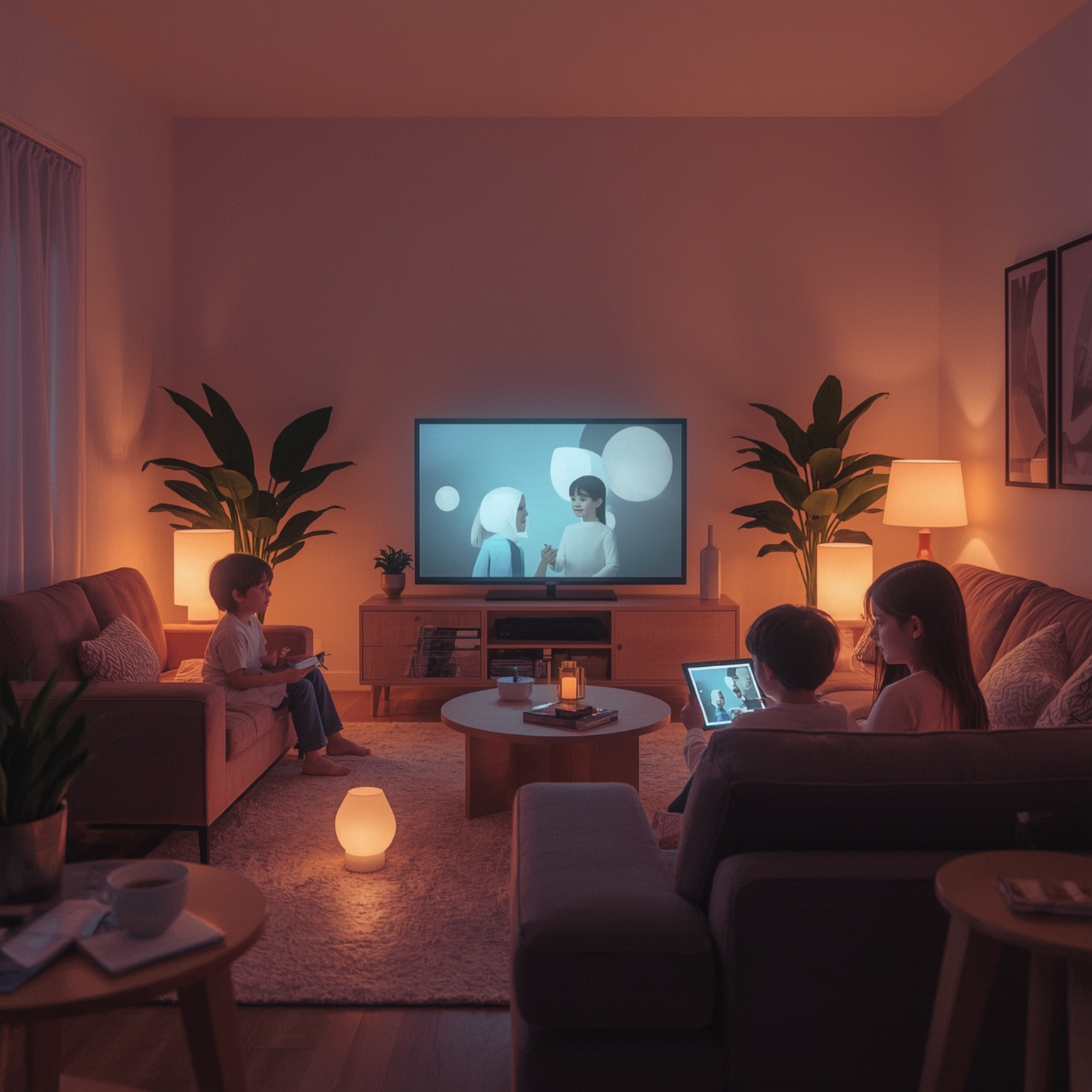
To prevent any misconception that I enforce screen restrictions with excessive rigidity, it’s worth noting that my youngest child is allowed one hour of primarily educational television per day. This routine grants my partner and me an opportunity to assist our older child with homework in a relatively peaceful environment. Saturdays, however, are different—reserved for our cherished family movie nights, during which we take turns selecting a film to watch together, turning shared screen time into a weekly bonding ritual.
When I reached out to readers of *The Verge* and my colleagues for insights, a common thread emerged: many parents preferred to treat screen time as a collaborative or communal activity rather than a purely individual pursuit. One reader, identified as Yw0, advised parents to make television viewing a shared experience—remaining present when screens are on so that media consumption becomes a social event rather than a solitary escape. Similarly, Kate Cox, senior producer for *Decoder*, described her family’s approach, aptly named “Family Time.” In her household, everyone participates together—watching or playing through a rotation of titles like *Steven Universe*, *Batman: The Animated Series*, and *Final Fantasy VI*. This routine serves a dual purpose: it helps introduce the children to content that may prompt meaningful questions or require guidance, while reinforcing togetherness.
Interestingly, the total amount of time spent in front of screens was not the primary concern for many parents. Although time limits are common, enforcement varies widely. Andrew Hawkins, Senior Transportation Editor, has chosen a particularly strict method by prohibiting any screen use during the school week. Others adopt moderated strategies: for example, a parent identified as maverikJV allows their son to play video games for only two hours per day on weekends and none at all on weekdays. Ostino takes a slightly different approach, restricting computer usage to two hours each weekday but leaving gaming consoles like the PlayStation and Nintendo Switch available. Another parent, Smash Monocle, limits their children to a single hour per day on iPads, though because the devices are not freely accessible, the kids often go several days without touching them. For this family, the emphasis isn’t on rigid limits but rather on intentionality—ensuring that screen usage stems from active choice rather than boredom.
According to Pew’s findings and the anecdotes shared, the dominant concern among parents revolves around *how* children use their screen time, rather than simply *how much* time they spend. Social media, in particular, generated significant anxiety: 80 percent of those surveyed believed it causes more harm than good for children. Despite widespread caution, 15 percent admitted their children used TikTok, while other social platforms such as Instagram and Facebook were far less prevalent, at just five percent each. YouTube, however, was nearly ubiquitous—three-quarters of parents said they had watched YouTube alongside their children, while only 15 percent reported that their kids avoided the platform entirely. Many parents, myself included, said they would not allow their children to browse YouTube unsupervised, citing the unpredictability of its algorithm and content.
Among my colleagues, strategies for balancing access and protection differed but shared common principles. Senior reviewer John Higgins grants his son permission to play or watch only pre-approved titles—Minecraft included—but draws strict lines elsewhere, saying there will be “no Roblox ever.” He also limits digital communication by whitelisting permitted FaceTime contacts. Kate Cox takes a similar stance, describing herself as “broadly games-permissive yet internet-restrictive,” maintaining rules that exclude both Roblox and YouTube from her children’s media repertoires.
When it comes to the practical tools parents use to manage these boundaries, the simplest solutions often prove most effective. Many rely on old-fashioned interventions—physically taking devices away or pressing the power button—rather than complex parental control software. Others employ built-in systems like Apple’s Screen Time tool to monitor and restrict iPad usage specifically. The introduction of smartphones into children’s lives is another area of restraint; only 29 percent of parents with children aged eight to ten said their child had their own smartphone, although the prevalence rises substantially once children enter their teenage years. One parent, Abdulla77, noted that his teenage daughter owns an iPhone but can only use it to call her parents outside designated hours. Another, Krisprince, opted for a Bark Phone for their 13-year-old, valuing its comprehensive parental controls above all.
Ultimately, there is no universally correct method for managing children’s relationship with screens. Every household must craft its own approach based on values, schedules, and personalities. What works seamlessly for one family may fail entirely for another. As the Pew report gently reminds us, the majority of parents—58 percent, to be precise—believe they are doing a reasonably good job navigating these digital waters. And perhaps that is what matters most: not perfection, but the ongoing, earnest effort to help our children develop healthy habits in an age where screens are both omnipresent and unavoidable.
Sourse: https://www.theverge.com/tech/798648/how-verge-parents-and-readers-manage-kids-screen-time